English, Healthy Mexican Food, Recipes

New Mexico Green Chile Stew

New Mexican Green Chile Stew is Queen! La Reina de los Estofados! You might be picking up on a little bias on my part. And that is due to the fact that New Mexico is my home. Furthermore, while I am admitting my biases, I will tell you that there’s no better green chile than New Mexico Hatch Green Chile. Punto.

If you are lucky enough to live in New Mexico, you know what I’m talking about when I tell you that it’s GREEN CHILE SEASON!  And the air is full of green chile aroma. There’s something about a crisp autumn day when the sun is shining but the air is cool, and you’re walking down the street and you smell green chile roasting. If you haven’t experienced this, it’s worth you going out and buying some fresh green chile, hopefully from New Mexico, and firing up the backyard grill. Your neighbors will thank you for enriching their senses and you’ll have the start of the best stew in your healthy recipe box.

So here is our very good and easy-to-follow recipe for New Mexican Green Chile Stew! The hardest part of this recipe is roasting the chiles, and if you have never done that before, it might take a few tries. But let me tell you, it’s worth it. Just give it a try and wear gloves. Another thing, if you are a little lazy, or in a hurry, you can give yourself permission to get frozen Hatch Green Chile from your grocer. And Trader Joe’s has Hatch Green Chile sometimes in the frozen section. Safeway has it in Portland, and any good grocer worth her salt has it in New Mexico and Arizona! And I don’t know about the rest of Texas, but I have found green chile in El Paso! So all this to say, that you are a busy woman, and who am I to judge? If you want to take a short cut, ¡Andale!  Go ahead and buy it in a jar or a can. (Ni Modo!) You can also use Anaheim, and we won’t hold it against you, although then you’re really making Anaheim Green Chile Stew. It’s still good. No worries! Use more! Now, if you are a real New Mexican, you might take offense with us using tomatoes. But I first learned how to make New Mexico Green Chile Stew from the Pink Adobe Cookbook, and Rosalea used tomatoes so I gave myself permission to do that. Finally, this stew is great on a cold evening, and shared with the people you love. It will please the panza and soothe the soul.

¡Qué viva Nuevo México!

Healthy Mexican Food

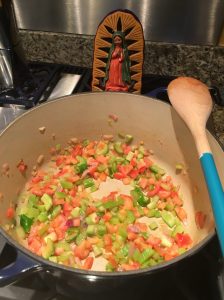
How to Make a Simple Sofrito

The Simple Sofrito

The Simple Sofrito is a powerful flavor ambassador.  One of the very first things that my mother taught me about cooking is to always start with a sofrito.  She said that my food would always be delicious if I started whatever I was doing with this magic concoction.  It seems like every Latino family has their own version of sofrito. My sister always adds a little fresh garlic, carrots and celery. My Ecuadoran consuegra calls it “Refrito,” and hers includes garlic, onion and achiote.  In Spain, the sofrito involves garlic and red pepper.

A Universal Practice

In our family, it meant chopping up some green chile, tomate y cebolla and frying it up in a small amount of oil.  So try this simple saute of green chile, onion and tomato next time you are cooking up some taco meat, scrambled eggs, or whatever you’re hungry for. Just start with the sofrito and then when the pepper is soft but not wilted, add your meat, eggs, or frijoles de la olla. We always make the point that Latinos and Latinas are not a monolithic group.  We are not all the same, but we have some strong things in common.  In the kitchen we find that almost all Spanish, Mexican and Latin American cooks use some kind of sofrito. Therefore, you can call the Sofrito, a universal practice across Latino cultures!

The De Las Mías sofrito is very simple and packs a good punch with ancho chile.  Find the recipe in the De Las Mías Recipe collection. Use it as a base for soup or whatever other guisado you embark on. The short cut is simple though, just chop up some chile, tomate y cebolla and fry it up in a small amount of oil. Sure, go ahead and add some minced garlic. ¡Y ya!

Nothing Fancy, Just Sabroso

I’m a very simple cook but people always love my food.  I don’t have a lot of fancy cooking stuff and most of my pots look like they made it out of a war zone, but I always start with a sofrito, and I think that’s why I cook sabroso.

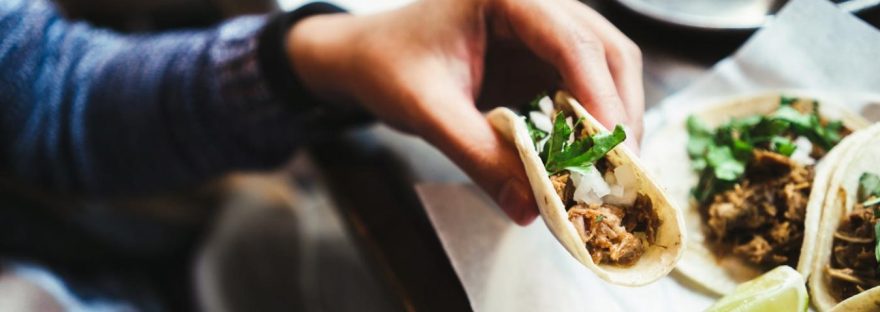
One of my favorite on-the-go meals is to stop by the market and get one of those chickens that are already roasted.  I remove the skin and chop it up for taquitos. I always start with the simple sofrito I learned from my mom. The chicken just tastes better and you can forget that you bought it in a plastic container and that it’s slammed in sodium. (Poquito de todo, remember?)

I heat up my corn tortillas with a tiniest amount of butter on the comal.  Add the chopped chicken that I sauteed with my sofrito. Top it off with shredded cabbage, cilantro, green onion and a squeeze of lime.  And you’ve got dinner!

Try it and let me know how it goes.  Nothing fancy! Just good and healthy. And it’ll take you home.

¡Hola, Sabrosa!, English, Healthy Mexican Food

How to Make a Simple Sofrito

The Simple Sofrito

The Simple Sofrito is a powerful flavor ambassador.  One of the very first things that my mother taught me about cooking is to always start with a sofrito.  She said that my food would always be delicious if I started whatever I was doing with this magic concoction.  It seems like every Latino family has their own version of sofrito. My sister always adds a little fresh garlic, carrots and celery. My Ecuadoran consuegra calls it “Refrito,” and hers includes garlic, onion and achiote.  In Spain, the sofrito involves garlic and red pepper.

A Universal Practice

In our family, it meant chopping up some green chile, tomate y cebolla and frying it up in a small amount of oil.  So try this simple saute of green chile, onion and tomato next time you are cooking up some taco meat, scrambled eggs, or whatever you’re hungry for. Just start with the sofrito and then when the pepper is soft but not wilted, add your meat, eggs, or frijoles de la olla. We always make the point that Latinos and Latinas are not a monolithic group.  We are not all the same, but we have some strong things in common.  In the kitchen we find that almost all Spanish, Mexican and Latin American cooks use some kind of sofrito. Therefore, you can call the Sofrito, a universal practice across Latino cultures!

The De Las Mías sofrito is very simple and packs a good punch with ancho chile.  Find the recipe in the De Las Mías Recipe collection. Use it as a base for soup or whatever other guisado you embark on. The short cut is simple though, just chop up some chile, tomate y cebolla and fry it up in a small amount of oil. Sure, go ahead and add some minced garlic. ¡Y ya!

Nothing Fancy, Just Sabroso

I’m a very simple cook but people always love my food.  I don’t have a lot of fancy cooking stuff and most of my pots look like they made it out of a war zone, but I always start with a sofrito, and I think that’s why I cook sabroso.

One of my favorite on-the-go meals is to stop by the market and get one of those chickens that are already roasted.  I remove the skin and chop it up for taquitos. I always start with the simple sofrito I learned from my mom. The chicken just tastes better and you can forget that you bought it in a plastic container and that it’s slammed in sodium. (Poquito de todo, remember?)

I heat up my corn tortillas with a tiniest amount of butter on the comal.  Add the chopped chicken that I sauteed with my sofrito. Top it off with shredded cabbage, cilantro, green onion and a squeeze of lime.  And you’ve got dinner!

Try it and let me know how it goes.  Nothing fancy! Just good and healthy. And it’ll take you home.

Healthy Body, Healthy Family, Healthy Mexican Food, Latina Community

Meatless Monday

Meatless Monday – A Fun Way to Start Eating More Veggies

One of my healthy living goals for the new year is to cut down on meat, and eat more more fruits and vegetables.  

A fun way to do this is to start a Meatless Monday tradition. So we agreed that we could try new recipes, and start the week off with a slightly healthier approach. Also, in these times of climate change, I am constantly worried about our poor little planet! Eating less meat is good for our bodies and good for the planet – a win-win!  

I was remembering my life in Nogales and how we had Meatless Mondays at my Nana’s house “across the line,” on the Mexican side of border. And then I realized that it wasn’t just Meatless Monday, but also Meatless Tuesday and Meatless Wednesday. And then, wait! Hold on. We pretty much went meatless every day except for maybe Carne Asada Sunday!  

The reason wasn’t that we were trying to save the planet, or lower our cholesterol. The reason was that my Nana and my aunts and uncles who lived in that old adobe house on the hill, didn’t have the money to buy meat for a giant family.

We ate frijoles de la olla, frijoles refritos, sopa de frijoles, enfrijoladas, burritos de frijoles, frijoles con chorizo, tostadas with you guessed it, frijoles, and even a special trick I learned: Cave out a bolillo roll and fill it with frijoles and queso fresco! YUM! This all paired really well with my Nana’s killer salsa de chile verde. And ¿sabes qué? I never once felt deprived. I felt loved and satisfied and nurtured.

When we were on the Mexican side of the border, we were poor and we had a super healthy diet. We never ate large portions because there weren’t that many portions to go around. But we never went hungry either, so we were lucky.

You’ve heard it here before and we will say it again: the traditional Mexican diet is a SUPER healthy diet! Our Mexican diet was pretty much dominated by protein from beans, eggs and queso fresco, and bolstered by corn, which is the grain of the gods. (No fooling.) Sure, we ate meat with our meals, but they weren’t dominated by large portions of it. If we had meat, it was in very moderate to small amounts, and mostly for taste.

But here we are now, trying to adopt a healthier way of living. And all we Mexicans have to do is look back to the way of our Nanas and Tatas!

In doing research about Meatless Mondays, I found out that Meatless Monday started as a movement by our colegas at the Public Health School at Johns Hopkins University, back in 2003. Through research, they discovered that Monday was the ideal day to try to recover from the overindulgence of weekends. (Overeating, disrupted sleep patterns and possibly even drinking too much.)  

Some of this research showed that people were motivated by making a small but significant change at the start of the work week. That is where the idea of Meatless Monday came from. As more and more people adopted the idea of not eating meat on Mondays, they became healthier, poco a poco, over time. Here is more evidence that small changes over time are the ones that last. It wasn’t a drastic thing, but just one day a week. The idea is that we could become just a little healthier if we took this small step. We would become healthier and the planet would benefit too.  


So Meatless Monday took off and other countries and organizations started getting on board. Australia tried it. Paul McCartney promoted it. Even beef-consuming Argentina got into the act in 2017 by declaring Vegan Mondays!

If you want to learn more about the history of Meatless Mondays, see the Wikipedia article. It has a fascinating amount of information that will surely inspire you to try it!

So at De Las Mías we want to encourage you to give Meatless Monday a try. Here’s another way to eat more veggies and fruits for your health and help Mother Earth carry the load.

Here are some of the benefits of Meatless Mondays:

  • Lower your cholesterol and therefore, your risk of heart attack and stroke.
  • Help you get to a healthier weight.
  • Help lower your risk of high blood pressure.
  • Increase your intake of fiber and its health benefits.
  • Take a little stress off the planet (plant-based foods take less energy).
  • Use less water to grow food (plant-based foods take less water than animal-based food).
  • Plant-based foods pollute less than cows.  

Try some meatless dishes from De Las Mías:

And we’re curious…

  • What’s your favorite meatless dish?  
  • How would your family feel about starting a Meatless Monday tradition at your house? Would they be on board?
  • What is the biggest barrier to going meatless on Mondays?

Sources:

https://en.wikipedia.org/wiki/Meatless_Monday

https://www.economist.com/the-economist-explains/2017/10/19/argentinas-vegan-mondays

¡Hola, Sabrosa!, English, Healthy Body, Healthy Mexican Food

Jugo Verde: Mexican Green Juice

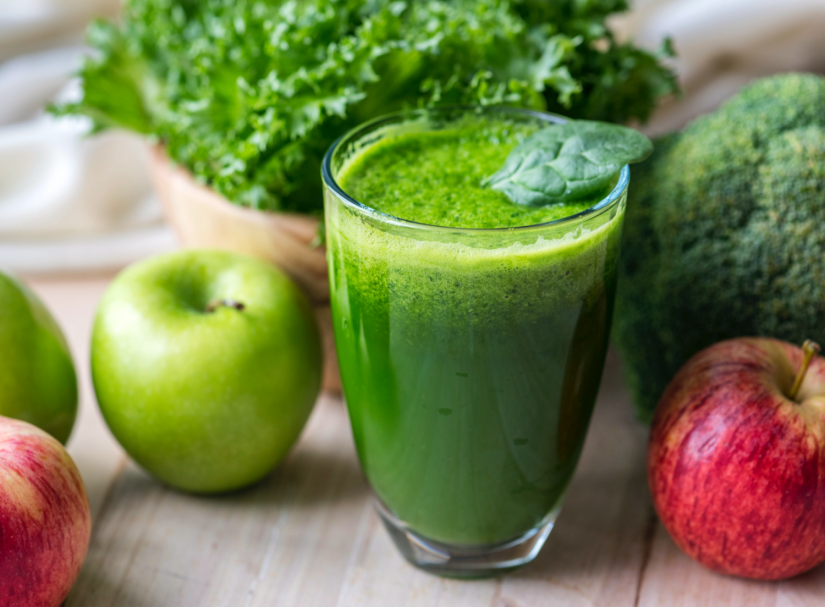
    My sister and I recently went to the City of Oaxaca, and it is always affirming for me to go to Mexico, but Oaxaca is just pure magic. Everything is so beautiful there — the textiles, the architecture, the pride of place, the colors, and of course, the food. We ate magnificently well there, from the 4 star Casa Oaxaca to the unpretentious La Florecita at El Mercado de la Merced. (Have you had squash blossom quesadillas? Amazing!) We took a fabulous cooking class from La Maestra Reyna Mendoza in Teotitlan Del Valle. We learned how to make Mole Rojo in a beautiful outdoor kitchen. We grinded the chiles and spices on a metate! And then we got to eat everything!   Everything we did was fantastic — one of the best vacations I have ever taken.  Being with my sister is such a joyful experience! I feel so blessed to be able play and work with her. It’s so much fun to eat with her because she can tell you what’s in the food while you’re eating it, just by taste. Let us not forget that she is La Madrina en La Cocina! She has developed and tested each and every one of our recipes! With the help of the fabulous Malena Perdomo, a certified nutritionist and diabetes educator, we bring you the healthiest food that our test kitchens have to offer.   This edición is about making small but important healthy changes. We’re with you on your journey to a healthier life. We all know that eating more veggies and fruit are the cornerstone of healthy eating. We are constantly adding more delicious ways to add more plant-based foods to our day. At De Las Mías, we recommend 3 cups of veggies and 2 fruits every day but the new USDA Dietary Guidelines are recommending that we go above and beyond.  There is no harm in eating more vegetables! But how do we do that? One way to add more healthy fruits and veggies to your day is to add them to breakfast. Add a bell pepper and some spinach to your huevos, and some berries to your avena! OR….Have yourself a Jugo Verde!     On our last day in Oaxaca, as we were walking down Hidalgo Street, I was snagged by a beautiful display of bicicletas, in all colors, adorned with handmade wooden baskets at the lovely hotel, Casa de la Sierra Azul. We walked into the courtyard and heard the angels sing! We couldn’t resist the inviting patio restaurant and promptly sat down to peruse the menu and order breakfast. The Jugo Verde caught my eye and I ordered it. It was the most refreshing and delicious juice I had ever tasted. Lori and I were trying to figure out what it had in it. It was psychedelic green! Not the green goop that you sometimes get from Odwalla in the States, but the most beautiful, vibrant green I’ve ever seen! We knew it had spinach in it, and I could taste the pineapple but we couldn’t figure out the rest. We asked the waiter and he said it had fresh nopales and yerba santa.   We struck up a conversation with the waiter and we told him about De Las Mías. He went on to tell us all about the magical properties of Jugo Verde, a time-honored Mexican tradition that promises to bring you good health, happiness, and beautiful skin.   We vowed to get back to the states, do some additional research and start testing out some Jugos Verdes of our own. We haven’t tried Jugo Verde with nopales, yet, and yerba santa is not that easy to find in Portland or Santa Fe, but here are 3 Jugos Verdes that I have been indulging in and I feel better already! Starting off my day with a refreshing Jugo Verde just feels right! It sets the intention for your day, como dicen las del New Age. To feel more grounded I follow it with a strong cup of coffee and avocado toast. Add a handful of almonds for protein, ¡y párale de contar! You’re set! Jugo Verde is a great way to include veggies and fruits with breakfast. These jugos are simple, don’t require any special equipment except a run-of-the-mill blender, and are packed with at least 2 servings of veggies and one serving of fruit! And that is just to get you going in the morning!   I also find that Jugo Verde is very energizing for the mid-afternoon slump when all I want to do is plop down to watch depressing news! So slam down some Jugo Verde, put on your tenis, and take your dog for a walk instead! SOOO much better for you than more screen time! Try these Mexican green juices!  


La Diosa Verde.

This one is my favorite. I feel righteous and strong after this one!

  • A handful of fresh spinach
  • 4 2-inch chunks of fresh pineapple
  • ½ a peeled cucumber
  • ½ a peeled apple
  • 1 cup of water
  • One or two squeezes of fresh lime
  • 1 teaspoon jalapeño juice
  • Ice cubes if you like ice in your jugo

Blend it on high until it turns into juice.  (Optional: Since I like sweet, I even add a ½ teaspoon of Stevia, but that’s just me.)  

Amor al Kiwi.

If you like kiwi, you will love this Jugo Verde.

  • One peeled and ripe kiwi
  • A handful of spinach
  • 1 teaspoon of fresh ginger
  • 1 stalk of celery
  • 1 cup of water
  • Ice cubes if you like ice in your jugo

Blend it until it turns into juice. (You can sprinkle Tajín on top for added punch!)  

Sana Sana, Jugo de Manzana.

I choose a super sweet apple for this one.  Have you tried Opal Apples? They are so sweet and delicious. Pink Lady is another sweetheart.

  • 1 cored and peeled apple
  • 2 stalks of celery
  • 1 cup of water
  • A handful of spinach
  • Ice cubes if you like ice in your jugo.

¡Andale!     A few notes on making Jugos Verdes in the blender: Basically, you can blend anything you like in your blender, so go nuts. You’ll need veggies, fruits and water for jugos. More on licuados and smoothies here. I sometimes add a bit of unsweetened juice, although water is really best. I also add a dash of salt, pepper, lime juice, lemon juice, jalapeño juice, or Tajín. You could even blend up a serrano in there if you dare! Just do what tastes good to you and makes you feel like the Righteous Green Goddess that you are! I have recommended this little book to you before and I will do it here again: The Blender Girl by Tess Masters. I like her non-pretentious approach to eating more vegan meals and we could all stand to eat less meat and more veggies, fruits and plants of all kinds. Your body and Mother Earth will thank you. Try these and let me know what you think! Keep it simple and delicious! Do you have a favorite Jugo Verde? Share your favorite with us and we’ll choose a few to feature on our Instagram feed!  

¡Hola, Sabrosa!, Edición No. 7: Change, English, Healthy Body, Healthy Mexican Food

Meatless Monday

Meatless Monday – A Fun Way to Start Eating More Veggies

One of my healthy living goals for the new year is to cut down on meat, and eat more more fruits and vegetables.  

A fun way to do this is to start a Meatless Monday tradition. So we agreed that we could try new recipes, and start the week off with a slightly healthier approach. Also, in these times of climate change, I am constantly worried about our poor little planet! Eating less meat is good for our bodies and good for the planet – a win-win!  

I was remembering my life in Nogales and how we had Meatless Mondays at my Nana’s house “across the line,” on the Mexican side of border. And then I realized that it wasn’t just Meatless Monday, but also Meatless Tuesday and Meatless Wednesday. And then, wait! Hold on. We pretty much went meatless every day except for maybe Carne Asada Sunday!  

The reason wasn’t that we were trying to save the planet, or lower our cholesterol. The reason was that my Nana and my aunts and uncles who lived in that old adobe house on the hill, didn’t have the money to buy meat for a giant family.

We ate frijoles de la olla, frijoles refritos, sopa de frijoles, enfrijoladas, burritos de frijoles, frijoles con chorizo, tostadas with you guessed it, frijoles, and even a special trick I learned: Cave out a bolillo roll and fill it with frijoles and queso fresco! YUM! This all paired really well with my Nana’s killer salsa de chile verde. And ¿sabes qué? I never once felt deprived. I felt loved and satisfied and nurtured.

When we were on the Mexican side of the border, we were poor and we had a super healthy diet. We never ate large portions because there weren’t that many portions to go around. But we never went hungry either, so we were lucky.

You’ve heard it here before and we will say it again: the traditional Mexican diet is a SUPER healthy diet! Our Mexican diet was pretty much dominated by protein from beans, eggs and queso fresco, and bolstered by corn, which is the grain of the gods. (No fooling.) Sure, we ate meat with our meals, but they weren’t dominated by large portions of it. If we had meat, it was in very moderate to small amounts, and mostly for taste.

But here we are now, trying to adopt a healthier way of living. And all we Mexicans have to do is look back to the way of our Nanas and Tatas!

In doing research about Meatless Mondays, I found out that Meatless Monday started as a movement by our colegas at the Public Health School at Johns Hopkins University, back in 2003. Through research, they discovered that Monday was the ideal day to try to recover from the overindulgence of weekends. (Overeating, disrupted sleep patterns and possibly even drinking too much.)  

Some of this research showed that people were motivated by making a small but significant change at the start of the work week. That is where the idea of Meatless Monday came from. As more and more people adopted the idea of not eating meat on Mondays, they became healthier, poco a poco, over time. Here is more evidence that small changes over time are the ones that last. It wasn’t a drastic thing, but just one day a week. The idea is that we could become just a little healthier if we took this small step. We would become healthier and the planet would benefit too.  


So Meatless Monday took off and other countries and organizations started getting on board. Australia tried it. Paul McCartney promoted it. Even beef-consuming Argentina got into the act in 2017 by declaring Vegan Mondays!

If you want to learn more about the history of Meatless Mondays, see the Wikipedia article. It has a fascinating amount of information that will surely inspire you to try it!

So at De Las Mías we want to encourage you to give Meatless Monday a try. Here’s another way to eat more veggies and fruits for your health and help Mother Earth carry the load.

Here are some of the benefits of Meatless Mondays:

  • Lower your cholesterol and therefore, your risk of heart attack and stroke.
  • Help you get to a healthier weight.
  • Help lower your risk of high blood pressure.
  • Increase your intake of fiber and its health benefits.
  • Take a little stress off the planet (plant-based foods take less energy).
  • Use less water to grow food (plant-based foods take less water than animal-based food).
  • Plant-based foods pollute less than cows.  

Try some meatless dishes from De Las Mías:

And we’re curious…

  • What’s your favorite meatless dish?  
  • How would your family feel about starting a Meatless Monday tradition at your house? Would they be on board?
  • What is the biggest barrier to going meatless on Mondays?

Sources:

https://en.wikipedia.org/wiki/Meatless_Monday

https://www.economist.com/the-economist-explains/2017/10/19/argentinas-vegan-mondays

Healthy Mexican Food

The Taquito Diet™


The Taquito Diet

At De Las Mías we don’t normally use the word – ‘diet.’ Diets have gotten to be trite and boring, and we don’t like them very much. We know that if you go on a diet, the chances of you succeeding are slim. (No pun intended.)  

Therefore, De Las Mías is not a diet club. We are a healthy lifestyle community. And we are here to help you take steps to be your healthiest self! We focus on the pleasure of eating and cooking good food. We don’t believe in deprivation, as evidenced by our “Poquito de Todo” philosophy. But because we are a healthy lifestyle community and we want to meet your needs, we do pay attention and many of you want to lose weight and want to get healthier and stronger.  

We’re with you! We support you on  your healthy lifestyle journey, but we don’t want you to go on a diet.

Proud Latinas

As you get to know De Las Mías better, you also know that we are proud of being Latinas, and we love nuestra comida. You will find De Las Mías recipes that are Mexican, New Mexican, and Southwestern. We are proud Latinas, Mexicanas and Chicanas and we want you to be proud too! We come from a rich Indo-Hispano tradition and we have a passion for our indigenous roots and foods!

As we grow and add more recipes and ideas on how to live healthier and more joyful lives, we want to add more ways that you can connect with your roots through your enjoyment of delicious, healthy food. And since most Latinas are both indigenous and Spanish, we want to fold in our love for the Mediterranean way of eating and enjoying food. So we are providing you with two ‘undiets’: The Mediterranean (Un)Diet and The Taquito (Un)Diet!

The Taquito (Un)Diet!

I am so proud of being Mexican! We are blessed with one of the most diverse, healthy and delicious foods in the world! Our Indigenous mothers and Spanish fathers, through many trials and tribulations combined to make us and our food, Mestizas! And what a beautiful combination that ended up to be. If you feel like geeking out on the origin of the taco, check out the Smithsonian: Where did the Taco Come From?

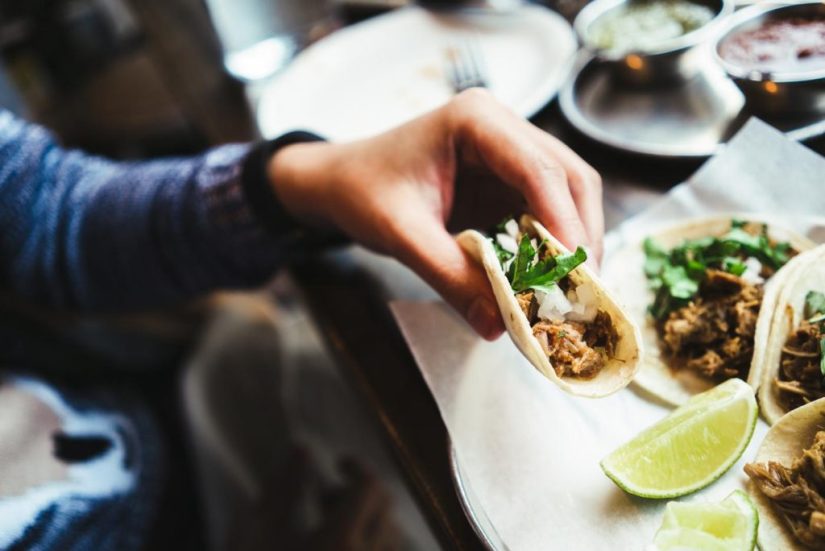
Take the humble taco, a portable bundle of deliciousness and health! It’s the perfect package of whole grains, lean protein, vegetables and even sometimes fruit!

You’ve heard of the grapefruit diet, the celery diet, the paleo diet, the Atkins diet, the blah-blah-blah diet! Now let me tell you about the Taquito Diet™, Baby! It’s a modular, delicious, nutritious and soul feeding pathway to health! You saw it here first!

Here is the skinny on the Taquito Diet:

1. You can make a healthy taco!

2. You can lose weight and enjoy your soul food while eating tacos.

3. You can mix and match, get creative and have fun while achieving a healthy lifestyle for you and your familia!

The taco could change your life! ¡Creélo! Believe, Comdres!
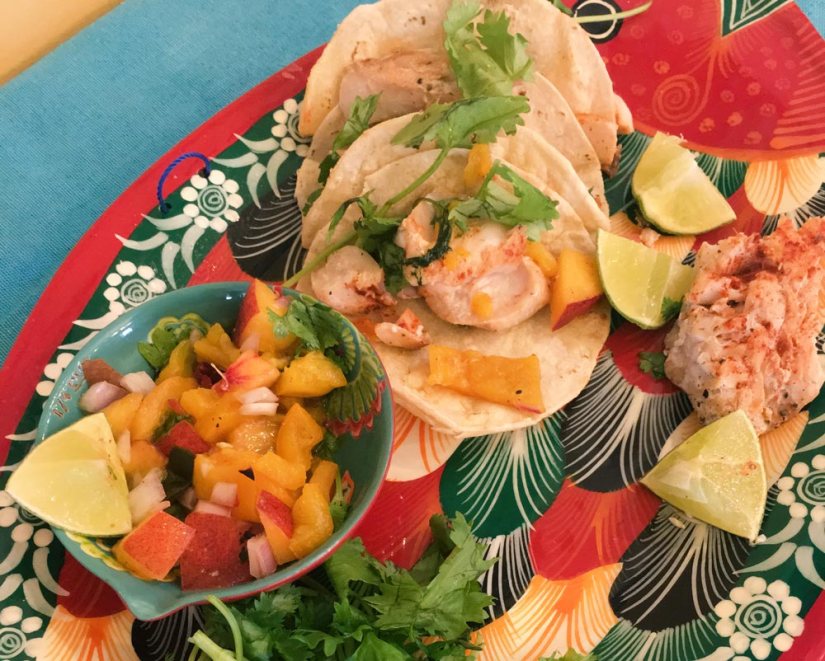
Here’s how it works:

1. Start with 3 corn tortillas.

We’re all about eating more whole grains and these thousand year old tortillas are a great low calorie, whole-grain, flavor-packed vehicle for all things deliciosa!

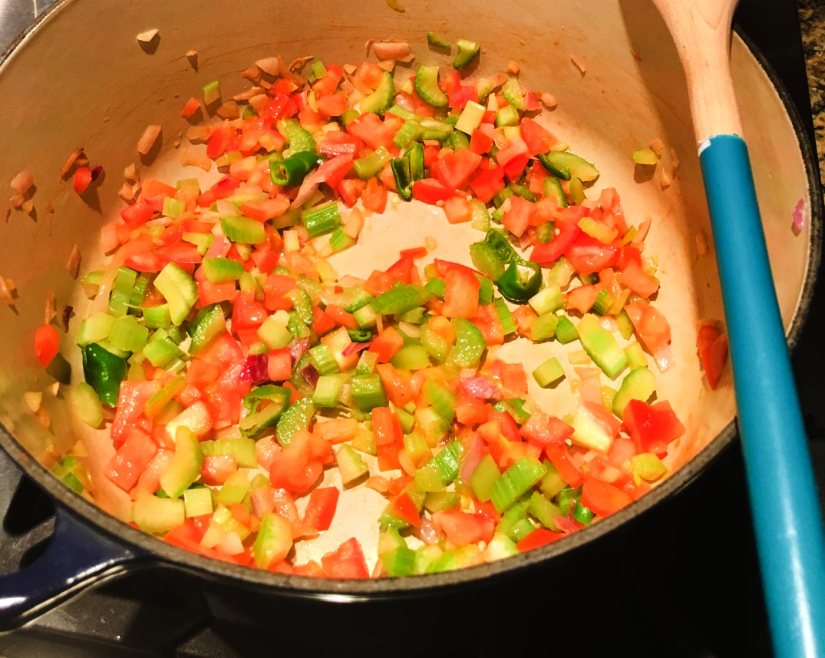
2. Make a sassy sofrito.

One of the very first things that my mother taught me about cooking is to always start with a sofrito. She said that my food would always be delicious if I started whatever I was doing with this magic concoction. It seems like every family has their own version of sofrito. My sister always adds a little fresh garlic, carrots and celery. My Ecuadoran consuegra calls it “Refrito,” and hers includes garlic, onion and achiote.

In our family, it meant simply frying up green chile, onion and tomato in a bit of olive oil before adding your meat, your eggs, or your frijoles de la olla. In Spain, sofrito almost always involves garlic and red pepper. So, the takeaway here is that almost all Spanish, Mexican and Latin American cooks use some kind of sofrito.

Hint: this is one place to add a veggie serving to your day.
3. Add a delicious meat or veggie heart!

A roasted chicken is an easy, simple way to fill your taquitos. Sometimes if we haven’t had a chance to cook dinner, I will stop by the market and get one of those rotisserie chickens that are already roasted. I remove the skin and chop it up for taquitos. I always start with the simple green chile, onion and tomato sofrito my mom taught me to make.

Carne asada is always a class taco choice. Or for the vegetarians in your life a delicious spicy cauliflower.


4. Top it off with soul-affirming salsa. ¡Qué viva el chilito!

Salsa is in our blood. Our indigenous ancestors were making salsas before the Spaniards landed. ¿Sabes qué? Mexican salsas originated with the Aztecs. And apparently, the Incas and Mayans were no slackers when it came up to making these tasty concoctions. (Ají, any one?) The base of a good salsa is, el chilito! You cannot have a good salsa without chiles, but the next most common ingredient is el tomate — the tomato.

Salsa, of course, has evolved and many other healthy ingredients were added such as cilantro, parsley, epazote and other spices, and lest we forget, the heroic avocado! Today, there are hundreds of different kinds of salsas. We love fruit salsas, like mango, peach and jicama salsa. Salsas can be raw or cooked. My own favorites are raw salsas, like Pico de Gallo with jalapeños or a good Hatch green chile, or even the humble Anaheim! But one thing is for sure, and that is that salsas are healthy foods that you can use in great abundance and feel good about it. Get your veggies here, Comadres!

Here are some of our favorite salsas:

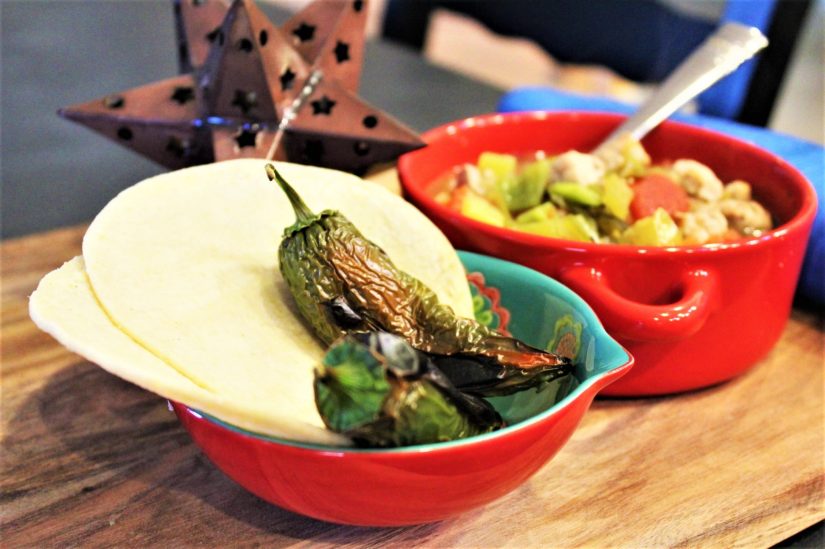
5. Serve with a side of roasted veggies or raja de chile verde.

And just for safe measure another serving a veggies. 😉

Here are 4 Taquito Diet Recipes in our app to start you on your journey to a better taco!

  1.  Tacos de Camaron
  2.  Tacos de Atun
  3.  Pork Taquitos
  4.  Lazy Sari Avocado taquitos

All of that for just about 500 calories! No fooling. ¡Buen provecho, Guapas!

〰️

Check out the De Las Mias app. It’s free and ready for download in the Google Play Store.  Follow us on Facebook and Instagram @delasmiaslife.

¡Hola, Sabrosa!, Edición No. 6: Healthy Eating, Edición No. 8: Healthy Habits, English, Healthy Mexican Food

The Taquito Diet™


The Taquito Diet

At De Las Mías we don’t normally use the word – ‘diet.’ Diets have gotten to be trite and boring, and we don’t like them very much. We know that if you go on a diet, the chances of you succeeding are slim. (No pun intended.)  

Therefore, De Las Mías is not a diet club. We are a healthy lifestyle community. And we are here to help you take steps to be your healthiest self! We focus on the pleasure of eating and cooking good food. We don’t believe in deprivation, as evidenced by our “Poquito de Todo” philosophy. But because we are a healthy lifestyle community and we want to meet your needs, we do pay attention and many of you want to lose weight and want to get healthier and stronger.  

We’re with you! We support you on  your healthy lifestyle journey, but we don’t want you to go on a diet.

Proud Latinas

As you get to know De Las Mías better, you also know that we are proud of being Latinas, and we love nuestra comida. You will find De Las Mías recipes that are Mexican, New Mexican, and Southwestern. We are proud Latinas, Mexicanas and Chicanas and we want you to be proud too! We come from a rich Indo-Hispano tradition and we have a passion for our indigenous roots and foods!

As we grow and add more recipes and ideas on how to live healthier and more joyful lives, we want to add more ways that you can connect with your roots through your enjoyment of delicious, healthy food. And since most Latinas are both indigenous and Spanish, we want to fold in our love for the Mediterranean way of eating and enjoying food. So we are providing you with two ‘undiets’: The Mediterranean (Un)Diet and The Taquito (Un)Diet!

The Taquito (Un)Diet!

I am so proud of being Mexican! We are blessed with one of the most diverse, healthy and delicious foods in the world! Our Indigenous mothers and Spanish fathers, through many trials and tribulations combined to make us and our food, Mestizas! And what a beautiful combination that ended up to be. If you feel like geeking out on the origin of the taco, check out the Smithsonian: Where did the Taco Come From?

Take the humble taco, a portable bundle of deliciousness and health! It’s the perfect package of whole grains, lean protein, vegetables and even sometimes fruit!

You’ve heard of the grapefruit diet, the celery diet, the paleo diet, the Atkins diet, the blah-blah-blah diet! Now let me tell you about the Taquito Diet™, Baby! It’s a modular, delicious, nutritious and soul feeding pathway to health! You saw it here first!

Here is the skinny on the Taquito Diet:

1. You can make a healthy taco!

2. You can lose weight and enjoy your soul food while eating tacos.

3. You can mix and match, get creative and have fun while achieving a healthy lifestyle for you and your familia!

The taco could change your life! ¡Creélo! Believe, Comdres!

Here’s how it works:

1. Start with 3 corn tortillas.

We’re all about eating more whole grains and these thousand year old tortillas are a great low calorie, whole-grain, flavor-packed vehicle for all things deliciosa!

2. Make a sassy sofrito.

One of the very first things that my mother taught me about cooking is to always start with a sofrito. She said that my food would always be delicious if I started whatever I was doing with this magic concoction. It seems like every family has their own version of sofrito. My sister always adds a little fresh garlic, carrots and celery. My Ecuadoran consuegra calls it “Refrito,” and hers includes garlic, onion and achiote.

In our family, it meant simply frying up green chile, onion and tomato in a bit of olive oil before adding your meat, your eggs, or your frijoles de la olla. In Spain, sofrito almost always involves garlic and red pepper. So, the takeaway here is that almost all Spanish, Mexican and Latin American cooks use some kind of sofrito.

Hint: this is one place to add a veggie serving to your day.

3. Add a delicious meat or veggie heart!

A roasted chicken is an easy, simple way to fill your taquitos. Sometimes if we haven’t had a chance to cook dinner, I will stop by the market and get one of those rotisserie chickens that are already roasted. I remove the skin and chop it up for taquitos. I always start with the simple green chile, onion and tomato sofrito my mom taught me to make.

Carne asada is always a class taco choice. Or for the vegetarians in your life a delicious spicy cauliflower.


4. Top it off with soul-affirming salsa. ¡Qué viva el chilito!

Salsa is in our blood. Our indigenous ancestors were making salsas before the Spaniards landed. ¿Sabes qué? Mexican salsas originated with the Aztecs. And apparently, the Incas and Mayans were no slackers when it came up to making these tasty concoctions. (Ají, any one?) The base of a good salsa is, el chilito! You cannot have a good salsa without chiles, but the next most common ingredient is el tomate — the tomato.

Salsa, of course, has evolved and many other healthy ingredients were added such as cilantro, parsley, epazote and other spices, and lest we forget, the heroic avocado! Today, there are hundreds of different kinds of salsas. We love fruit salsas, like mango, peach and jicama salsa. Salsas can be raw or cooked. My own favorites are raw salsas, like Pico de Gallo with jalapeños or a good Hatch green chile, or even the humble Anaheim! But one thing is for sure, and that is that salsas are healthy foods that you can use in great abundance and feel good about it. Get your veggies here, Comadres!

Here are some of our favorite salsas:

5. Serve with a side of roasted veggies or raja de chile verde.

And just for safe measure another serving a veggies. 😉

Here are 4 Taquito Diet Recipes in our app to start you on your journey to a better taco!

  1.  Tacos de Camaron
  2.  Tacos de Atun
  3.  Pork Taquitos
  4.  Lazy Sari Avocado taquitos

All of that for just about 500 calories! No fooling. ¡Buen provecho, Guapas!

〰️

Check out the De Las Mias app. It’s free and ready for download in the Google Play Store.  Follow us on Facebook and Instagram @delasmiaslife.

Healthy Mexican Food

Embracing Our Heritage Through the Love of Food

Our Rich Heritage Embraced Through Food!

At De Las Mías, we embrace our indigenous and  our Spanish roots.There is so much history that shaped our Indo-Hispano heritage, and some of it is not so good. Oppression and colonization caused pain and suffering. And because of that, we would sometimes like to abandon our past and reject the oppressor. There is merit in rejecting oppression and in countering the negative effects of colonization. But to deny or reject our past can also cause us to reject ourselves, and we don’t want that.

We want to embrace the whole messy thing that brought us to this place, and move on.

Our Heritage and Cultural Pride

I am equally proud of being Mexicana, Chicana, Latina as I am to be Española. I love that my Papá Pepe, my Spanish grandfather, left Spain by himself when he was 13 years old to come to ‘Hacer la America.’ And I’m proud that my Nana Concha, with her Yaqui roots, lived and struggled in a small village in the State of Sonora. This is my heritage and I am proud of it. 

I embrace the traditional and healthy Mexican way of eating, as well as the Mediterranean way of eating. The Mexican way of eating is rich in corn, native vegetables, chiles, nopalitos, tomatoes, beans, and chocolate (lots of chocolate!), and the Mediterranean way of eating is rich in vegetables, fruits, legumes, nuts, fish, olives and olive oil (lots of olive oil!).

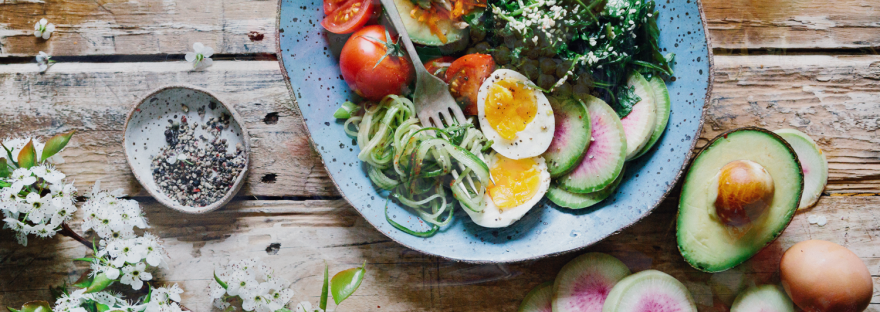
The Mediterranean Diet

There is ample research that the ‘Mediterranean Diet’ provides great health benefits. Adopting it as a way of life is an excellent way to prevent chronic conditions like diabetes, heart disease, cancer and hypertension.

We are working on having a whole array of Mediterranean inspired recipes to send your way, but for now, let’s take a look at what we mean when we say ‘Mediterranean Diet.’

What makes it special?

The Mediterranean Diet is a way of eating that involves traditional foods commonly eaten in the 16 countries that border the Mediterranean Sea. This way of eating involves eating lots of vegetables and fruits, along with a moderate amount of bread, whole grains, potatoes and nuts, and a lesser amount of dairy, eggs, poultry, and fish. There is almost no red meat in the classic ‘Mediterraneans Diet.’ It also involves copious amounts of olive oil, very little butter, and a little red wine.

According to Clark and Farrow, authors of the wonderful and affordable cookbook, Mediterranean, A Taste of the Sun in over 150 Recipes, these are some of the most common foods and spices that are part of a Mediterranean Diet:

  • Vegetables include artichokes, eggplant, fava beans, fennel, mushrooms, okra, onions, peppers, mostly sweet peppers like red and yellow peppers or pimientos, radicchio, radishes, spinach, tomatoes, grape leaves, zucchini, and olives.
  • Fruits characteristic of the ‘Mediterranean Diet’ are dates, figs, melons, peaches and oranges.
  • Dairy includes goat, cow and sheep cheeses, like Manchego! And of course, yogurt.
  • Legumes include garbanzo beans also known as chickpeas, lentils and navy beans.
  • Nuts include almonds, piñon nuts, walnuts and pistachios.
  • Herbs and spices are bountiful in the ‘Mediterranean Diet’ and perhaps that is the reason why it is so tasty and satisfying. Traditional Mediterranean herbs include basil, bay leaves, chives, cilantro dill, mint, parsley, rosemary, sage, tarragon, thyme, cardamom, chiles, cinnamon, coriander, cumin, mace, nutmeg, pepper and saffron!  
  • Fish, poultry and eggs are key proteins in the Mediterranean way of eating, but the small amount of red meat in this way of eating may account for the great benefits to heart health that are attributed to it.
  • The Mediterranean way of eating includes olive oil almost to the exclusion of any other kind of fat. Olive oil is one of the healthiest fats we can consume.

With this great variety of foods and flavors, how can we not enjoy the bounty of the Mediterranean table?

It is not a way of eating it’s a way of living.

A characteristic that many of us in North America forget to mention when we talk about the Mediterranean way of eating is that it is a lifestyle. It is not just about the food but about how you buy it, prepare it and share it with friends and family. The Mediterranean way of eating involves sitting around a table, talking, eating, sharing stories, taking it slowly and not rushing, being more mindful of the experience of good food and good company.  

So, embrace your multicultural heritage and delve into the Mediterranean way of eating, but take your time, cook it with love and attention, set a table, tell some stories and enjoy! ¡Buen Provecho!

〰️

Check out the De Las Mias app It’s free and ready for download in the Google Play Store. Follow us on Facebook and Instagram @delasmiaslife.

————

Source:

Clark, Jacqueline and Farrow, Joanna. Mediterranean, A Taste of the Sun in over 150 Recipes. Hermes House. 2003.


¡Hola, Sabrosa!, Edición No. 6: Healthy Eating, English, Healthy Mexican Food

Embracing Our Heritage Through the Love of Food

Our Rich Heritage Embraced Through Food!

At De Las Mías, we embrace our indigenous and  our Spanish roots.There is so much history that shaped our Indo-Hispano heritage, and some of it is not so good. Oppression and colonization caused pain and suffering. And because of that, we would sometimes like to abandon our past and reject the oppressor. There is merit in rejecting oppression and in countering the negative effects of colonization. But to deny or reject our past can also cause us to reject ourselves, and we don’t want that.

We want to embrace the whole messy thing that brought us to this place, and move on.

Our Heritage and Cultural Pride

I am equally proud of being Mexicana, Chicana, Latina as I am to be Española. I love that my Papá Pepe, my Spanish grandfather, left Spain by himself when he was 13 years old to come to ‘Hacer la America.’ And I’m proud that my Nana Concha, with her Yaqui roots, lived and struggled in a small village in the State of Sonora. This is my heritage and I am proud of it. 

I embrace the traditional and healthy Mexican way of eating, as well as the Mediterranean way of eating. The Mexican way of eating is rich in corn, native vegetables, chiles, nopalitos, tomatoes, beans, and chocolate (lots of chocolate!), and the Mediterranean way of eating is rich in vegetables, fruits, legumes, nuts, fish, olives and olive oil (lots of olive oil!).

The Mediterranean Diet

There is ample research that the ‘Mediterranean Diet’ provides great health benefits. Adopting it as a way of life is an excellent way to prevent chronic conditions like diabetes, heart disease, cancer and hypertension.

We are working on having a whole array of Mediterranean inspired recipes to send your way, but for now, let’s take a look at what we mean when we say ‘Mediterranean Diet.’

What makes it special?

The Mediterranean Diet is a way of eating that involves traditional foods commonly eaten in the 16 countries that border the Mediterranean Sea. This way of eating involves eating lots of vegetables and fruits, along with a moderate amount of bread, whole grains, potatoes and nuts, and a lesser amount of dairy, eggs, poultry, and fish. There is almost no red meat in the classic ‘Mediterraneans Diet.’ It also involves copious amounts of olive oil, very little butter, and a little red wine.

According to Clark and Farrow, authors of the wonderful and affordable cookbook, Mediterranean, A Taste of the Sun in over 150 Recipes, these are some of the most common foods and spices that are part of a Mediterranean Diet:

  • Vegetables include artichokes, eggplant, fava beans, fennel, mushrooms, okra, onions, peppers, mostly sweet peppers like red and yellow peppers or pimientos, radicchio, radishes, spinach, tomatoes, grape leaves, zucchini, and olives.
  • Fruits characteristic of the ‘Mediterranean Diet’ are dates, figs, melons, peaches and oranges.
  • Dairy includes goat, cow and sheep cheeses, like Manchego! And of course, yogurt.
  • Legumes include garbanzo beans also known as chickpeas, lentils and navy beans.
  • Nuts include almonds, piñon nuts, walnuts and pistachios.
  • Herbs and spices are bountiful in the ‘Mediterranean Diet’ and perhaps that is the reason why it is so tasty and satisfying. Traditional Mediterranean herbs include basil, bay leaves, chives, cilantro dill, mint, parsley, rosemary, sage, tarragon, thyme, cardamom, chiles, cinnamon, coriander, cumin, mace, nutmeg, pepper and saffron!  
  • Fish, poultry and eggs are key proteins in the Mediterranean way of eating, but the small amount of red meat in this way of eating may account for the great benefits to heart health that are attributed to it.
  • The Mediterranean way of eating includes olive oil almost to the exclusion of any other kind of fat. Olive oil is one of the healthiest fats we can consume.

With this great variety of foods and flavors, how can we not enjoy the bounty of the Mediterranean table?

It is not a way of eating it’s a way of living.

A characteristic that many of us in North America forget to mention when we talk about the Mediterranean way of eating is that it is a lifestyle. It is not just about the food but about how you buy it, prepare it and share it with friends and family. The Mediterranean way of eating involves sitting around a table, talking, eating, sharing stories, taking it slowly and not rushing, being more mindful of the experience of good food and good company.  

So, embrace your multicultural heritage and delve into the Mediterranean way of eating, but take your time, cook it with love and attention, set a table, tell some stories and enjoy! ¡Buen Provecho!

〰️

Check out the De Las Mias app It’s free and ready for download in the Google Play Store. Follow us on Facebook and Instagram @delasmiaslife.

————

Source:

Clark, Jacqueline and Farrow, Joanna. Mediterranean, A Taste of the Sun in over 150 Recipes. Hermes House. 2003.