¡Hola, Guapa!, ¡Hola, Sabrosa!, Edición No. 3: Stay On Track, Healthy Body, Healthy Comadres, Spanish

Cinco pasos para vivir una vida con Ganas y Salud

Así que tienes diabetes, Comadre…

En primer lugar, recuerda: Eres fuerte, eres poderosa y eres latina.  Con toda la diabetes que es aparente en nuestras familias y comunidades, las latinas vivimos vidas más largas que la demás de la población en los EEUU. Estamos bien hechas. Así que a pesar de que tenemos diabetes, todavía vivimos más tiempo que nadie.  ¡Ahora vamos a vivir, no sólo más tiempo, sino también más una vida más saludable! ¡Sí se puede! ¡Cuidémonos con Ganas y Salud!

Cuando se trata de diabetes, cuidarnos a nosotros mismas se quiere decir tomar estos cinco pasos:

  1. Consulta a un educador certificado en diabetes.
  2. Come sano.
  3. ¡Actívate, Ya!
  4. Maneja tu estrés.
  5. Busca y encuentra apoyo.

  1. Consulta con un educador certificado en diabetes. El primer paso para cuidar de tu diabetes es obtener buenos consejos de un experto.  Si tienes seguro, perfecto.  Si tienes Medicare o Medicaid,busca más información sobre DSMES.

El DSMES es el Programa de Educación y Apoyo para el Autocontrol de la Diabetes.  Este programa ofrece educación especial  sobre la diabetes y servicios de control a las personas con diabetes.  Estos son educadores certificados que son expertos en diabetes.  Ellos te pueden ayudar a encontrar un plan que se adapta a tus necesidades.  Aprovéchalo, si puedes. Si tienes Medicare o Medicaid, DSMES puede ser gratis.  Pide más información. Hay otros recursos muy buenos en los Estados Unidos para personas con diabetes.  Hay un programa llamado programa de autocontrol de la diabetes y el programa de autocontrol de enfermedades crónicas.  Ofrecen clases gratuitas.  ¡Aprenderás mucho sobre el autocuidado de la diabetes yencontrarás amigas! Comunícate con el departamento de salud local para obtener información sobre estas clases gratuitas.    A veces están disponibles en español.

  1. Come sano. ¿Qué significa eso?  Vamos a darte unos tips muy sencillos de parte del CDC.  Esta es una manera fácil de comer más sano cuando uno tiene diabetes.

El método del Plato.

Comer sano cuando tienes diabetes se trata de controlar tus niveles de azúcar en la sangre.  Las verduras con almidón y los granos procesados como la harina blanca, el arroz blanco, las tortillas de harina blanca y el pan blanco son solo algunos de los alimentos que te suben el azúcar en la sangre.  Este tipo de alimento te puede causar problemas. Puedes comer estos alimentos, pero con medida.  Tu cuerpo te lo agradecerá.  No quiere decir que nunca podrás comer pastel o bizcochitos o empanadas. Sólo significa que te tienes que cuidar a ti misma, y ser medida.  Nada de malo en ser  medida. (¿Te acuerdas de los consejos de mamá o de la tía?) El método del plato es una forma simple y visual de asegurarte que estás comiendo suficientes verduras, frutas y proteínas bajas en grasa.  Esto te ayuda a limitar comer alimentos con muchos carbohidratos.

A continuación, se explica cómo utilizar el método del Plato: También se conoce cómo My Plate o Mi Plato:

  • Comienza con un plato de cena de 9 pulgadas.
  • Llena la mitad con verduras no frescas y verdes como ensalada, judías verdes, brócoli, coliflor, repollo, pimientos, verdolagas, pepinos y
  • Llene una cuarta parte de tu plato con una proteína magra, como pollo, pescado, pavo, frijoles o huevos.
  • Llene una cuarta parte del plato con alimentos con carbohidratos. Los alimentos que son más altos en carbohidratos incluyen granos procesados, verduras con almidón (como papa), arroz, pasta, frutas y yogur. Una taza de leche también cuenta como alimento con carbohidratos.
  • Bebe agua o té sin azúcar.
  • Busca más recetas con verduras en nuestra Cocina. Hay recetas “Diabetes Friendly.”
  • Aprende a hacer más platillos vegetarianos.
  • Para merendar, come verduras como zanahorias, pepino con chilito, judías verdes, apio y jícama, también con chilito y limón.
  1. ¡Actívate, Ya! Asegúrate de ser activa de 30 a 45 minutos diarios.  Se puede ir a dar a caminar 15-20 minutos por la mañana y 15-20 minutos por la tarde.  No tienes que ir a caminar.  También puedes pasearte en bici.  Trabaje en tu jardín por 15-20 minutos y luego sal a caminar.

Caminar es gratis y lo más fácil.  Encuentra un lugar seguro.  Llámale a tu Comadre y salte, ¡Chica!   Ser más activa te ayudará a controlar el azúcar en la sangre y a llegar a un peso más saludable. No te dilates. Hazlo hoy.

  1. Maneje tu estrés. El estrés no es bueno para nadie, pero es especialmente difícil para las personas con diabetes.  Aprende sobre la relajación profunda. Hay muchos recursos gratuitos en línea que pueden Incluso, hasta puedes tomar 10 respiraciones relajantes profundas cada unas cuantas horas y hasta esto te ayudará a reducir el estrés.  Ve a pararte debajo de un árbol por 5 minutos y cálmate así. Date un paseo por tu vecindario y mira las flores.   Reza el rosario.  O usa las cuentas de oración a tu manera.
  2. Obtén apoyo. El apoyo moral es muy importante para las personas con diabetes.  Evita aislarte cuando te sientas mal o con poca energía.  Llámale a tu comadre y quéjate.  Tienes que desahogar.   Únete a un grupo de apoyo.  Toma una clase de autocontrol de la diabetes y encuentra nuevas amistades que también tengan diabetes.  Ponte en contacto con tus amigas y familiares y comparte tus sentimientos.  Encuentra personas que no te juzguen cuando no puedas cumplir con tu plan de comer bien.  No te dejes sentir culpable si no cumples con tu plan.  Nada más comienza de nuevo otra vez.

Recuerda que tú puedes vivir bien con diabetes.  Eres fuerte. Eres poderosa. ¡Eres latina!  ¡Y vives más tiempo que nadie! ¡Esa es una buena noticia! Ahora vive tu vida más saludable para que puedas vivir esa larga vida con ganas y salud.


¡Hola, Guapa!, ¡Hola, Sabrosa!, Edición No. 3: Stay On Track, Spanish

Así que tienes diabetes…

Cuando Emma se enteró por primera vez de que tenía diabetes, se fue a su cama a llorar. No se escapó de “la maldición”.  Así es como ella se refería a la diabetes, después de ver a su mamá quedarse ciega y a su prima perder una de sus piernas. Su hija Josie encontró a Emma hecha bolita como un bebé en el sofá. “No tiene que ser una maldición, mamá“, ella dijo. Josie, con el permiso de su mamá hablo con el médico sobre el nuevo diagnóstico. “Es impactante al principio“, dijo el médico, “pero hay maneras de controlar la diabetes. Su madre es una mujer fuerte y lista, y le ayudaremos a manejarlo“. Luego, el médico compartió buena información sobre la diabetes con Josie.  Y ahora, Josie le recordaba a su mamá que podía vivir una vida buena y saludable incluso con diabetes. “Hasta mi nana tuvo diabetes”, dijo Emma, todavía sintiendo el dolor del nuevo diagnóstico. “Pero esta no es la diabetes de tu nana, mamá“. Emma se sentó y miró a su sabia hija. “Esta es tu diabetes, mamá, y vamos a ayudarte a controlarla tan bien como sea posible“. El relato de Emma es solo una de tantas historias que las latinas hemos presenciado y vivido. Declarar que “Esta no es la diabetes de tu nana“, es importante. El cuidado de la diabetes ha progresado mucho desde que nuestros abuelos y tíos sufrieron a través de esta seria condición.  Y para quedar claro, la diabetes todavía puede ser trágica para nosotros los latinos.  Pero no tiene que ser así.  Y de esto se trata este artículo.
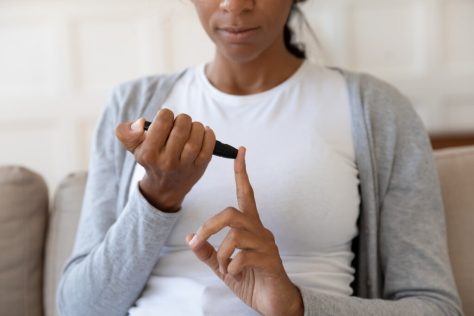
Apoyar a una persona que tiene diabetes:

  1. Una persona con diabetes no es “un diabético”. La persona tiene una condición.  Pero no es su identidad.
  2. Una persona con diabetes requiere apoyo de su familia. Esto significa ayudar y no juzgar. Evita castigar o culpar a las personas con diabetes cuando coman en exceso.  Esto no sirve y hasta puede perjudicar.
  3. Ofrece apoyo a la persona con diabetes. Por ejemplo, “Mamá, a juntarnos dos veces por semana y a irnos a caminar”. O “Mamá, echemos un vistazo a las nuevas recetas de verduras en De Las Mías y veamos qué podemos hacer para la cena”.

Si tienes diabetes:

  1. La educación sobre la diabetes funciona. Pídele al médico que te refiera a un educador certificado en diabetes.
  2. Hay muy buenas clases que ayudan a apoyar a las personas con diabetes. Comienza con el departamento de salud local y averigua sobre el Programa Tomando Control de Su Salud. En inglés son – Chronic Disease Self-Management Program y Diabetes Self-Management Program. Ambos programas son eficaces para ayudar a las personas con diabetes.  La mayoría de estas clases son gratis.

También existe el Programa de Educación y Apoyo para el Autocontrol de la Diabetes – Diabetes Self-Management, Education and Support – DSMES por sus siglas en inglés.  Se enfoca más a las específicas necesidades de la persona con diabetes. DSMES puede ser gratis o de bajo costo. Aprende más sobre estos programas en el sitio web:   www.cdc.gov/learnmorefeelbetter/programs/diabetes.htm

  1. Recuerda, la moderación es la clave para el control de la diabetes. No tienes que parar de comer las comidas que te gustan.  Hay maneras de aprender cómo comer bien sin sacrificar tus comidas favoritas.

Aquí hay unas ideas de comer de forma más saludable de la Asociación Americana de la Diabetes:

  • ¡Come más verduras y frutas!
  • Come carnes con poca grasa y proteínas de origen vegetal como frijoles.
  • Come menos azúcar.
  • Come menos alimentos procesados.
  1. Si estás confundida acerca de cómo alimentarte bien y controlar tu diabetes, pídele a tu médico que te refiera a una nutricionista certificada. ¡Busca recetas saludables para personas con diabetes en la App De Las Mías!
  2. Sé activa. Haz por lo menos 30 minutos de actividad física todos los días de la semana. Mueve tu cuerpo.  Haz cualquier actividad que mueve tu cuerpo, incluso el quehacer de la casa, trabajar en el jardín, caminar, nadar, bailar, andar en bici.
  3. Aprende a reducir el estrés. El estrés no es bueno para nadie, y menos para las personas con diabetes. Aprende a meditar. Reza. Rezar el rosario puede ser una forma de relajación profunda. Aprende otras técnicas de relajación como Tai Chi y Yoga.
  4. Si el médico te receta medicina, ¡tómala!
  5. Colabora con tu médico. Si no te gusta cómo te sientes con la medicina, díselo. Llámalo. Pide ayuda de tu médico.  ¡No seas tímida! Mereces una buena atención de la diabetes.
  6. Recuerda, “Esta no es la diabetes de tu nana.” ¡Puedes vivir una vida rica de bienestar y felicidad y tener diabetes!
¡Hola, Guapa!, ¡Hola, Sabrosa!, Spanish

La Prediabetes y las latinas: Es mejor saber

La Prediabetes y las latinas: Es mejor saber

En De Las Mías nos enfocamos en la salud de la latina y estamos prestando especial atención a la prediabetes. Quizás ya te hayas dado cuenta de que si eres latina, tienes sobrepeso y tienes una madre, padre, hermana o hermano con diabetes, deberías hacerte un chequeo para detectar prediabetes. Si eres latina, tienes mucha mas propensidad de padecer de diabetes que la población en general, y enterarte sobre la prediabetes te puede ayudar a prevenir que te dé diabetes. En este artículo te queremos animar a que tomes la prueba de la prediabetes. Esta es una prueba que fue desarrollada por el CDC, que es el Centro de Prevención de Enfermedades de los Estados Unidos. La prueba es fácil y disponible en este link. Si respondiste sí a más de 3 de las preguntas de la prueba, deberías de tomar nuestro consejo e ir a tu médico o clínica para hacerte un chequeo completo. Si tienes prediabetes, es mejor saber.

Es mejor saber.

Hemos visto los resultados de las investigaciones y está claro. Tu puedes prevenir o retrasar la diabetes y al descubrir que tienes prediabetes puedes hacer cambios para prevenir la diabetes.  Saber que tienes prediabetes te sirve como un sobre aviso muy importante. Y es cómo dice el dicho – Sobre aviso, no hay engaño.

Datos importantes sobre la prediabetes:

Aquí te preparamos una lista de datos importantes que puedes tener a mano.  Compártela con tus hermanas, hermanos, comadres y amigas. Compártela con todo mundo por que si tienes la oportunidad de prevenir la diabetes — ¿Por qué no hacerlo?   ¿Qué es la prediabetes? La prediabetes es tener niveles de azúcar en la sangre que son más altos de lo normal, pero no lo suficientemente altos como para que se diagnostique como diabetes.

  • Casi todas las personas con diabetes comenzaron con prediabetes.
  • Si tu médico te ha dicho que tienes prediabetes, debes tomarlo en serio. No tienes que “paniquearte,” sino actuar en una manera sana, sabia y saludable.
  • Tener prediabetes te pone en alto riesgo de desarrollar diabetes tipo 2 y otras enfermedades como la alta presión de la sangre y enfermedades del corazón.
  • A veces las personas se refieren a la prediabetes como estar al borde de la diabetes. En inglés le dicen “borderline.” Quiere decir que estás casi al punto de tener diabetes.
  • A veces los médicos llaman a la prediabetes “alteración de la tolerancia a la glucosa” o IGT, o alteración de la glucosa en ayunas, que es IFG.
  • No importa cómo lo llamen, no lo ignores.
  • No hay síntomas claros para la prediabetes. Es posible que la tengas y no lo sepas. La mayoría de la gente que tiene prediabetes, no lo saben.
  • Si un médico te ha dicho que tienes prediabetes, haz los cambios saludables que se recomiendan y házte un examen para detectar la diabetes, por lo menos, una vez al año.

Hay 2 tipos de pruebas que el médico podría recomendar para detectar prediabetes:

  • Un análisis de sangre en ayunas. En ayunas quiere decir que no comes nada por 8-10 horas antes de hacerte el examen de la sangre. Si tu nivel de azúcar en la sangre está entre 100 y 125, es probable que tengas prediabetes. Si tu nivel es menos de 100, es normal. Si tienes más de 125, es probable que tengas diabetes. Es muy importante que consultes con tu médico después de hacerte exámenes de la sangre.
  • Una prueba de A1C, que también es un análisis de sangre, te indica cuánto azúcar (glucosa) ha estado en la sangre en los últimos 3 meses. Algunos médicos revisan tu A1C si sospechan que tienes prediabetes y otros no. Si tu A1c está entre 5.7 y 6.4, probablemente tengas prediabetes.

Prevención de la diabetes tipo 2

Los expertos sobre la diabetes del American Diabetes Association nos aconsejan lo siguiente: “No desarrollarás diabetes tipo 2 automáticamente si tienes prediabetes. Para algunas personas con prediabetes, el tratamiento temprano en realidad puede reversar los niveles de glucosa en la sangre a niveles normales”. Las investigaciones muestran que tu puedes reducir tu riesgo de diabetes tipo 2 por hasta 58% si haces lo siguiente:

  • Perder el 7% de tu peso corporal (o 15 libras si pesa 200 libras)
  • Hacer ejercicio moderado (como caminar a paso ligero) 30 minutos al día, cinco días a la semana

No te apresures si no puedes llegar a tu peso corporal ideal. Perder incluso 10 a 15 libras puede hacer una gran diferencia. Estas son algunas buenas recomendaciones para reversar la prediabetes. Estos consejos están de acuerdo con los consejos que te damos en De Las Mías.

  • ¡Come más frutas y verduras! Utilice nuestra lista saludable – Healthy Lifestyle Checklist – de De las Mías para mantenerte en el camino!
  • Come pescado 2 veces por semana.
  • Come carnes magras y quítale el pellejo al pollo o al guajolote antes de cocinarlo.
  • Come más proteínas de origen vegetal como… ¡frijoles!
  • Asa, hierve, coce al vapor o hornéa tu comida en lugar de freirla.
  • Guisa tu comida con aceite de oliva o de canola en lugar de manteca o mantequilla.
  • ¡Bebe más agua! Utiliza nuestra Checklist Saludable para recordarte que debes beber 6-8 vasos de agua por día.

Aquí hay algunas cosas para reducir:

  • Refrescos con azúcar.
  • Jugos de frutas comerciales.
  • Comida chatarra.
  • Azúcares añadidos, como los que se encuentran en los alimentos procesados.
  • Carnes altas en grasas y procesadas, como hot dogs, salchichas, chorizo comprado en la tienda y tocino.
  • Vigila las grasas trans. Lea las etiquetas de los alimentos envasados.
  • Limita tu consumo de alcohol. Una bebida por día si eres mujer y a 2 si eres hombre.

Fíjate en qué tan parecidos son estos consejos de la American Diabetes Association a los De Las Mías. Lee nuestro volante sobre los 9 pasos para una alimentación saludable. Descarga nuestra App.  Utiliza nuestra Healthy Lifestyle Checklist y consigue tus ¡Esos! Recuerda: Si te han dicho que tienes prediabetes, considérala una oportunidad de oro. Encuentra una clase del DPP Nacional cerca de ti e inscríbete. ¿Y qué tal esta idea? Si tiene amigas, comadres y familiares que tienen prediabetes, comienza tu su propio grupo de apoyo. Y una cosa más… Sé amable contigo misma. Busca apoyo. Da apoyo. Únete a la comunidad de De Las Mías. ¡Acompáñanos! ¡Unidas por una Vida Saludable!   La App de De Las Mias es gratis y está lista para descargar en Google Play Store o App Store.  Síguenos en Facebook e Instagram @delasmiaslife.

¡Hola, Guapa!, ¡Hola, Sabrosa!, Edición No. 7: Change, Spanish

De Las Mías – Técnicas Poderosas: Una receta para el éxito

Metas S.M.A.R.T.

¿Quieres ser más saludable, más poderosa y recibir más apoyo de tus amigas, comadres y familia? Nosotras también queremos eso para ti. ¡Estamos aquí para ayudarte!

Un viejo dicho dice, «Del dicho al hecho es largo trecho.»  – Una cosa es decirlo y otra es hacerlo.

Estamos aquí para darte técnicas para tu “trecho”.

Otro viejo dicho, este de nuestros antecedentes chinos, es «El maestro aparece cuando el estudiante está listo».  Si estás lista, aquí estamos.

En De Las Mías hablamos mucho sobre cómo hacer cambios positivos que te lleven al camino del bienestar.  He aquí un método, o sea, una técnica que te ayudará a lograr tus metas.

Se llama SMART  Goals en inglés – Metas inteligentes –

Metas SMART – Por sus siglas en inglés significa – Specific, Mesurable, Attainable, Realistic, Timely – En español lo presentamos como:

Singular (Específico), Medible, Alcanzable, Realista, Temporizado

En De Las Mías creemos que, para poder efectuar cambios positivos en nuestras vidas, primero tenemos que estar listas. Así que toma unos momentitos y házte estas preguntas:

  • ¿Has estado pensando en hacer un cambio en tu vida?
  • ¿Has estado pensando en comer más frutas y verduras?
  • ¿Has estado pensando en salir a caminar todos los días?

Si has estado pensando en hacer cambios saludables, lo más probable es que estás lista para pasar del pensar al hacer.  Pero, para que tengas éxito en hacer un cambio, necesitas un plan.  No es suficiente decir que lo vas a hacer. Tienes que llevarte al siguiente paso importante.

Para esto te presentamos la técnica S.M.A.R.T.:

Aprender a establecer metas es un ejercicio poderoso.  Aquí te presentamos una técnica que se ha probado eficaz y que puede encaminarte hacia una vida más poderosa en muchas áreas de tu vida. ¡Ponla en práctica! Compártelo con tus amigas o comadre.  Avísanos si te podemos ayudar.

¿Qué significa SMART? Aquí te explicamos lo que significan estas siglas, en español

Singular (y Específico) Esto significa que le das detalles a tu meta.  Por ejemplo, no sólo dices «Voy a ser más activa».  Dices, «Hoy, voy a empezar a caminar por 30 minutos y lo haré  3 veces por semana».

Medible – ¿Cómo sabrás que cumpliste tu meta?  Podría ser tan sencillo como escribirlo en una nota post-it y pegarla al refri.

Si utilizas la App de De Las Mías, llévate tu móvil contigo y la App lleva cuenta de tu caminata.  Algunas usan Fitbits u otro tipo de “wearable”. Ahora puedes sincronizar tu wearable  con la App.

Alcanzable – Esto significa que es posible cumplir con tu meta. Si te duelen los pies cuando caminas, no es alcanzable caminar por 30 minutos.  Pero, lo podrías intentar por 10 minutos a la vez.  También podrías bailar, pasearte en tu bici, o nadar.  Lo importante es establecer una meta que realmente puedas lograr.

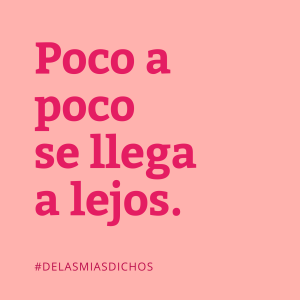
Si tu meta es realístico y alcanzable vas a tener más éxito. Recuerda que paso a paso se llega a lejos.

Relevante: ¿Tiene sentido tu meta? ¿De verdad, crees que es importante?  ¿Pregúntate – en quién te convertirás cuando cumplas con esta meta?

Temporizado – Establece cuando vas a caminar, cuántas veces a la semana lo vas a hacer y por qué tanto tiempo. Al principio, pon tu esfuerzo en una semana a la vez, en lugar de un año.  Entre más semanas logres, más te vas a ir acostumbrando.  Esto quiere decir que estás formando hábitos.

Este es un ejemplo de un meta SMART.

A partir de mañana, voy a caminar por 20 minutos durante mi hora de comer.   Voy a caminar 3 veces esta semana.  Al final de la semana, me reportaré conmigo misma y con mi comadre y veré si necesito cambiar mi meta para la próxima semana o mantener esto hasta que me sienta satisfecha.

Esta técnica – SMART – funciona mejor si la compartes con alguien.  Comprometerte con alguien es una manera poderosa de hacer cambios saludable porque te haces más responsable por tu meta.  ¡Aquí es donde entran tus amigas y comadres!  Comparte tus metas SMART con alguien que te estime y que quiera que tengas éxito.

¡Buena suerte!

¡Hola, Guapa!, ¡Hola, Sabrosa!, English, Healthy Body, Healthy Comadres

De Las Mías Tools: Recipe for Success

Setting S.M.A.R.T. Goals

Do you want to be healthier, more powerful and lead a much more supported life?  We want that for you too! And we are here to help.

As the old dicho goes, “Del dicho al hecho es largo trecho.”  –  From saying it to doing it is a long stretch of road.

We are here to give you tools for your trecho.

Another old dicho, this one from our Chinese antecedents is, “When the student is ready, the teacher appears.”  If you’re ready, we’re here. We would be happy to be your teacher.

At De Las Mías we talk a lot about making positive changes that will take you on the road to a healthier life.

Here is a tool for your toolbox: It’s called S.M.A.R.T. Goals. SMART stands for Specific, Measurable, Attainable, Relevant, Timely.

We believe that anytime we want to make a change, we first must be ready for it.  So, consider this…

  • Have you been thinking of making a change in your life?
  • Have you been thinking of eating more fruits and vegetables?
  • Have you been thinking of getting out on a daily walk?

If you have been thinking about making healthy changes, chances are you are ready to go from thinking about it to doing it. But, to make a change, you need a plan. It isn’t enough to say you’re going to do it. You must take yourself to the next important step.

Setting S.M.A.R.T. Goals

Learning how to set goals is a powerful exercise.  Here is a well-tested tool that may get you on the road to making healthy changes in all areas of your life.  It’s called the SMART Goals tool.  Try it! Share it with your comadre.  Let us know how we can help!

What does SMART stand for?

Specific – This means you give details to your goal.  For example, you don’t just say “I am going to be more active.”  You say, “Today, I am going to start walking for 30 minutes and I will do it 3 times per week.”

Measurable – How will you know that you met your goal?  Keep track and measure it.  It could be as simple as writing it down on a post it and put it on your fridge.

If you use the De Las Mías App, keep your phone with you and the App will track your steps and record it for you.   Some people wear Fitbits or some other kind of wearable.  This is another way to measure your goals Now, you can even sync your wearable to the De Las Mías App.

Attainable – This means your goal is possible for you. For example, if your feet hurt when you walk, then it’s probably not attainable for you to set a walking goal of 30 minutes.  You could try 10 minutes at a time and build up.  You could try some other form of being active such as dancing, cycling, or swimming.  The important thing is to set a goal you can do.  Be realistic and get better results. Don’t shoot for the moon on the first try.  Slow and steady wins the race.

Relevant – Does your goal make sense to you?  Do you believe that it is important?  Does it fit with who you want to become?  It has to be something you want and that you believe has value.  Otherwise, it won’t work.

Timely – Set a time for when you are going to do it and for how long.  Some women even put it on their calendar.  Setting a goal for a week at a time is better than setting it for the whole year.

Here is an example of a SMART Goal.


Starting tomorrow, I am going to walk for 20 minutes during my lunch break.  I am going to walk every other day for this week.  At the end of the week, I will check in with myself and my comadre and see if I need to change my goal for next week or keep this up until I feel satisfied.

We believe that the SMART Goal tool works better if you have someone to share it with.  Sharing a goal helps keep us accountable and it is a powerful way to make healthy changes.  This is where your amigas and comadres come in.  Share your SMART goal with someone who cares about you and wants you to succeed.

¡Buena suerte!

¡Hola, Guapa!, ¡Hola, Sabrosa!, Edición No. 8: Healthy Habits, Spanish

Latina y Saludable

En De Las Mías nuestra filosofía es una de orgullo por nuestra comida, nuestra cultura y nuestros cuerpos. Esta es la manera que nos empoderamos para vivir una vida más saludable. No rechazamos nuestras costumbres ni nuestra manera de ser.  Nos aceptamos tal y como somos – todo el paquete – y así seguimos buscando el camino a la buena salud.

Los hábitos son los pilares de la vida y por eso en De Las Mías nos enfocamos en construir hábitos saludables.

Qué la vida saludable sea nuestra costumbre

Qué bonito fuera si pudiéramos vivir nuestras vidas en una manera saludable, como de costumbre. Nuestro camino no se trata de ir al país de los skinny jeans. Se trata de hacer cambios saludables poquito por poquito, siempre con la confianza que vamos a un destino sano y saludable.

Ya basta con las dietas

De Las Mías no es un Club de Dieta, porqué las dietas no funcionan.

Aunque no seamos un Club de Dieta, buscamos una solución sana y moderada al sobrepeso. Somos latinas, y nos queremos sentir guapas y atractivas, pero también sanas y fuertes.

Deja de ponerte en dieta

El dilema del sobre peso tiene solución. Pero repito que ponerte “en dieta” no es la solución. Sé que no me crees así que sigue leyendo…

“¿Tomarías un medicamento que ha fracasado el 95 por ciento del tiempo? Esa es la tasa de fracaso de la mayoría de las dietas tradicionales”. Eso es lo que Rebecca Scritchfield, una dietista licenciada, y autora de “Body Kindness” declara en su libro.

Imagínate, ¡Mujer! Gastamos miles de millones de dólares al año en dietas que no funcionan.

Buscamos la forma mágica de bajar de peso, la dieta mágica…Pero la dieta mágica no existe.

Lo que sí existe es una manera moderada y positiva de llegar a nuestros metas de vivir una vida saludable.

Aquí va: Primero, deja la dieta. Segundo, agrégale el amor propio y el hecho de aceptarte tal y como eres. Tercero, comienza a tomar pequeños pasos saludables y que se te conviertan and hábitos saludables.  Y así formando los buenos hábitos vas a llegar a tu destino de la buena salud. Paso por paso te vas a sentir mejor y vas a lucir mejor. Con el tiempo si sigues tu camino vas a llegar a un peso natural para ti.

Esta técnica te ayudará a construir los hábitos sanos y saludables que te van a durar toda la vida. Si tu dominas estos buenos hábitos poco a poco, vas a sentirte cómo una Super Mujer – Super Poderosa.

Nuestros hábitos y nuestra identidad

Otro concepto que estuve estudiando es de James Clear, autor de “Atomic Habits.” El conecta los hábitos con la identidad personal. Clear declara que para cambiar hábitos, necesitas “integrar” el nuevo comportamiento como si fuera parte de ti. Tiene que formar parte de tu identidad, de lo que eres y de cómo te expresas.

Me acordé de algo que me pasó hace muchos años, cuando mi profesora de escritura, Miriam Sagan, me dio un buen consejo sobre ser escritora.

Quería yo lanzarme como escritora de cuentos y le dije que me preocupaba que nunca me convertiría en escritora porque nunca me iban a publicar mis cuentos. Y me contestó, “Cariño, una escritora no es alguien que se publica. Una escritora es alguien que escribe”.

Al principio, no lo entendí. “No estoy segura de lo que quieres decir”, le dije.

Ella dijo: “La manera de convertirte en una escritora es hacer lo que hace una escritora. Si quieres ser escritora, escribe”.

Desde ese entonces me llamo Escritora. Y sí, se han publicado bastante mis cuentos, pero publicar no me convirtió en escritora. Escribir me convirtió en escritora. Primero tuve que ser dueña de mi identidad como escritora y luego hacer lo que hace una escritora.

Mi hija es otro buen ejemplo. Sada es bailarina. Su identidad está envuelta en ser bailarina. Ella baila. Cuando no baila, no se siente como sí misma. Y eso es porque ella no está haciendo lo que hace una bailarina: bailar.

La ciclista monta su bici. La cocinera cocina. La escritora escribe. ¿Entiendes el rollo?

Ahora, hablemos de nuestra identidad como latinas. ¿Qué haces como latina que te hace latina? Piénsalo. Estoy segura de que puedes darnos ejemplos. ¿Cómo te latinas?

¿Eres Mujer Saludable?

Yo me identifico como Mujer Saludable.  Es parte de lo que soy y de lo que hago. ¿Estoy en el “peso ideal” de acuerdo con las cartas de IMC? No. ¿Como donuts? Sí. De vez en cuando. Con un cafecito por favor.

Aunque me coma unas cuantas donuts de vez en cuando, yo me sigo identificando cómo una Mujer Saludable. Y eso es por lo que hago todos los días. Todos los días, como frutas y verduras. Salgo a pasear en mi bici. Doy mis buenas caminatas. Duermo bien. Bebo mis 6 vasos de agua a diario. Esos hábitos son parte de lo que me hacen sentir como Mujer Saludable. Ser saludable es parte de mi identidad. ¿Lo hago todo el tiempo? No. Pero puedo decirte que estos son mis hábitos diarios, mis costumbres. Estos son los hábitos que me convierten en dueña de mi identidad como Mujer Saludable.

Una palabra de precaución sobre las etiquetas y la identidad: Hay tanta investigación que declaran los problemas de salud que los latinos enfrentamos. Estos problemas de salud son reales, pero no son, ni deben ser, parte de nuestra identidad. Por ejemplo, tener diabetes no te convierte en “Una Diabética” – tienes diabetes, eres una persona con diabetes pero tú, querida, no eres Una Diabética.

Declara que quieres identificarte cómo Mujer Saludable. Haz lo que hace una Mujer Saludable. Hazte dueña de esta identidad. (Y no dejes que nadie te dé una identidad que no quieras.)

¿Qué te hace sentirte cómo Mujer Saludable?

¡Dime! ¡Ahora, hazlo!

Comienza hoy y sigue poco a poco.

¡Paso por paso se llega a lejos!


References: 

Atomic Habits: An Easy & Proven Way to Build Good Habits & Break Bad Ones

Book by James Clear

October 2018

Penguin Random House


Body Kindness: Transform Your Health from the Inside Out–and Never Say Diet Again

Book by Rebecca Scritchfield

December 2016

Workman Publishing


¡Hola, Sabrosa!, Edición No. 8: Healthy Habits, English, Healthy Body, Healthy Mexican Food

Healthy Habits & Self-Monitoring: A Powerful Tool for Change

Create healthy habits with our Healthy Lifestyle Checklist

Whether you’re trying to get to a healthier weight or just eat healthier, one of the most powerful tools you can use is self-monitoring. Self-monitoring is simply paying attention to what you’re doing and keeping track of it. You can use self-monitoring to improve your eating habits, track your physical activity, become more aware of your moods – you can even track how you’re spending your money. Self-monitoring gives you power.

At De Las Mías we like to say, ¡Saber es poder! Knowledge is power.

If you are trying to make healthy changes, self-monitoring puts you in the driver’s seat. 

The De Las Mías app offers you two great self-monitoring tools:

  •       The Healthy Habits Checklist
  •       Activity Tracker

The Healthy Habits Checklist

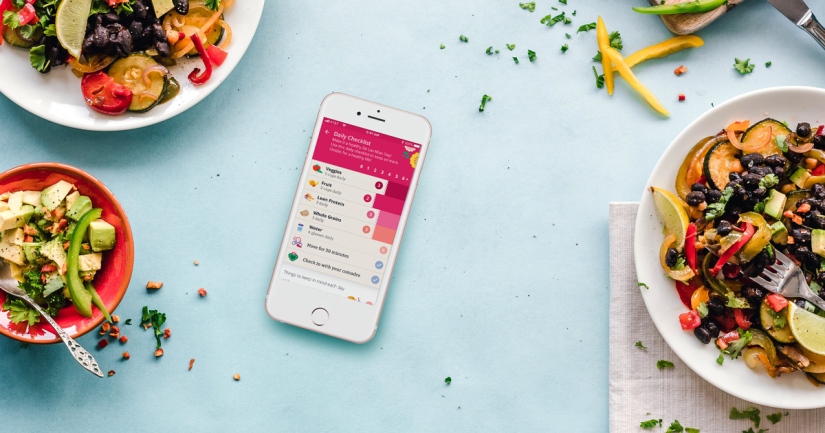
Find this quick and easy-to-use tool on the De Las Mías app! It’s there to remind you of the healthy habits you need to lead a healthier life. Use it daily to keep up with your healthy lifestyle goals. The checklist will help you stay on track: Eat more veggies! Drink more water! Call your comadre! Cut down on sugar! When you use the checklist you build healthy habits.

Do it for 3 days straight. See what happens. Then do it for 5. Then do it again until it sticks. 

The Healthy Habits Checklist is a great self-monitoring tool. The healthy habits on the checklist are proven to improve your health. Get into the habit of using the checklist every day. And then one day, ¡Boinas! You are in the habit of being healthy.

Start doing it today. ¡Te va encantar! ¡You’re gonna love it!

The checklist includes all the important healthy habit goals you need to lead a healthier life, but there are 3 we would like you to start with:

  1.     Eat more vegetables
  2.     Eat more fruit
  3.     Get more exercise

First, let’s talk about healthy habits and how to eat more fruits and veggies. Next, we’ll talk about how to build a healthy habit of moving your body every day.

Let’s Get Started with the Veggie Habit!  

The very first 2 healthy habits we want you to build is to eat your fruits and veggies. According to the CDC (Centers for Disease Control), only one in 10 adults in the U.S. get the recommended amount of fruits and vegetables. Eating your daily fruits and veggies can help reduce the risk of many chronic diseases such as obesity, heart disease, type 2 diabetes, and some cancers.

To jump start your healthy habit of eating more fruits and veggies, our certified nutritionist, la mera Malena Perdomo, came up with daily menus you can try from our recipes. If you choose your meals from the many delicious De Las Mías recipes, you’ll be well on your way to building healthy habits and becoming a Healthy Habit Super Mujer!    

At De Las Mías, we are taking a page from the latest research that shows that you don’t have to count every calorie to get to a healthier weight. You can get to a healthier weight by building healthy habits over time. This is a more balanced way of living and one that you can keep up over your whole life. We’re not losing 30 pounds by Christmas here, Comadre. We’re working on a healthy lifestyle you can keep up ¡Por Vida! (And no, you don’t have to give up tamales.)

So Malena, our nutritionist, works with hundreds of women all over the country in her own practice as well as helping De Las Mías. She tells us, “Many of the women I work with want a simple approach to eating healthier. I help them by giving them a menu to follow for the week.”

Tres Días of De Las Mías: Three-Day Meal Plan

So her is a 3-day De Las Mías  plan that she prepared for you. All of these recipes can be found on the De Las Mías app or website.  We call it, Tres Días of De Las Mías

Here’s how it works:

  1. Review the recipes , check your pantry for ingredients you may already have, and go shopping for the rest.
  2. Try the plan for 3 days and start checking off those healthy habits.
  3. Let us know how it goes.

Remember this: De Las Mías is evidence-based! That means that all our Mexican, Southwestern and New Mexican recipes align with the highest standards set by the USDA as heart healthy and good for you! Our recipes are developed by our Test Kitchen Chef, Lori, in Saguarita, Arizona and then Malena analyzes them in her kitchen in Denver, Colorado. Our recetas are tried, tested and approved by Latinas just like you! 

¡Buen Provecho! 

Day 1 – Tres Días of De Las Mías

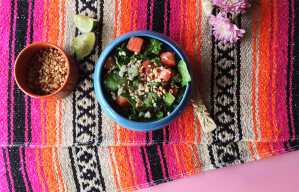
Watermelon spinach salad

Breakfast: Spinach Scramble with Queso fresco (140cals)  – Check off 1 serving of veggies!

Lunch: Watermelon and Almond Salad (130cals) and Enfrijoladas de Pollo* (400cals) Check off 1 serving of fruit and 1 serving of veggies!

Dinner: Tuna Tacos (330 cals) and Nopalitos Salsa (1cup 40cals) – Check off 1 serving of veggies!

Snack: Add one fruit, like an apple, orange or banana – Check off 1 more serving of fruit!

¡Eso! You just checked your 3 veggies and 2 fruits for the day! (All this for under 1200 calories – not that you’re counting!)

Day 2 – Tres Días of De Las Mías

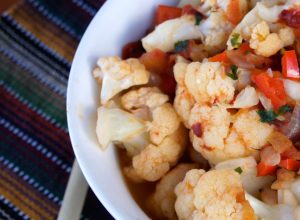
Spicy cauliflower

Breakfast: Brunch Quesadilla (250cals)

Lunch:  Turkey Taco Salad* (320 cals) – Check off 2 servings of veggies!

Dinner:  Spicy Cauliflower (60cals), Roasted chicken* (190 cals), and Lori’s Quinoa Jalapeño Salad* (220cals) – Check off 2 serving of veggies!

Snack: Add a cup of chopped fruit like melon, pineapple, and strawberries . Have an orange, apple or banana. – Check off 2 servings of fruit! (Note: Fruit is better with – ¡limón y chilito!)

¡Eso! You just checked 4 servings of veggies and 2 fruits for the day! (Total calories for the day: 1,040. Pero lo más importante is you are building your healthy habits!)

Day 3 – Tres Días of De Las Mías

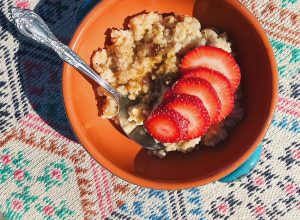
Mexican oatmeal with strawberries

Breakfast: Old Fashioned Mexican Oatmeal* (90cals) and Mango Banana Smoothie* (180 cals) – Check off 1 serving of fruit!

Lunch: Shrimp and Veggie Taquitos (230cals) with Pico de Gallo Salsa (1/2 recipe: 55cals) – Check off 2 servings of veggies!

Dinner: Poblano Chicken Soup (140 cals)  Arroz Verde* (150 cals) – Check off 2 servings of veggies!

Snack: Add your two fruits and check them off! 

¡Eso! You just checked 4 servings of veggies and 3 fruits for the day! (Total calories for the day: 845.

*Recipes only available on the De Las Mías app. Download it today! Available on Google Play and App Store

Note: For these three days, we are just counting veggies and fruits, but notice you are eating whole grains and lean protein too! ¡Eso! You are well on your way to becoming a Healthy Habits Super Mujer!

And we kept the calorie count low on purpose to encourage you to add some healthy snacks, such as your 2 frutas al día, a handful of almonds with a crispy apple, some hummus and veggies, a quick licuado or gazpacho in the afternoon slump.

Healthy Habits Recap

So just to recap: Here you have 3 full days of healthy eating that honors your culture and your buena salud! Get into the habit of eating your 3 veggies and 2 fruits a day and get into the habit of using the Healthy Habit Checklist. And soon you will be a Healthy Habit Super Star! 

This is the way you create a habit:

  1.     Find something you like, for example, our delicious ways to eat more fruits and veggies.
  2.     Do it. Do it again. And repeat until it sticks.
  3.     Use the Healthy Habit Checklist to see how you’re doing and to nudge you to keep doing it! (Self-monitor!)
  4.     Enjoy those ¡Esos! And share them!
  5.     When you get through to the other side of Tres Días of De Las Mías, get yourself a reward! Flowers! A romp through Instagram or Pinterest! A new nail polish. You get the picture.
  6.     Encourage your amigas, comadres, hermanas and even your vatos to join you in your healthy habit quest!

See our 9 Steps Healthy Eating Plan for more ideas on how to embark on a healthier life.

¡Unidas for a Healthy Life!


¡Hola, Sabrosa!, English, Healthy Mexican Food

How to Make a Simple Sofrito

The Simple Sofrito

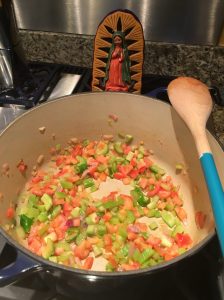
The Simple Sofrito is a powerful flavor ambassador.  One of the very first things that my mother taught me about cooking is to always start with a sofrito.  She said that my food would always be delicious if I started whatever I was doing with this magic concoction.  It seems like every Latino family has their own version of sofrito. My sister always adds a little fresh garlic, carrots and celery. My Ecuadoran consuegra calls it “Refrito,” and hers includes garlic, onion and achiote.  In Spain, the sofrito involves garlic and red pepper.
A Universal Practice

In our family, it meant chopping up some green chile, tomate y cebolla and frying it up in a small amount of oil.  So try this simple saute of green chile, onion and tomato next time you are cooking up some taco meat, scrambled eggs, or whatever you’re hungry for. Just start with the sofrito and then when the pepper is soft but not wilted, add your meat, eggs, or frijoles de la olla. We always make the point that Latinos and Latinas are not a monolithic group.  We are not all the same, but we have some strong things in common.  In the kitchen we find that almost all Spanish, Mexican and Latin American cooks use some kind of sofrito. Therefore, you can call the Sofrito, a universal practice across Latino cultures!

The De Las Mías sofrito is very simple and packs a good punch with ancho chile.  Find the recipe in the De Las Mías Recipe collection. Use it as a base for soup or whatever other guisado you embark on. The short cut is simple though, just chop up some chile, tomate y cebolla and fry it up in a small amount of oil. Sure, go ahead and add some minced garlic. ¡Y ya!

Nothing Fancy, Just Sabroso

I’m a very simple cook but people always love my food.  I don’t have a lot of fancy cooking stuff and most of my pots look like they made it out of a war zone, but I always start with a sofrito, and I think that’s why I cook sabroso.

One of my favorite on-the-go meals is to stop by the market and get one of those chickens that are already roasted.  I remove the skin and chop it up for taquitos. I always start with the simple sofrito I learned from my mom. The chicken just tastes better and you can forget that you bought it in a plastic container and that it’s slammed in sodium. (Poquito de todo, remember?)

I heat up my corn tortillas with a tiniest amount of butter on the comal.  Add the chopped chicken that I sauteed with my sofrito. Top it off with shredded cabbage, cilantro, green onion and a squeeze of lime.  And you’ve got dinner!

Try it and let me know how it goes.  Nothing fancy! Just good and healthy. And it’ll take you home.

¡Hola, Sabrosa!, English, Healthy Body, Healthy Mexican Food

Jugo Verde: Mexican Green Juice

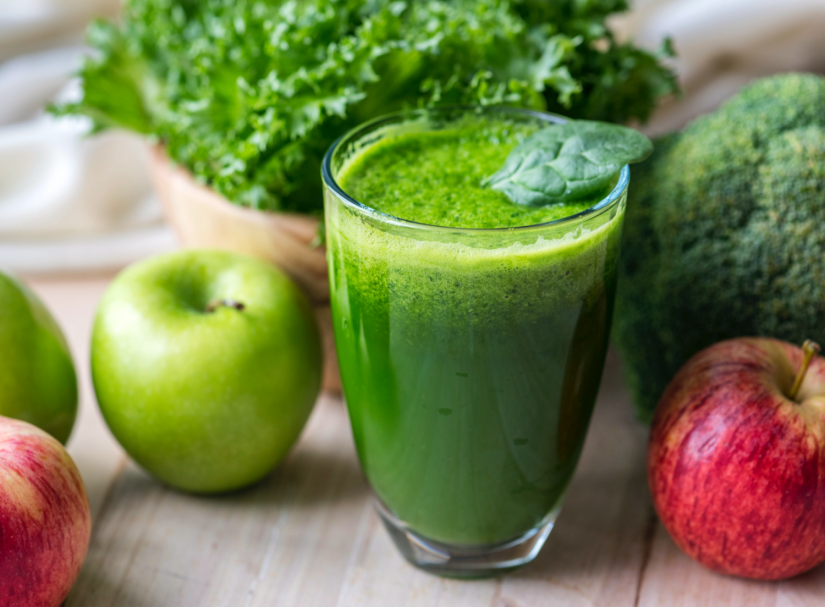
    My sister and I recently went to the City of Oaxaca, and it is always affirming for me to go to Mexico, but Oaxaca is just pure magic. Everything is so beautiful there — the textiles, the architecture, the pride of place, the colors, and of course, the food. We ate magnificently well there, from the 4 star Casa Oaxaca to the unpretentious La Florecita at El Mercado de la Merced. (Have you had squash blossom quesadillas? Amazing!) We took a fabulous cooking class from La Maestra Reyna Mendoza in Teotitlan Del Valle. We learned how to make Mole Rojo in a beautiful outdoor kitchen. We grinded the chiles and spices on a metate! And then we got to eat everything!   Everything we did was fantastic — one of the best vacations I have ever taken.  Being with my sister is such a joyful experience! I feel so blessed to be able play and work with her. It’s so much fun to eat with her because she can tell you what’s in the food while you’re eating it, just by taste. Let us not forget that she is La Madrina en La Cocina! She has developed and tested each and every one of our recipes! With the help of the fabulous Malena Perdomo, a certified nutritionist and diabetes educator, we bring you the healthiest food that our test kitchens have to offer.   This edición is about making small but important healthy changes. We’re with you on your journey to a healthier life. We all know that eating more veggies and fruit are the cornerstone of healthy eating. We are constantly adding more delicious ways to add more plant-based foods to our day. At De Las Mías, we recommend 3 cups of veggies and 2 fruits every day but the new USDA Dietary Guidelines are recommending that we go above and beyond.  There is no harm in eating more vegetables! But how do we do that? One way to add more healthy fruits and veggies to your day is to add them to breakfast. Add a bell pepper and some spinach to your huevos, and some berries to your avena! OR….Have yourself a Jugo Verde!     On our last day in Oaxaca, as we were walking down Hidalgo Street, I was snagged by a beautiful display of bicicletas, in all colors, adorned with handmade wooden baskets at the lovely hotel, Casa de la Sierra Azul. We walked into the courtyard and heard the angels sing! We couldn’t resist the inviting patio restaurant and promptly sat down to peruse the menu and order breakfast. The Jugo Verde caught my eye and I ordered it. It was the most refreshing and delicious juice I had ever tasted. Lori and I were trying to figure out what it had in it. It was psychedelic green! Not the green goop that you sometimes get from Odwalla in the States, but the most beautiful, vibrant green I’ve ever seen! We knew it had spinach in it, and I could taste the pineapple but we couldn’t figure out the rest. We asked the waiter and he said it had fresh nopales and yerba santa.   We struck up a conversation with the waiter and we told him about De Las Mías. He went on to tell us all about the magical properties of Jugo Verde, a time-honored Mexican tradition that promises to bring you good health, happiness, and beautiful skin.   We vowed to get back to the states, do some additional research and start testing out some Jugos Verdes of our own. We haven’t tried Jugo Verde with nopales, yet, and yerba santa is not that easy to find in Portland or Santa Fe, but here are 3 Jugos Verdes that I have been indulging in and I feel better already! Starting off my day with a refreshing Jugo Verde just feels right! It sets the intention for your day, como dicen las del New Age. To feel more grounded I follow it with a strong cup of coffee and avocado toast. Add a handful of almonds for protein, ¡y párale de contar! You’re set! Jugo Verde is a great way to include veggies and fruits with breakfast. These jugos are simple, don’t require any special equipment except a run-of-the-mill blender, and are packed with at least 2 servings of veggies and one serving of fruit! And that is just to get you going in the morning!   I also find that Jugo Verde is very energizing for the mid-afternoon slump when all I want to do is plop down to watch depressing news! So slam down some Jugo Verde, put on your tenis, and take your dog for a walk instead! SOOO much better for you than more screen time! Try these Mexican green juices!  


La Diosa Verde.

This one is my favorite. I feel righteous and strong after this one!

  • A handful of fresh spinach
  • 4 2-inch chunks of fresh pineapple
  • ½ a peeled cucumber
  • ½ a peeled apple
  • 1 cup of water
  • One or two squeezes of fresh lime
  • 1 teaspoon jalapeño juice
  • Ice cubes if you like ice in your jugo

Blend it on high until it turns into juice.  (Optional: Since I like sweet, I even add a ½ teaspoon of Stevia, but that’s just me.)  

Amor al Kiwi.

If you like kiwi, you will love this Jugo Verde.

  • One peeled and ripe kiwi
  • A handful of spinach
  • 1 teaspoon of fresh ginger
  • 1 stalk of celery
  • 1 cup of water
  • Ice cubes if you like ice in your jugo

Blend it until it turns into juice. (You can sprinkle Tajín on top for added punch!)  

Sana Sana, Jugo de Manzana.

I choose a super sweet apple for this one.  Have you tried Opal Apples? They are so sweet and delicious. Pink Lady is another sweetheart.

  • 1 cored and peeled apple
  • 2 stalks of celery
  • 1 cup of water
  • A handful of spinach
  • Ice cubes if you like ice in your jugo.

¡Andale!     A few notes on making Jugos Verdes in the blender: Basically, you can blend anything you like in your blender, so go nuts. You’ll need veggies, fruits and water for jugos. More on licuados and smoothies here. I sometimes add a bit of unsweetened juice, although water is really best. I also add a dash of salt, pepper, lime juice, lemon juice, jalapeño juice, or Tajín. You could even blend up a serrano in there if you dare! Just do what tastes good to you and makes you feel like the Righteous Green Goddess that you are! I have recommended this little book to you before and I will do it here again: The Blender Girl by Tess Masters. I like her non-pretentious approach to eating more vegan meals and we could all stand to eat less meat and more veggies, fruits and plants of all kinds. Your body and Mother Earth will thank you. Try these and let me know what you think! Keep it simple and delicious! Do you have a favorite Jugo Verde? Share your favorite with us and we’ll choose a few to feature on our Instagram feed!  

¡Hola, Sabrosa!, Edición No. 7: Change, English, Healthy Body, Healthy Mexican Food

Meatless Monday

Meatless Monday – A Fun Way to Start Eating More Veggies

One of my healthy living goals for the new year is to cut down on meat, and eat more more fruits and vegetables.  

A fun way to do this is to start a Meatless Monday tradition. So we agreed that we could try new recipes, and start the week off with a slightly healthier approach. Also, in these times of climate change, I am constantly worried about our poor little planet! Eating less meat is good for our bodies and good for the planet – a win-win!  

I was remembering my life in Nogales and how we had Meatless Mondays at my Nana’s house “across the line,” on the Mexican side of border. And then I realized that it wasn’t just Meatless Monday, but also Meatless Tuesday and Meatless Wednesday. And then, wait! Hold on. We pretty much went meatless every day except for maybe Carne Asada Sunday!  

The reason wasn’t that we were trying to save the planet, or lower our cholesterol. The reason was that my Nana and my aunts and uncles who lived in that old adobe house on the hill, didn’t have the money to buy meat for a giant family.

We ate frijoles de la olla, frijoles refritos, sopa de frijoles, enfrijoladas, burritos de frijoles, frijoles con chorizo, tostadas with you guessed it, frijoles, and even a special trick I learned: Cave out a bolillo roll and fill it with frijoles and queso fresco! YUM! This all paired really well with my Nana’s killer salsa de chile verde. And ¿sabes qué? I never once felt deprived. I felt loved and satisfied and nurtured.

When we were on the Mexican side of the border, we were poor and we had a super healthy diet. We never ate large portions because there weren’t that many portions to go around. But we never went hungry either, so we were lucky.

You’ve heard it here before and we will say it again: the traditional Mexican diet is a SUPER healthy diet! Our Mexican diet was pretty much dominated by protein from beans, eggs and queso fresco, and bolstered by corn, which is the grain of the gods. (No fooling.) Sure, we ate meat with our meals, but they weren’t dominated by large portions of it. If we had meat, it was in very moderate to small amounts, and mostly for taste.

But here we are now, trying to adopt a healthier way of living. And all we Mexicans have to do is look back to the way of our Nanas and Tatas!

In doing research about Meatless Mondays, I found out that Meatless Monday started as a movement by our colegas at the Public Health School at Johns Hopkins University, back in 2003. Through research, they discovered that Monday was the ideal day to try to recover from the overindulgence of weekends. (Overeating, disrupted sleep patterns and possibly even drinking too much.)  

Some of this research showed that people were motivated by making a small but significant change at the start of the work week. That is where the idea of Meatless Monday came from. As more and more people adopted the idea of not eating meat on Mondays, they became healthier, poco a poco, over time. Here is more evidence that small changes over time are the ones that last. It wasn’t a drastic thing, but just one day a week. The idea is that we could become just a little healthier if we took this small step. We would become healthier and the planet would benefit too.  


So Meatless Monday took off and other countries and organizations started getting on board. Australia tried it. Paul McCartney promoted it. Even beef-consuming Argentina got into the act in 2017 by declaring Vegan Mondays!

If you want to learn more about the history of Meatless Mondays, see the Wikipedia article. It has a fascinating amount of information that will surely inspire you to try it!

So at De Las Mías we want to encourage you to give Meatless Monday a try. Here’s another way to eat more veggies and fruits for your health and help Mother Earth carry the load.

Here are some of the benefits of Meatless Mondays:

  • Lower your cholesterol and therefore, your risk of heart attack and stroke.
  • Help you get to a healthier weight.
  • Help lower your risk of high blood pressure.
  • Increase your intake of fiber and its health benefits.
  • Take a little stress off the planet (plant-based foods take less energy).
  • Use less water to grow food (plant-based foods take less water than animal-based food).
  • Plant-based foods pollute less than cows.  

Try some meatless dishes from De Las Mías:

And we’re curious…

  • What’s your favorite meatless dish?  
  • How would your family feel about starting a Meatless Monday tradition at your house? Would they be on board?
  • What is the biggest barrier to going meatless on Mondays?

Sources:

https://en.wikipedia.org/wiki/Meatless_Monday

https://www.economist.com/the-economist-explains/2017/10/19/argentinas-vegan-mondays