¡Hola, Guapa!, English

Avoiding the Thin Trap: A Letter From De Las Mías Founder

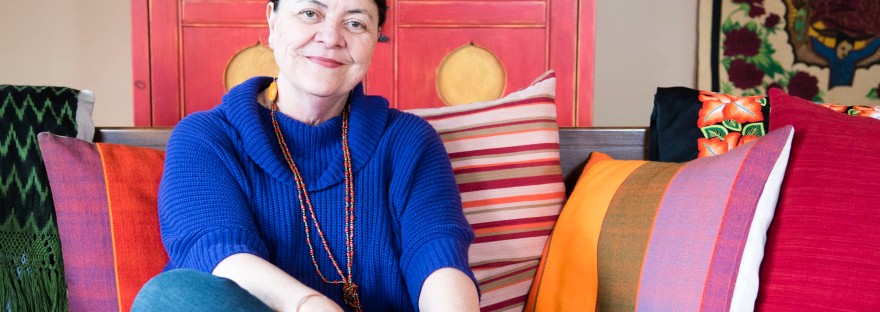
A letter from De Las Mías founder Ana Consuelo Matiella
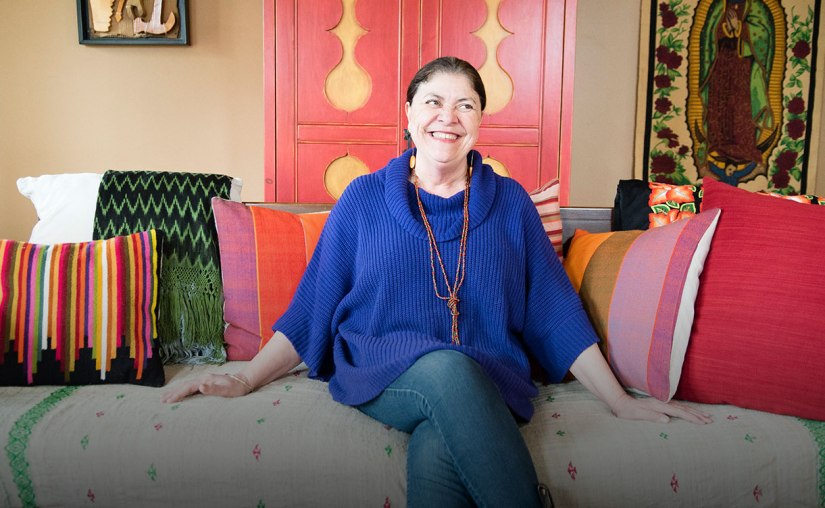
Late the other night, I couldn’t sleep, so I decided to turn on Netflix. Since I craved laughter, I found a list of Mexican comedians and I clicked on Ricardo O’Farrill. Funny! Laugh-out-loud funny. When he got to making fun of Jews I sat up straight on my bed and said, “Uh-oh.” His Jewish joke, the one I heard, wasn’t terribly offensive. If I recall, it was making fun of the Hebrew pronunciation of Spanish. Okay, I said, I can live with that. Laughter is a stress-reliever so I kept watching. Lots of cussing and swearing, but, hey, that can be funny, right? I’m from the state of Sonora. I can swear you under the table. I have cousins who cannot speak if they can’t say something related to the word chingar. O’Farrill sounded like he was quoting out of a dictionary called El Chingonario, which I happen to have on my shelf right now. A gift from another cousin…this one from Magdalena, Sonora. So I kept watching. I was giggling away when he got to the “fat chick” jokes. “Ha-ha!” the audience laughed. They laughed at the gorda jokes, the ones about how the gordas jiggled when they danced at the nightclub, and how funny it was that the gordas, because they were fat, weren’t going to get to have sex after the party. Quoting the Chingonario, I whispered an insult to his mother, and logged off. O’Farrill, funny guy that he is, it took me back to my childhood and the memory of all the fat jokes I had to endure as a big, chubby girl growing up in Nogales, Arizona. It took me back to my mother, and the picture I have of her wearing the tight black skirt and form-fitting matching sweater. She’s leaning like Ava Gardner against the rustic wall of our TV room, smoking a cigarette. So sexy, my mama. I remember helping her out of her girdle at night after she and my dad got home from the parties. It was flesh-colored pink and it had metal stays. My mama was never fat. She never had to hear gorda jokes aimed at her. She was beautiful and, above all, thin. She had this expression she used when she wanted to communicate that a woman was doing well. If she ran into someone at the market and recounted it to my tia, she would say something like, “I ran into Chalita at the store.” My aunt would say, “And how is she these days?” And my mom would answer, “Oh she’s fine, and above all, thin.” That was the final clincher. Sobre Todo Delgada.

Worried About Being Thin? Here’s a Cautionary Tale.

My mom was born in 1932 and came into adult womanhood in Mexico during World War II; she had stories of rationed silk stockings that she treasured like precious jewels. She was a fashion plate. She cared so much about what she looked like that she suffered from it. She was beautiful and stylish and, above all, thin. She was also bulimic. She was on prescription diet pills that at the time were called “Black Beauties.” My mom had an eating disorder and it stemmed from her deepest desire to be thin, because that meant she had worth. She and O’Farrill were on the same wavelength, except that she wouldn’t have laughed at his jokes. She would have been embarrassed that O’Farrill might have been making fun of her daughter, even as she was feeding her steak and no carbs. Like O’Farrill, my mom wanted her girls to be thin. Having a chunky daughter did not sit well with her. She tried to put me on various diets. She knew a thing or two about the no-carb diet. Thanks to Vanidades magazine, Atkins was a household word at our house in 1965. Looking back, I believe the doctor was treating her binging-and-purging—her bulimia—with Biphetamine, rationalizing that if she weren’t hungry, she wouldn’t binge. But when the Biphetamines made her jittery, he gave her Valium. She was a classic case for the times: while my mom might have benefitted from a good therapist, she was simply given pills to solve her problems. But she was never fat, and for my mom, that was, above all, the most important thing. So, one day when I was about 15 and she saw that my clothes were getting too tight, she said, “Ya no comas pan.” No more bread and tortillas for me. This was my first weight-loss diet: Breakfast: a hard-boiled egg and what she called “diet bread.” (This tasted a bit like cardboard.) Lunch: I was supposed to take carrots and celery but I discovered tortilla chips and Coke at the Charrito’s stand at the high school. (The Charrito was a blind guy who sold junk food to kids out of his makeshift cargo bike. He was ahead of his time.) Dinner: A steak and a salad. No oil. Just vinegar. A pear or an apple for dessert. Look it wasn’t a terrible diet, okay? I get it. She wanted me to be attractive and Sobre Todo Delgada and she was trying her best to be a good mom and protect me from fat jokes and bad outfits. I get it, but early on I also got this message: A woman is worth more when she’s thin.

Focus on a Healthy Body, Not a Thin Body

I am 65 years old now and have tried many more diets. As a health educator, I have made great strides. I switched from being on a diet to learning to eat in a healthy way. It took years of hard work for me to realize that my self-worth, confidence, power and self-esteem are not determined by how thin or fat my body is. You might think that the problem I faced 50 years ago has gone away, and that we have evolved from thinking that a woman’s self-worth is based how much she weighs. Alas, it is still with us! This distorted and cruel way of defining self-worth for women is still here. O’Farrill, a modern Mexican man, gets laughs because people still laugh at jokes about gordas. And there is something wrong with that. I founded De Las Mías because I want Latinas to be healthy, powerful and confident. And yes, of course, I want us to express our cariño, our beauty and our femininity. We believe that we can learn to love, nurture and take care of ourselves and our bodies without becoming overly focused on thinness. De Las Mias is about being healthy and adopting new behaviors that will result in a healthier life. I don’t want you to be Sobre Todo Delgada, I want you to be ¡Sobre Todo Healthy and Powerful! Focus on being healthy—avoid worrying about being thin. Learn to love yourself and your body. You are beautiful the way you are, comadre.
¡Hola, Comadres!, ¡Hola, Guapa!, ¡Hola, Madrina!, English, Healthy Body, Healthy Comadres

Find a Physical Activity That Brings You Joy

Physical activity keeps our hearts fit and pumping oxygen, our muscles strong and our joints healthy. The only way to do this is to move. You don’t have to be a superstar athlete to reap the benefits. Finding a physical activity that brings you joy means taking the “work” out of workout. Here’s a story from our resident fitness coach, Madrina Yoli, that will inspire you to move.

Why We Need to Be Active

I remember when my mom was turning 50 and going through the changes. She came home and told me, “Mija, the doctor said I had to start an exercise program. ¡Ay Dios! I can’t do all you do! I will die!” I was just finishing my degree in exercise physiology and was eager to help her. So I started by explaining to her the reason why we need to be active and how it will help her body. “Mami, you do not need to run a marathon or be a weightlifter to be healthy. You can do things like walk to the store instead of drive. Do some stretching while you watch TV, or maybe we can get you a stationary bike. We could even plant a garden with flowers and vegetables in the backyard and working on it will be part of your exercise.” She said, “I’m ready to start!” I said, “Okay! I will be your exercise comadre—it’s best if you have a training buddy.” We started by writing down her goals for the week in a workout journal. I showed her, “See, here are all of your goals for each day, and here you write down when you complete them in order to keep track of your progress.” I taught her that we needed to start slow in order to let her ligaments and tendons grow stronger to avoid injuries. After that, we started to work on the heart and I reminded her the only way to work out the heart is through aerobic exercise. All you need to do is increase your heart rate. Our ultimate goal was 150 minutes of aerobic exercise per week, so we started out with three 30-minute sessions per week and picked her favorite exercises: dancing and walking. “Later on, Mami,ˮ I said, “we can get you some resistance bands and begin to work on some strength training, but for now, just remember one important thing.” “What’s that, Mija?” “Have fun!” After 12 weeks, we could see a big difference. Find a physical activity that brings you joy and you will see a difference too.

¡Hola, Guapa!, Edición No. 1: Getting Started, English, Healthy Comadres

Starting a Healthy Lifestyle is Easier Than You Think

We are pleased to welcome you to Edición No. 1 of the De Las Mías online revista! Each edición features articles and recipes to inspire and inform you to start a healthy, balanced lifestyle.

Start a healthy lifestyle. Go from thinking to doing.

Here are articles that will help you move into action:

Moderation is the key to a balanced life. We know from our own experience—and the experiences from our comadres—starting a healthy lifestyle is easier than you think.

Ready for a healthy, balanced lifestyle?

Ready to get started? Click here for the next article.

¡Hola, Guapa!, ¡Hola, Madrina!, Edición No. 4: Reflection, English, Healthy Comadres

Women and Altars, Nichos and Shrines – ¡Qué Viva la Morenita!

Every year around the winter holidays, I am full of pride for my cultura. It is this season when I feel all the cultures that I carry within me more strongly. It could be because all the senses are awakened with the flavors of our wonderful food, the bright colors of the lights and decorations, the music of Las Posadas and all the diversity of our Indo-Hispano celebrations. There are so many rich and delicious traditions that we partake in this time of year, that even with all its consumerism, it is still a magical time of year.

In our family, the season kicks off with Our Lady of Guadalupe’s Feast Day.  


One of my earliest memories takes me back to my childhood in Nogales, Sonora and Arizona. It was the custom that many families on the Mexican side of the border erected shrines to Our Lady on their windows facing out to the street.  My mom would drive us around the neighborhoods, so we could take a closer look at all the different ways the community honored Our Lady. Even from the distance, looking up at the Nogales hills, you could see the scores of windows illuminating Our Lady with multi-colored strings of lights.

As a Mexicana, I am a classic Guadalupana, and I venerate and honor Our Lady every day of the year. Even as I seized to call myself Catholic, I retained my devotion to La Morenita. I think it is precisely because she is called La Morenita that I have so much love for her. The legend says that she came here to give the indigenous people of the Americas comfort for their suffering. And I can so get behind that idea, that I hold it dear to my heart. There are other more cynical explanations, if you care to look, like that our Spanish ancestors made up the whole story in order to convert the indigenous people, but I choose to continue to hold her in very high esteem. Here’s a great summary from the Huffington Post that you might find interesting.

A lovely custom that many Indo-Hispanos like us practice is to build or erect shrines, altars or nichos to Our Lady of Guadalupe. When I was raising Sada, we had annual Our Lady of Guadalupe parties and we would invite the children in our lives to make shrines. We collected small cardboard boxes, construction paper, old remnants of tissue paper and fabric, glitter and whatever else you could find in your craft drawer and have a party. There was a lovely woman in Santa Fe at the time, Connie Hernandez, who had a little religious shop where she sold old-fashioned devotional cards of various saints and milagros, and I would make my yearly run to Connie’s to buy the estampitas to put in our shrines. The kids loved the activity, but it was always fun to see the adults wanting to take part in it too.   

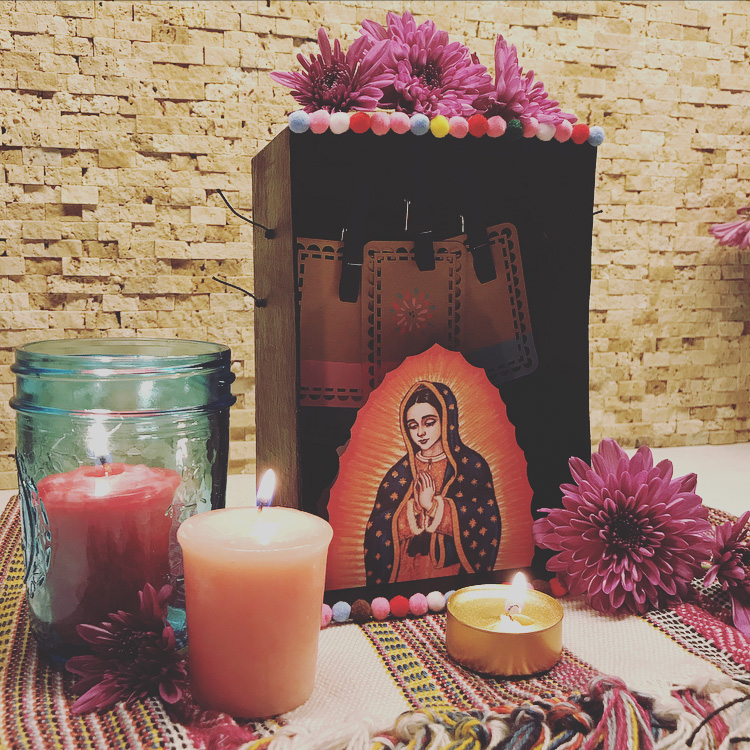
Here are some of Our Lady of Guadalupe shrines that we have in our home and some we made for this special occasion!

Comadres, if you have a shrine, nicho or altar to honor Our Lady, we would love to see it and post it!

¡Felices Fiestas, Comadres!

¡Y que viva la Morenita!

¡Hola, Guapa!, ¡Hola, Madrina!, Edición No. 8: Healthy Habits, Healthy Comadres, Spanish

Mujeres y altares, nichos y santuarios – ¡Que viva la Morenita!

Cada año durante las fiestas navideñas, siento mucho orgullo por ser mexicana. En esta temporada siento todas las culturas que llevo dentro de mí con más fuerza.  Podría ser porque todos los 5 sentidos se me despiertan con los sabores de nuestra maravillosa comida, los colores brillantes de las luces y decoraciones, la música de las Posadas y toda la diversidad de nuestras celebraciones Indo-hispanas.  Hay tradiciones tan bonitas que celebramos en esta temporada.  Y aunque pienso que nos enfocamos demasiado en “la compradera”, de todos modos, sigue siendo la temporada más mágica del año.

En nuestra familia, la temporada comienza con el día de la fiesta de Nuestra Señora de Guadalupe.   

Uno de mis primeros recuerdos me lleva de regreso a mi niñez en Nogales, Sonora y Arizona.  Era la costumbre que muchas familias en el lado mexicano de la frontera hacían una ofrenda a Nuestra Señora de Guadalupe y la ponían en las ventanas dando a la calle.  

Mi mamá nos llevaba a pasear por los vecindarios para ver a las distintas formas en que la comunidad honraba a Nuestra Señora. Desde la distancia mirando hacia las lomas de Nogales, se podían ver las docenas de ventanas iluminadas con foquitos de muchos colores. ¡Era algo maravilloso!

Como mexicana, soy una clásica Guadalupana, y venero a la Morenita todos los días del año. Creo que es precisamente porque le llamamos la Morenita que tengo tanto amor por ella.  

La leyenda dice que ella vino a las Américas para dar consuelo a los pueblos indígenas para aliviar un poco su sufrimiento.  Me da consuelo ese pensamiento y siempre lo llevo en mi corazón. Hay otras explicaciones más cínicas sobre el milagro de Nuestra Señora de Guadalupe, como ya lo saben.  Como que nuestros antepasados españoles inventaron la historia con el fin de convertir a los pueblos indígenas, pero yo sigo creyendo en ella.

Una costumbre encantadora que muchas latinas practican es en hacer pequeños altares o nichos a Nuestra Señora de Guadalupe. Cuando yo estaba criando a mi hija Sara, teníamos fiestas de Nuestra Señora de Guadalupe e invitábamos a los amiguitos a hacer nichos de cartón.  Recogíamos pequeñas cajas, papel de China y cartulina, restos de otros diferentes papeles o telas, cualquier cosa que se nos antojaba o que podíamos encontrar.  Así nos juntábamos a hacer los nichos y hacíamos fiesta.

Había una señora encantadora en Santa Fe, llamada Connie Hernández. Ella era muy devota y tenía una pequeña tienda religiosa donde se vendían estampitas religiosas de varios santos. Yo hacía mi carrera anual a con Connie para comprar las estampitas de Nuestra Señora de Guadalupe para poner en nuestros nichos. A los niños les encantaba esta actividad, pero siempre fue divertido ver a los adultos que querían participar también.   

Aquí están algunos de los nichos, altares y arreglos que tenemos en nuestras casas y algunos que hemos hecho para esta ocasión especial.

Comadres, si tienen un santuario, nicho o altar para honorar a Nuestra Señora, nos encantaría verlos y publicarlos!

¡Felices Fiestas, Comadres!

¡Y que viva la Morenita!

¡Hola, Guapa!, Edición No. 4: Reflection, Spanish

Cómo convertirte en una supermujer con una imagen corporal saludable

¿Sabes Que?

Los estándares de belleza y delgadez extrema que se presentan en los medios de comunicación pueden llegar a afectar negativamente a las mujeres de todas las edades. La mejor forma de prevenir este impacto negativo y tener una imagen corporal positiva es aceptando orgullosamente tu cultura latina y rodeándote de ejemplos positivos a seguir.

Tu cuerpo te mueve y te lleva a lo largo del día. Muchas veces sostiene el peso del mundo: el estrés del trabajo, la escuela y la familia. La manera en la que ves a tu cuerpo es igual de importante que la manera en la que lo tratas. Tener una imagen corporal positiva y alto autoestima es igual de importante para vivir una vida feliz, que incorporar actividad física y alimentarte bien.

¿Qué es la imagen corporal?

La imagen corporal es la manera en la que te percibes a ti misma, cuando te miras al espejo o te imaginas en tu mente. Tu imagen corporal incluye lo que crees y sientes acerca de tu apariencia, tu peso, figura y altura; y cómo te sientes y controlas tu cuerpo mientras se mueve. Una imagen corporal negativa puede afectar tus relaciones y comunicaciones interpersonales, causar un autoestima bajo y desórdenes alimenticios, y en general disminuir tu salud y bienestar. Por eso es tan importante cultivar una imagen corporal positiva.

Señales de que tienes una imagen corporal negativa

  • ¿Tienes una percepción distorsionada de tu figura? ¿Percibes las partes de tu cuerpo como realmente son?
  • ¿Estás convencida de que sólo otras personas son atractivas y que tu tamaño o figura es un signo de fracaso personal?
  • ¿Te sientes avergonzada por tu cuerpo? ¿Te preocupa o te causa ansiedad tu figura?
  • ¿Te sientes incómoda y torpe dentro de tu cuerpo?

Señales de que tienes una imagen corporal positiva

  • ¿Tienes una percepción clara y verdadera de tu figura? ¿Ves las diversas partes de tu cuerpo como realmente son?
  • ¿Celebras y aprecias tu figura natural? ¿Entiendes que la apariencia física de una persona dice muy poco sobre su carácter y su valor?
  • ¿Sientes orgullo y aceptación por tu cuerpo, y te niegas a pasar una cantidad irracional de tiempo preocupándote sobre comida, tu peso y calorías?
  • ¿Te sientes cómoda y confidente en tu cuerpo?

¿En qué afecta la imagen corporal?

La manera en la que percibes tu cuerpo es compleja. Tu imagen corporal se ve afectada por muchas cosas, incluyendo dónde naciste, cómo te educaron, quiénes son tus modelos a seguir y los grupos sociales con los que interactúas y a los que te comparas. Desafortunadamente, la cultura actual de los medios de comunicación masivos tiene el poder de afectar de manera negativa la imagen corporal de las mujeres latinas. Se ha encontrado que las mujeres latinas que ven cuatro o más horas de televisión al día o pasan esa cantidad de tiempo en las redes sociales, tienen una imagen corporal inferior a la de las latinas que no lo hacen.

Los medios masivos de comunicación nos presentan ciertos valores, personas y temas que causan un “espejismo de la realidad” y el deseo de pensar, actuar y vernos de cierta manera que a menudo idolatra la delgadez y los estándares extremos de belleza. Este “espejismo” también logra que como mujeres comparemos nuestras opiniones, habilidades e identidad étnica con los atributos de nuestras comadres o personajes en los medios de comunicación. Estas comparaciones pueden ser poco saludables y causar un impacto negativo en nuestra imagen corporal.

¿Sabes Qué? Las latinas que ven cuatro o más horas de televisión al día o pasan esa cantidad de tiempo en las redes sociales, tienen una imagen corporal inferior a la de las latinas que no lo hacen.

¿Cómo ayuda nuestra identidad latina a mejorar la imagen corporal?

Nosotras las latinas somos fuertes, apasionadas y dignas. Adopta todas estas características para mejorar tu imagen corporal. Las mujeres que se identifican como latinas (las que aceptan orgullosamente su identidad étnica) describen sus cuerpos de manera más positiva y tienen una mejor capacidad de luchar en contra de los efectos negativos de los medios masivos de comunicación. Nuestra cultura latina tiene el poder de promover tipos de cuerpo de todas las edades, figuras y tamaños, lo que ayuda a remover el estigma de imágenes sexualizadas o estereotipos de los cuerpos de las latinas en los medios de comunicación.

Lo más importante es rodearte de positividad en tus entornos familiares y sociales. Tú puedes reducir la imagen negativa de tu cuerpo al rodearte con la positividad de tu familia y de tus comadres. Cuando las latinas tienen un fuerte apoyo cultural, se disminuyen los estándares de belleza y delgadez extrema, resultando en una imagen corporal saludable y positiva.

Así que la próxima vez que te mires al espejo o sientas el peso del mundo sobre tus hombros, toma un momento para recordar quién eres y de dónde vienes. Tu herencia y tu cultura han sido construidas a base de amor, tradición y apoyo; sin importar qué negatividad exista a tu alrededor. Para traer amor y belleza al mundo, debes primero amarte a ti misma y aceptar la belleza de tu cuerpo.

¡Hola, Sabrosa!, Edición No. 6: Healthy Eating, Spanish

10 maneras fáciles para comer más frutas y vegetales

Tu alimentación debe incluir una variedad saludable de frutas, vegetales, proteínas y granos integrales. Las frutas y vegetales son importantes porque añaden vitaminas y nutrientes que te ayudan a que te sientas bien durante el día. Prueba estos consejos fáciles de seguir y estarás en camino a una vida más saludable.

¿Estás lista?

Cocinar comida sabrosa y saludable nunca ha sido más fácil. Las frutas y verduras dan color, sabor y textura a tus platillos, y también añaden un poco de creatividad a tu mesa. Malena, nuestra madrina en la cocina, nos recomienda comer 3 tazas de verduras y 2 tazas de fruta cada día. Estas 10 deliciosas y sencillas opciones a continuación te ayudarán a obtener tu ración diaria fácilmente.
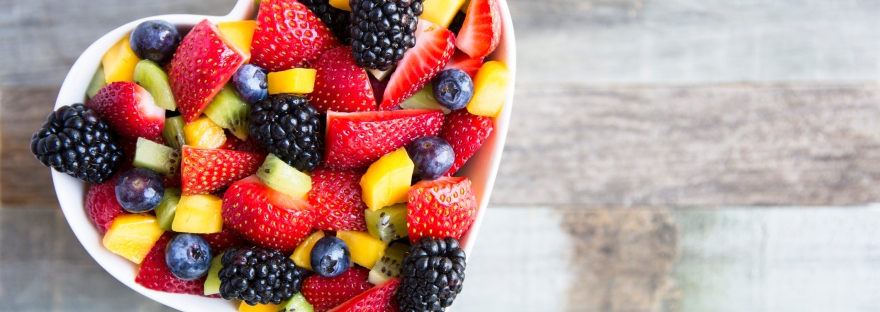
  1. Haz un licuado de frutas¡Los licuados de frutas son como un postre en un vaso! Mezcla hielo con frutas como sandía, melón, piña, fresas o mango en la licuadora para hacer bebidas refrescantes y deliciosas.
  1. Añade vegetales picados a tus platos principalesDale vida a tus comidas con vegetales picados y salsas. Acompaña el plato principal con un delicioso pico de gallo, salsas dulces, saladas o picantes; puedes incorporar también diferentes vegetales como cebollas, champiñones, tomates, pimientos, espinacas ya sea frescas o sofritas, y así agregar suficientes vitaminas como nutrientes en tus platos.
  1. Come ensalada verde una vez al díaEs tan fácil agregar lechuga y verduras crujientes a tu alimentación con tan sólo comer una pequeña ensalada verde al día. Una ensalada fresca con lechugas mixtas, zanahorias, tomates, cebollas verdes y pimientos es el complemento perfecto para tu almuerzo o cena.
  1. Enciende la parrillaAsar a la parrilla es una forma distinta de saborear tus verduras. Ya sea para hacer brochetas o fajitas, la combinación de elote, pimientos y cebollas con un poco de chile en polvo hará que tu comida sea muy sabrosa.

    Nosotras las Latinas, debemos comer más de 3 tazas – y para algunas, hasta 6 tazas – de verduras y frutas al día.

  1. Vegetales molidos o en puréEn lugar de usar productos lácteos o de carne para espesar tus sopas y guisados, trata de moler tus vegetales o hacerlos en puré. Zanahorias, apio, papas, champiñones, y camotes en puré o desmenuzados harán que tu platillo sea sustancioso y saludable.
  1. Añade fruta a tus postresCuando se te antoje algo dulce, usa frutas para darle color y sabor a tus postres. Añadir frutas como arándanos, peras, fresas, plátanos o manzanas a tus recetas favoritas hará que tus postres sean más coloridos, deliciosos y saludables.
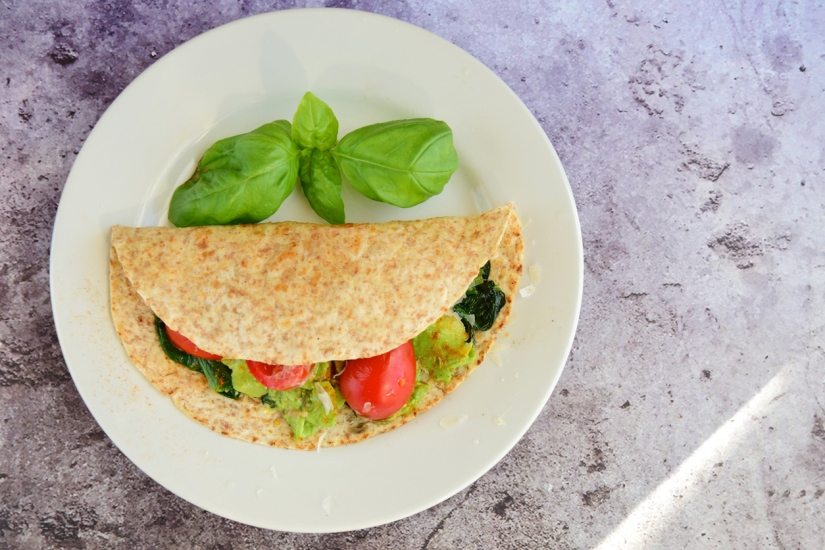
  1. Intenta un plato principal vegetariano¡Deja que tus vegetales sean los protagonistas de tus platillos! Usa tu creatividad para hacer tacos, enchiladas, tostadas, burritos y quesadillas de vegetales.
  1. Disfruta de una sabrosa sopa de verdurasTodas sabemos que una buena sopita de verduras llega a calentar hasta el alma. Mezcla una combinación coqueta de pimientos, elote, calabacita, tomates, cebollas y frijoles para hacer una sopa de verduras como un delicioso plato principal o como un antojito.
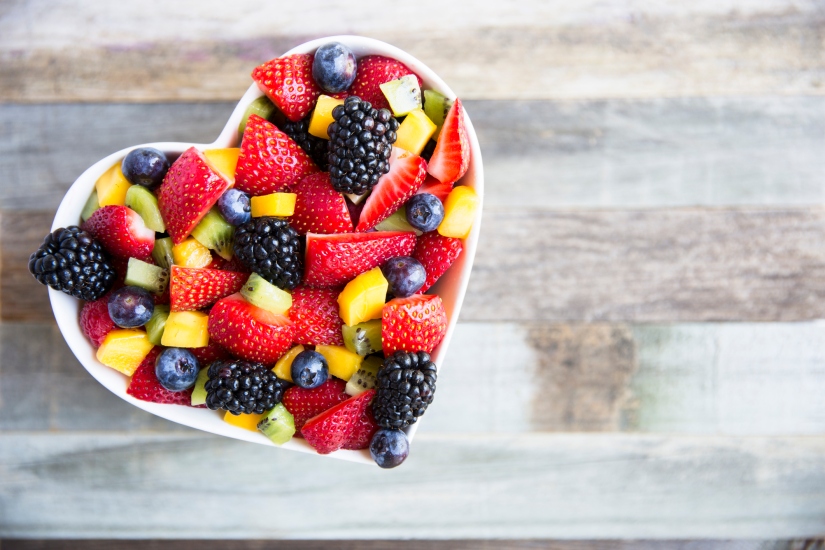
  1. Prueba botanas de frutas durante el díaCuando te sientas con hambre, piensa en comer frutas: frambuesas, uvas, arándanos, plátanos, manzanas o peras, que además de satisfacer tu apetito, te darán un aumento sano de energía.
  1. Mantén tu cocina llena de frutas y vegetales frescos, enlatados y congeladosLa manera más fácil de comer más frutas y vegetales es simplemente tenerlos a tu alcance. Llena tu carrito del supermercado con frutas y vegetales frescos y no olvides incluir vegetales enlatados y congelados para asegurar que tus comidas siempre sean sabrosas y nutritivas.
¡Hola, Guapa!, ¡Hola, Sabrosa!, Healthy Family, Healthy Mexican Food, Spanish

Mamá, ¿qué le pasó a mi tortilla? ¿Por qué está café?

Durante una visita con una de nuestras comadres en De Las Mías, Laura, (no es su nombre verdadero) compartió que cuando empezó a usar la app de De las Mías hizo varios cambios saludables para toda la familia.  

Uno de ellos fue cambiar a tortillas de harina integral en lugar de tortillas de harina blanca. Estaba orgullosa de sí misma, pero le causó risa la reacción de su hijito.

Nos contó que su niño al ver la tortilla integral le preguntó, “Mami, ¿qué le pasó a mi tortilla? ¿Por qué está café?”


Le respondió a su hijito que las tortillas color café eran de grano integral y mucho mejores para su cuerpecito que las blancas.

El niño de Laura es inteligente porque sabe que a veces cuando hacemos algo tenemos que saber por qué. Saber por qué es un buen motivador.

Comparte los beneficios de comer alimentos saludables con tu familia. Aquí hay algunas buenas razones para comer granos integrales:

  • Los granos integrales tienen nutrientes importantes. Tienen proteínas, fibra, minerales y vitaminas.
  • La harina integral es mejor que la harina blanca porque al refinar el grano se pone blanco y se eliminan muchos nutrientes útiles para el cuerpo.
  • La harina de trigo integral contiene todas las partes del grano así que conserva todos los nutrientes.
  • Los granos integrales pueden ayudar a reducir el riesgo de las enfermedades del corazón, infartos, diabetes tipo 2 y cáncer colorrectal y mucho más.
  • Los granos integrales pueden ayudarte a mantener un peso saludable.
  • Los granos integrales contienen mucha fibra. Comerlos es una manera fácil de agregar más fibra a tu dieta. La fibra te ayuda a digerir la comida y es buena para el estómago.

Aquí hay algunos granos integrales que puedes agregar a tu nueva manera de comer mejor:

  • Tortillas de trigo 100% integral. (¡Qué vivan las brown tortillas!)
  • Panes de trigos 100% integrales. (Busca que diga “whole grain” y “100% whole grain” como el primer ingrediente)
  • Pasta de trigo integral
  • Avena
  • Maíz de grano integral.
  • ¡Tortillas de maíz azul!
  • Palomitas. (¡Eso! ¡A los niños les encantan las palomitas!)
  • Quinoa. (Le dicen el oro de los incas por su valor nutritivo.)
  • Arroz integral
  • Arroz silvestre (Wild rice en inglés)

¡Busca recetas de granos integrales en la sección de La Cocina en De las Mías!

¿Tienes recetas de granos integrales para compartir con nosotras? ¡Envíanoslas!

¡Unidas para una vida saludable!

¡Hola, Guapa!, ¡Hola, Sabrosa!, Edición No. 8: Healthy Habits, Spanish

¡A comer bien en 9 pasos!

En De Las Mías, creemos que la moderación es clave para una mejor manera de comer. Por eso adoptamos la filosofía “un poquito de todo” y así disfrutar de todo un poco. Nuestra nutrióloga, Malena, diseñó un plan para comer saludablemente, dándote las herramientas necesarias para comer bien y saludablemente.

Un plan para comer saludablemente y ayudarte en alcanzar una vida moderada.

  1. Un poquito de todo. Come poquito de todo. Cuida el tamaño de tus porciones. ¿No estás segura cuál es la porción correcta? Mira nuestra gráfica informativa “¿Qué es una porción?


  1. ¡Tantas frutas y verduras! Come más de éstas. Que sea tu meta comer hasta cinco frutas y verduras al día. Adelante. ¡Empieza con tres! ¡Y agrega más poco a poco! Busca la “Ensalada de pavo con tostadas” de Lori. ¡Si te comes esta ensalada deliciosa, estarás a la mitad de tu meta de cinco frutas y verduras al día!


  1. Cambia a granos integrales.Come más pan y pasta de harina integral. Come tortillas de maíz y de harina integral en lugar de las de harina blanca. Prueba otros granos, como la quinoa. Haz clic aquí para la “Ensalada de quínoa” de Lori. ¡Riquísima!


  1. Los chicharrones son muy traicioneros. Reduce tu consumo de grasas trans y saturadas. (¡No importa cuán encantador se vea, el chicharrón no es tu amigo!) Elige el aceite de oliva o de cártamo en lugar de la manteca de cerdo. Come carnes más magras, como pollo o pavo. Quítale el cuero al pollo y córtale la grasa al puerco. Usa pavo molido en lugar de carne de res molida para tacos y otros picadillos. Haz clic aquí para el delicioso “Chorizo de pavo” de Lori. (Nadie notará la diferencia).


  1. ¡Queso bajo control! Adoramos los quesos… pero con medida. Cambia los quesos de leche entera y de mucha grasa por los de leche baja en grasa y por quesos como el mozzarella/Oaxaca o el queso fresco.


  1. ¡Aguas con la sal! Cuida la sal y el sodio en tu dieta. Evita agregarle más sal a tu comida. Lee las etiquetas de comida empaquetada para ver cuánto sodio contienen.


  1. ¡Gánale a la chatarra! La comida chatarra no es saludable ni para nuestros hijos, ni para nosotros. Evítala.


  1. Cuidado con los dulces. Reduce tu consumo de dulces y azúcares y bájale a la cantidad de alimentos con azúcar adicional.


  1. ¡Agua! Bebe agua en lugar de refrescos y otras bebidas azucaradas. Hazte tus propias deliciosas aguas frescas con frutas y verduras.Haz clic aquí para nuestra receta de “Agua de pepino.” ¡Es súper refrescante en un cálido día de verano!

¡Es tu turno, comadre! Sigue este plan todos los días. ¡Comienza a comer mejor y conviértete en una super-mujer saludable!

¡Hola, Sabrosa!, Healthy Body, Healthy Family, Spanish

Control de las porciones: En tus manos

En De Las Mías sabemos que la moderación es una de las claves principales para vivir una vida saludable. Por eso tenemos nuestra filosofía de “Un poquito de todo”.

Un paso importante que debemos tomar para vivir una vida más moderada y saludable es reducir el tamaño de las porciones de comida que nos comemos.

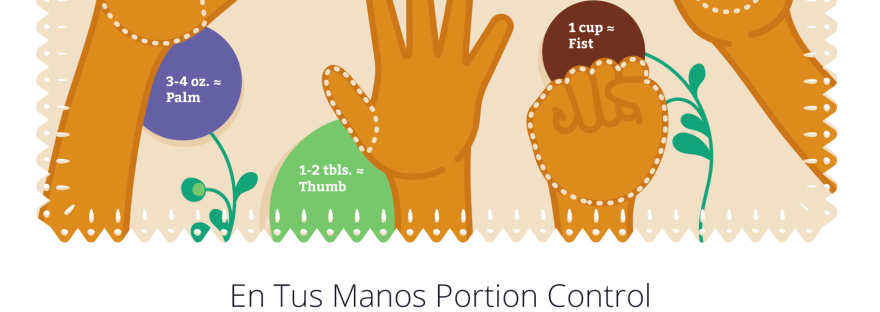
Muchas veces ni nos damos cuenta de la cantidad de comida que comemos. Controlar el tamaño de las porciones es fácil si uno sabe cómo. Este dibujo explica el tamaño de las porciones y te ayuda a ser más moderada cuando te sirvas comida.

Aquí hay un dibujo que te explica el tamaño de las porciones:

Clave:

  • 3-4 oz. Tres o cuatro onzas = tamaño de la palma de tu mano (Esta porción funciona para medir carne, pescado, pollo, etc.)
  • 1 teaspoon (en inglés) es una cucharadita cómo la que usas para el café (Esta porción funciona para medir aceites, mantequilla, mayonesa)
  • 1 oz. – Una onza = tamaño de tus dos manos formando un hueco (Para medir tortillas, panes, galletas)
  • 1-2 cucharadas = tamaño de tu dedo pulgar (Esta porción funciona para medir mantequilla, aceite, crema, aderezo para ensaladas, queso fresco)
  • ½ taza = tamaño de una mano ahuecada (frijoles, arroz, papas, pasta)
  • 1 taza = tamaño del puño cerrado (sopas, frutas, verduras, ensalada)

Es fácil aprender sobre el control de porciones cuando adoptas nuestra filosofía de “Un poquito de todo”. Utiliza este dibujo de control de porciones como guía cuando necesites que alguien te de una mano.