¡Hola, Sabrosa!, English, Healthy Family, Healthy Mexican Food

¡Salsa First!

Salsa Con Todo

There is an old saying that my Tía Paqui, one of my madrinas, used to say when she cooked up a good salsa: “¡Más vale la salsa que los chicharrones!” (The salsa is worth more than the chicharrones.)

Dichos are wonderful little bits of wisdom and at De Las Mías, we love our dichos. They are mini-lessons passed on by our abuelitas, moms and madrinas. You can find thousands of dichos in the Spanish language. 

The dicho, “Más vale la salsa que los chicharrones” aligns with the De Las Mías way of thinking.It means that salsa is highly valued in our kitchen culture. And in the case of chicharrones, we definitely want the salsa to be the star of the show and the chicharrón to be the supporting actor. The chicharrón is not your friend, comadre. And as my Tío Beto used to say, “Los chicharrones son muy traicioneros.” In English, this translates to “chicharrones are traitors,” (backstabbers!) They can basically kill you.

Some of us, like my sister, loves, loves, loves chicharrones. But chicharrones are firmly in the “poquitos por que son benditos,” category. You can still make a mean taco with a few chicharrones, though. You can. I’ve done it. I am speaking from experience. But let the salsa lead and postpone the heart attack.

(I’m only half kidding.)

High fat foods are killing us, comadres, and we need to dial it back. Fat makes food taste good, but salsa makes it taste GREAT! So when you’re cutting back on fat, a good way to not sacrifice flavor, not to mention, your way of life, is to liven it up with salsa!

Salsa is in our blood. Our indigenous grandmothers have been making salsas since before the Spaniards landed. 

A Mini-History of Salsa

Mexican salsas originated with the Aztecs. And apparently, the Incas and Mayans were no slackers when it came to to making these tasty  concoctions. (Ají, any one?) The base of a good salsa is, el chilito! You cannot have a good salsa without chiles, but the next most common ingredient is el tomate — the tomato. Both of these ingredients are native to the Americas. Salsa, of course, has evolved. For example, I am not sure when the onion showed up. But as the salsa evolved, many other healthy ingredients were added such as cilantro, parsley, epazote and other spices, and lest we forget, the heroic avocado! Today, there are hundreds of different kinds of salsas. We love fruit salsas, like mango, peach and jicama salsa.

Salsas can be raw or cooked. My own favorites are raw salsas, like Pico de Gallo with jalapeños or one good Hatch green chile, or even the humble Anaheim! But one thing is for sure, and that is that salsas are healthy foods that you can eat in great abundance and feel good about it. Get your veggies here, Comadres!

Salsa adds spice to life – le da sabor a la vida.  Even a simple bottle of Cholula will brighten up your taco.  And did you know that Louisiana Red Devil Sauce, la salsa del diablito, originated in New Orleans? Who knew? Here is a great article that you might find entertaining.

We love concocting recipes with native ingredients such as nopalitos, tomatoes, and chiles.  Here’s a list of native foods from the Americas,these ten things that have always been here:

Finally, did you know that cranberries are native to the Americas? Cranberry salsa, anyone? Are you ready for this? Easy cranberry salsa that you could become famous for, with only 5 raw ingredients: Fresh or frozen cranberries, an orange, a fresh jalapeño, a little bunch of cilantro, and yeah, a cup of sugar. But it’s okay, in moderation, remember? And for Thanksgiving! To go with your native guajolote? (Blend it up in a food processor and you are done.)

So pile on the salsas, comadres! And have yourself some of the healthiest food you can eat, while expressing your fabulous cultura. ¿Who says Mexican food is not healthy? ¡We don’t!

Here is a list of the salsas that you can find in La Cocina — De Las Mías:

Roasted Chile Salsa

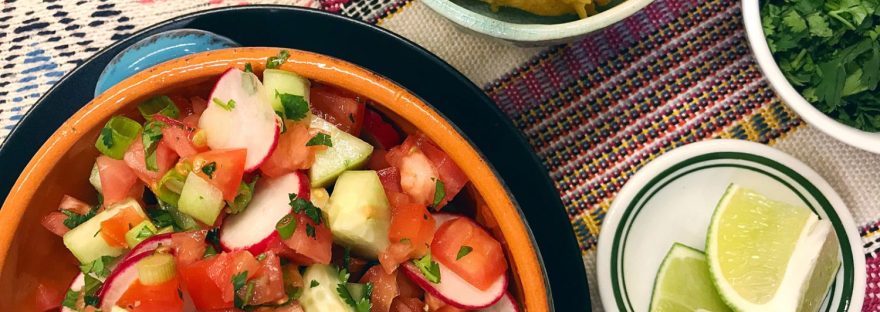
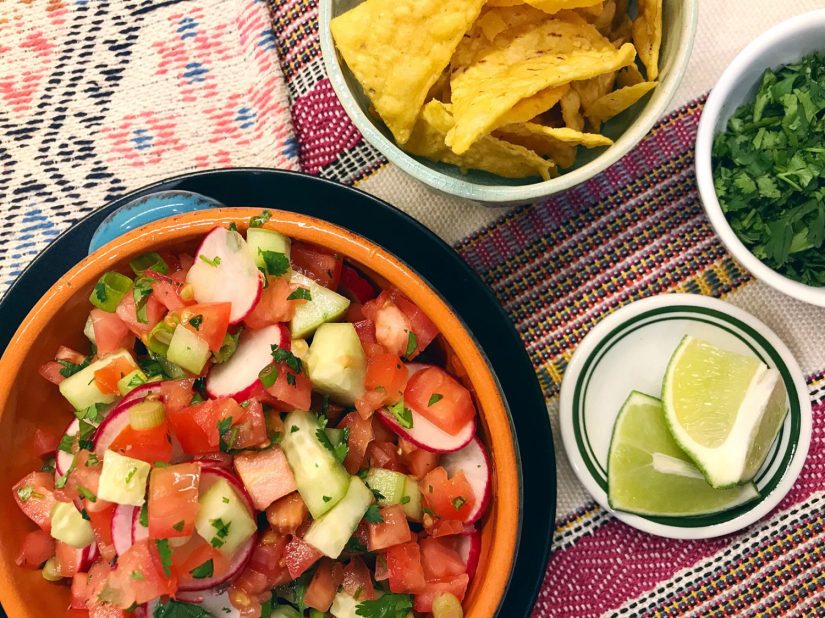
Pepino and Radish Salsa

Pico de Gallo

Salsa de Nopalitos

Grilled Pineapple Salsa

Ana’s Chipotle Salsa

Try them with tacos, burritos, scrambled eggs, tortas, tostadas, soups, and stews.  (I take a store-bought bottle of Cholula to the movies for my popcorn! Yeah, I do.)

Don’t see your favorite salsa here? Send us the recipe and we’ll send you a little something in return.  

〰️

De Las Mias app is ready for download.  Look for it at the Apple and Google Play Store. Follow us on Facebook and Instagram @delasmiaslife.


¡Hola, Guapa!, Edición No. 5: Stress, Spanish

Caminar para relajarte

Malo que yo lo diga pero, nací estresada. Mi sobrenombre, entre familia, es ‘bultodenervios’. También me dicen ‘ansiosa’, ‘alterada’ y a veces hasta ‘pesada’cómo a la Pepa en la película Mujeres al borde de un atque de nervioso.

Nadie nos tiene que decir que la vida es estresante. Para cada solución, hay un problema…el estrés es una aspecto de la vida diaria, parte del tejido de la vida, pero algunas tenemos demasiado y nos puede causar problemas.

El estrés puede causar que no duermas bien, que se te suba la presión de la sangre, y hasta te puede impedir que logres tu peso saludable.

Esta parte, la que te puede impedir que bajes de peso no me la sabía yo hasta que lei un artículo muy interesante sobre la hormona Cortisol.  Todas tenemos esta hormona – el cortisol – pero algunos científicos le llaman la hormona del estrés. Cuando nos estresamos al extremo, producimos más cortisol que lo normal. Y sin darnos cuenta podemos subir de peso o no poder lograr un peso saludable.

Y ya sabemos que cuando andamos bien estresadas, para el colmo de los colmos, nos complacemos con comer más comida chatarra, grasosa o dulce, como chicharrones, pan dulce, cheetos o pulpitas de tamarindo.

Les confieso que durante un ‘perfect storm’ (¡LA TORMENTA PEFECTA!) de estrés me comí una bolsa entera de papitas con chilito y limón.

A esto se le dice comer emocionalmente o como dicen en los Yunaides, ‘Emotional Eating’.  Y el EE se convierte fácilmente en CD – comer demasiado – y asi comienza un círculo vicioso que resulta en aumentar más y más de peso, hasta llegar al punto de ‘self loathing’, el odio a si misma. ¡Cálmense, comadres! ¡Que hay ayuda!

¿Listas?

A enfocarnos en 3 consejos básicos para su cajita de herramientas.

CONSEJO #1

Practica ‘mindfulness’ = poner atención. Un concepto sencillo, realmente. ‘Mindfulness’ quiere decir tomar tu tiempo y ser conciente de lo que estás haciendo… lo que comes, lo que escuchas, lo que compras.

  • Pon toda tu atención en el momento de cada actividad.
  • Concéntrate en cómo te sientes en ese momento.

Comienza poco a poco. Pon atención a como tratas a tu cuerpo. ¿Qué te hace sentirte bien o mal? Pon atención en como te sientes después de comer una comida deliciosa. Pon atención en cómo huele la comida, de qué colore es.  Pon toda tu atención en lo que estás haciendo en cada momento. Practica un poquito más cada día… mañana y pasado mañana también. Pon más atención la semana que entra y sigue tratando cada día de estar más presente en lo que estás haciendo.

CONSEJO #2

Usa tu ‘mindfulness’ para chequear contigo misma sobre tus ‘antojos’. Cuando llegues a casa, después del trabajo, ¿sientes que vienes muerta del hambre? ¿Te sientes ansiosa? ¿Traes ganas de comer algo?  Ahora pon atención a lo que quieres comer y practica:

  • Toma tu tiempo.
  • Pon atención.
  • Hazte esta pregunta:  ¿Tienes hambre física o hambre emocional?

Si tienes hambre y no puedes saber si traes hambre física o emocional, escoge una fruta con una manita de almendras o algo con proteína.  Ahora cómetela y para un momento. Si sigues con hambre, ¿qué te apuesto que tienes hambre emocional? Y lo que necesitas, comadre, es un antojito emocional. Entonces llama a tu comadre, corre un ‘bubble bath’ abraza a tu compañero, o compañera, pon tu música favorita,  o juega con tu perro. Haz el esfuerzo de conocerte a ti misma mejor y establecer si el hambre que traes es por comida o por cariño.

CONSEJO #3

Aprende a meditar. Ya sé lo que estás pensando. Imposible. Soy muy inquieta. ¡Te comprendo! A veces tiemblo como hormiguero al sentarme quieta por 5 minutos.  Pero inténtalo. No cabe duda del valor enorme de la meditación. Hay décadas de investigación sobre los beneficios de la meditación y del ‘deep relaxation’. Si no has aprendido a meditar aquí te va una nueva herramienta…

Esta meditación es especialmente buena para las personas nerviosas inquietas como yo…

#1  Compra zapatos cómodos

No tienes que gastar un dineral ni comprar lo de la última moda. Solo necesitas un par de zapatos que te sostenga bien el pie para caminar. No tienes que elevar tu ‘cardio’,  pero puedes caminar tan rápido como quieras. Yo salgo de la casa como bala tratando de escapar el estrés, pero después de un rato, relajo las manos, calmo cado paso, levanto la cabeza y respiro profundamente. Practico ser conciente de cada paso que tomo y se siente bien padre.

#2  Respira profundamente

Cierra la boca y respira profundamente por la nariz y sopla por la boca. Hazlo tres o cuarto veces.  Cada vez que respiras, siente que estás más calmada. Toma tu tiempo.

#3  Camina

Vete sola o con una comadre o con tu perro.

Consejo Extra: Si tu perro anda igual de nervioso como tu, pues déjalo en casa y llévalo más tarde.

Ahorita, toma cada paso con la meta de dejar el estrés atrás de ti.  Paso por paso.

#4  Practica ‘mindfulness’ = poner atención

  •     Camina con atención.
  •     Concéntrate en como te sientes mientras caminas.
  •     Pon atención cuando tu talón baja y como sigue el resto del pie.
  •     Relaja tus brazos y pon atención a como se mueven por el aire.
  •     Respira.
  •     Pon atención a tu ambiente y las sensaciones que sientes.
  •     Deja que entren los pensamientos y preocupaciones del día, pero respira profundamente y pon atención solamente a tu cuerpo y a cada paso.

Un Tip: Cuando mis pensamientos me están volviendo loca, repito este dicho. “Voy derecho y no me quito”.  Me calmo y sigo caminando. Camino. Camino. Camino.

#5  Camina por 15 minutos

Regálate esto 15 minutos. Hazlo cada día y pon atención. ¿Cómo te sientes? Si con el tiempo quieres oír música, pues hazlo. (A mi me gusta – “Caminando por la calle yo me fui…” de los Gipsy Kings’) Yo te aconsejo que para empezar, camines en silencio por unos 3-5 días.

Camina. Camina. Camina por 15 minutos poniendo atencón. Verás que con esta simple práctica te vas a sentir menos estresada.  ¡Anda! ¡Te lo mereces!

# 6. Al terminar, respira y mira.

¿Cómo te sientes?

Después de unos cuantos días de practica por favor aviéntanos un ‘text’. Nos encantaría saber cómo te fue y con toda la confianza del mundo dinos:

  •     Que te gusto.
  •     Que no te gusto.
  •     Otras ideas en cómo relajarte.

〰️

The De Las Mias app es gratis. Búscala en el Google Play Store.  Síguenos en Facebook y Instagram @delasmiaslife.

¡Hola, Guapa!, Edición No. 4: Reflection, English, Healthy Body

Walking Meditation


Are you stressed out? I know I am! My natural way of being is kind of high-strung. I am, what my Mexican family calls, nerviosa. So yes, high-strung, hyper, even at times, a bit over the edge. Some people may even call me anxious, like the Mexican version of Woody Allen. But I still prefer nerviosa which simply means – nervous.

The truth is, life is very stressful and some lives are more stressful than others. But did you know that stress can keep you from achieving a healthy weight? There is this hormone, cortisol, that some scientists refer to as the stress hormone, and when we get overly stressed, we produce more of this hormone than normal. And sometimes, some of us may have cortisol interfere with our healthy weight goals.

Of course we also know that we can’t blame it all on cortisol. We know that sometimes, when we are overly stressed we reach for crunchy, fat-filled foods like chicharrones, Cheetos and potato chips, or the sugary stuff like candy bars, pan dulce, churros and pulpitas de tamarindo.

Emotional eating is easily converted into overeating, and overeating leads us to unhealthy weight gain and sometimes even self-loathing.

In today’s article, I want to cover 3 basic pieces of advice and a special tool for your toolbox.

First, let’s talk about mindfulness. You hear a lot about mindfulness now. Mindful eating, mindful listening, mindful shopping, you name it. It’s a very simple concept, really. Being mindful is paying attention. So the first piece of advice from me to you is — be mindful. Pay attention. Pay attention to what you eat. Pay attention to how you treat your body. Pay attention to what makes you feel good and what makes you feel bad. Pay more attention today than you did yesterday. And tomorrow, try it again.

Second, use your mindfulness to check in with yourself regarding your cravings and your hunger pangs. If you come home, nerviosa, from a hectic day at work, and you want something to eat, pay attention to what you want.  Practicing your mindfulness, ask yourself if you are physically hungry or emotionally hungry. Just ask yourself that question. Try it. If you answer ‘physically hungry,’ pick up something healthy like an apple, an orange or a pepino with chilito y limón. If after you eat something healthy, you are still hungry, the sure bet is that you are emotionally hungry. You need an emotional snack. Call your comadre, hug your husband or partner, kiss your kid on the head, play with your dog.

Third, learn to meditate. I know what you’re thinking. You can’t sit still, either? That’s me. Sometimes I am so nerviosa, that I can’t sit still to take a deep breath. Sitting still to take deep breaths when I am so nerviosa, just makes me twitch. But we know that the value of meditation is enormous. There is a lot of research on the benefits of meditation and deep relaxation. It’s been there for many years and it’s held up. But some of us, hyper-active nerviosa types just can’t sit still. So here’s a simple tool for your toolbox: Walking Meditation.


Here’s how it goes:


1. Get yourself some comfy shoes.

They don’t have to break the bank or impress the neighbors.They just have to provide you with support to take a nice leisurely walk. Now remember, this walk is not intended to get your cardio up, although you can walk as fast as you want.The intention of this walk is for you to chill out.

2. Take some deep cleansing breaths.

Three usually does the trick. Breathe in through your nose and out through your mouth.

3. Now walk.

Go by yourself or with your calm dog. If your dog is just as hyper and nervioso as you are, take him later.  Right now your mission is to let the stress fall away from your body and your mind.

4. Go back to mindfulness.

Walk mindfully. This means pay attention to how you feel as you walk. Pay attention to your feet as they touch down on the ground. Pay attention to your heel as it touches the ground and how the rest of your foot follows. Relax your arms and let them swing in a natural way and pay attention to them as they move through the air. Pay attention to your surroundings, the sensations you feel as you breathe in. Keep your attention on walking. Thoughts will come, worries will come, your to-do list might haunt you, but your job right now is to take a walk and pay attention to yourself,  your body, your breath, and your surroundings. One trick that works for me, when I get lots of distracting chatter in my brain, is to simply say to myself, “walking.” Repeat that each time some random thought comes in to distract you. Walking. Walking. Walking.

5. Walk for 15 minutes.

Set the intention that you are doing this for yourself. Do it. See how it feels. Some people like to play soft music, but I would advise you to just do it a la natural for a few times and see how it feels. You can add soft music later if you like. For now just walk mindfully for 15 minutes because you deserve this sacred time for yourself.

6. When you are done, take a deep breath and look around.

Smile. How does it feel?

Now that you have given yourself this nice little walking meditation gift, if you feel like going for a power walk and get your heart rate up, knock yourself out. You can go back for your crazy dog or your kids now, if they wanted to come with you, but those 15 minutes are yours and yours alone. You will benefit by lowering your stress level, curbing the cortisol, and being healthier than you were 15 minutes ago.

We would love to hear from you. Is this content useful? Does our advice make sense? Let us know, so we can provide you with the right kind of information that you can use to be healthier and happier!

〰️

The De Las Mias app is free and ready for download in the Google Play Store.  Follow us on Facebook and Instagram @delasmiaslife.

¡Hola, Sabrosa!, English, Healthy Mexican Food

The Diversity of our Comida


We are so lucky to be Mexican! Hey, how often have you heard that lately? Well, it’s time to say it out loud, comadres!

Mexico is a fantastic country and the American Southwest, which at one time was part of Mexico, is a fantastic region. We are connected by land, our love of language, our love of familia, and our love of food. We are kindred spirits. In many instances, we did not cross the border. The border crossed us. So here we all are in this extraordinary land at an extraordinary time. This land mass that we occupy, Mexico and the North American Southwest, holds our roots and represents centuries of customs, languages and flavors. We come together to form a wonderful amalgamation.

Amalgamation is what happens when two or more cultures blend together to create a new one – in Spanish it is called Mestizaje. That’s what happened to us, our customs, our food and our way of life. ¡Que viva el Mestizaje!

It started when our Spanish ancestors landed in Vera Cruz, painful as it was for our indigenous brothers and sisters. It was a brutal birth, but the results were complex, rich, beautiful and diverse. Our food grew out of that mestizaje and now we have one of the most varied and delicious foods in the world.

From our Spanish ancestors we got wheat, cows, pigs, chicken, horses and sugar. From our indigenous ancestors we got corn, potatoes, tomatoes, chiles, and chocolate!

Say those words out loud and let your imagination and your taste buds explode!

If it hadn’t been for the Spaniards, we would not have our beloved flour tortillas. And where would be without the corn of our indigenous grandmothers? Picture a day without tacos, burritos, enchiladas, pozole, menudo, and tostadas, and picture a sad, sad day! Imagine New Mexico without the red, the green and the Christmas!

And don’t even get me started on where I personally would be without chocolate.

Every region of Mexico and the North American Southwest has its knockout specialty dishes and as De Las Mías grows, we want to proudly feature all of them and teach you how to enhance those dishes to make them healthier.


Here is a small run-down of our favorite Mexican and Southwestern foods and signature dishes.

  • Arizona: Machaca
  • California: Fish Tacos
  • New Mexico: Green Chile Stew
  • Texas: Fajitas
  • Oaxaca: Mole Negro
  • Puebla: Pipian
  • Sinaloa: Chilorio
  • Tijuana: Caesar Salad
  • Jalisco: Birria
  • Sonora: Caldo de Queso


Some of them you will find in De Las Mías and some of them you will have to dig around on your own.  Talk to your mothers, abuelas, madrinas and comadres. Hear their stories. Start collecting family recipes and pass them on. Pass them on to us and we’ll have our expert chef and nutritionist hack them for you and teach you how to make lighter versions that don’t compromise flavor. And when we can’t hack them and make them healthier, we won’t recommend that you give them up. If we can’t make it lighter, you will simply hear us say, ¡Go easy on the portion size, comadre!  

Enjoy our “Poquito de todo,” philosophy.

Enjoy the fruits of our amazing Mestizaje! Be a proud Latina enjoying the riches that our multicultural cornucopia has to offer – and ¡Buen Provecho!

As Evie Righter, author of the lovely little book, The Best of Mexico so aptly puts it, “Every cuisine in the world is rooted in history. And while volumes have been written about Mexico’s past, it is only recently that the cuisine of this dramatic, vibrant country has been chronicled for its extraordinary complexity and diversity and it is marvelous melding of different cultures and distinct regions. It is spirited; it is strong; it is from the ground up. Its beginnings are ancient.”

I love this paragraph and I see how it also applies to that same cultural legacy we benefit from in the American Southwest. At De Las Mías we will always strive to highlight the diversity of our food and strength of our cultural heritage. The changes we make in our test kitchen with the help of our chef Lori and our nutritionist Malena, will never compromise flavor and always strive to enhance your ¡Salud!

Here are some great resources we want to share with you to start exploring the glorious and exquisite foods of Mexico and the Southwest. Here are some of the books I keep on my shelf and 2 websites I am particularly fond of:


Books

Diane Kennedy’s – The Essential Cuisines of Mexico

A tattered copy of my mom’s — La Cocina de Doña Adela by Adela Romo de Escamilla


Websites

De Las Mías

Comida Mexicana


Other Books on my Shelf:

Susanna Palazuelos’ and Marilyn Tausend’s Mexico the Beautiful Cookbook

Evie Righter’s The Best of Mexico

Marilyn Tausend’s and Miguel Ravago’s Cocina de La Familia

Fabiola Cabeza de Vaca Gilbert’s The Good Life: New Mexico Traditions and Food

Jane Milton’s Mexican: Healthy Ways with a Favorite Cuisine


¡Hola, Sabrosa!, Spanish

La variedad de nuestra comida

  ¡Somos tan dichosas de ser mexicanas! ¿Cuántas veces has oído eso últimamente? Bueno, es hora de decirlo en voz alta, Comadres! México es un país fantástico y el suroeste de los E.E.U.U, que en un tiempo fue parte de México, es una región fantástica. Hay muchas cosas que nos unen:  la tierra que compartimos, a la que pertenecemos, nuestra idioma, el amor que sentimos por nuestras familias y nuestra cultura y algo más que es súmamente importante:  ¡nos encanta nuestra comida! Aunque ya lo había mencionada antes, lo quiero repetir que pertenecemos a esta tierra, a esta región que embarca méxico y el suroeste de los E.E.U.U.. En muchos casos, nosotros no cruzamos la frontera: la frontera nos cruzó a nosotros. Así que aquí estamos todos en esta tierra extraordinaria en un momento extraordinario. Esta terreno que ocupamos los Latinos, Indo-hispanos, Mexicanos, Mestizos, sostiene nuestras raíces y representa siglos de costumbres, idiomas y sabores.  Formamos una maravillosa amalgamación. Es una manera de describir lo que nos sucedió cuando nuestros antepasados indígenas se mezclaron con nuestros antepasados españoles. Dos o más culturas se mezclaron y crearon una nueva. En español esto se llama Mestizaje. El mestizaje fue el resultado de la mezcla de costumbres, idiomas, comida y forma de vivir. ¡Que viva el Mestizaje! Para muchos de nosotros, esta historia comenzó cuando nuestros antepasados españoles aterrizaron en Vera Cruz, doloroso como lo fue para nuestros hermanos y hermanas indígenas, así es cómo llegamos a este mestizaje. Fue un parto brutal, pero los resultados fueron complejos, ricos, hermosos y diversos. Nuestra comida surgió de ese mestizaje y ahora tenemos uno de las cocinas más variadas y deliciosas del mundo. De nuestros antepasados españoles conseguimos el trigo, vacas, cerdos, pollos, caballos y azúcar. De nuestros antepasados indígenas conseguimos el  maíz, las papas, tomates, chiles y ¡chocolate! ¡Si te pones a repetir, en voz alta, todas estas palabras que representan nuestros alimentos,  y te dejas llevar por tu imaginación, ¡sientes una exploción de sabores! Si no hubiera sido por los españoles, no tendríamos nuestras amadas tortillas de harina. ¿y dónde estaríamos sin el maíz de nuestras abuelas indígenas? Imagínate un día sin tacos, burritos, enchiladas, pozole, menudo y tostadas! ¡Qué dia tan triste! No quiero ni pensar cómo fuera mi vida sin chocolate. Cada región de México y del suroeste norteamericano tienen sus especialidades y en De Las Mías queremos presentar, con orgullo, un poco de toda la variedad que existe en nuestra cocina maravillosa y deiciosa. Nuestro meta es en presentarte toda esta variedad exquisita en una manera más saludables.   Aquí hay una pequeña lista de algunos de nuestros platillos regionales favoritos:

  • Arizona: Carne machaca
  • California: Tacos de pescado
  • New Mexico: Green Chile Stew (Guisado de puerco en chile verde)
  • Texas: Fajitas
  • Oaxaca: Mole Negro
  • Puebla: Pipian
  • Sinaloa: Chilorio
  • Tijuana: Ensalada César (Ceasar Salad)
  • Jalisco: Birria
  • Sonora: Caldo de Queso

  Algunos de estos platillos  se encuentran en la sección de la cocina En De las Mías y algunos de ellos tendrás que encontrar por tu cuenta.  Habla con tu mamá, tu suegra, tus abuelas, madrinas y comadres. Escucha sus historias. Empieza a colectar recetas familiares y a preservarlas y compartirlas. Compártelas con nosotras.  Danos permiso para adaptarlas, si es necesario, para hacerlas más saludables. Aquí podemos ver si es posible preparar versiones más saludables y compartirlas contigo y tus amigas. Se trata de adaptar pero no sacrificar el sabor. Y cuando no se puede adaptarla receta sin sacrificarla, seguimos nuestra filosofía de “Poquito de todo.” Disfruta de nuestro increíble Mestizaje en la cocina! Hay que sentir orgullo por nuestra cultura y la diversidad de nuestra comida. Evie Righter, un autora de un pequeño libro de recetas muy encantador, The Best of Mexico lo explica bien, “Cada cocina en el mundo tiene sus raices en la historia. Y aunque se han escrito volúmenes sobre el pasado de México, es sólo recientemente que la cocina de este dramático y vibrante país ha sido presentada por su extraordinaria complejidad y diversidad. Es una maravillosa fusión de diferentes culturas y regiones distintas. Es espíritu; es fuerte; surgió de la tierra. Sus origenes son antiguos. “ Me encanta este párrafo porque reconozco cómo se aplica también a nuestra herencia cultural que nos enriquece la vida. En De las Mías siempre nos esforzaremos para representar lo mejor de nuestra comida y en una manera saludable. Los cambios que hacemos en nuestra cocina los hacemos con nuestra chef, Lori y nuestra nutricionista Malena. Siempre nos comprometemos a conservar la tradición de nuestra comida mientras que la adaptamos para hacerla en una manera más saludable. Aquí hay algunos recursos que queremos compartir con ustedes para que empiecen a explorar los alimentos diversos, gloriosos y exquisitos de México y el suroeste. Aquí está una lista de mis favoritos libros de receta y 2 sitios web que me gustan especialmente:   Books Diane Kennedy’s – The Essential Cuisines of Mexico A tattered copy of my mom’s — La Cocina de Doña Adela by Adela Romo de Escamilla   Websites De Las Mías Comida Mexicana   Otros Libros en mi Estante: Susanna Palazuelos’ and Marilyn Tausend’s Mexico the Beautiful Cookbook Evie Righter’s The Best of Mexico Marilyn Tausend’s and Miguel Ravago’s Cocina de La Familia Fabiola Cabeza de Vaca Gilbert’s The Good Life: New Mexico Traditions and Food Jane Milton’s Mexican: Healthy Ways with a Favorite Cuisine    

¡Hola, Guapa!, ¡Hola, Sabrosa!, English, Healthy Body, Healthy Family

How to Help your Spouse Make Healthy Changes

Bicycle Commuter stop at Traffic Light

We’ve all heard the old American dicho, “You can lead a horse to water, but you can’t make him drink.”  This little bit of wisdom, much like the dichos of our abuelas, madrinas and moms, is tried and true. Another one of my favorites is, “When the student is ready, the teacher appears.”

I think these two dichos are pretty handy for those of us over-achieving helper types. Being a helper or a supporter of someone trying to make a change is very important. De Las Mías is based on the knowledge and the research that affirms that helping relationships actually make a difference. But it is equally important to realize that if the horse ain’t ready, there ain’t much you can do about it. So here’s your first consejo: Before you volunteer to help someone change, make sure they are ready to make the change.   

When I started helping my husband, Mike, eat healthier foods, he was ready. His dad had died when Mike was just a baby, leaving Mike’s mom as a young widow to take care of herself and her infant. This was in the 1950s and women alone had more barriers than they do now fending for themselves. This tragic story was told and retold by Mike’s aunts and uncles so that young Mike grew up knowing of his father’s fateful date with a heart attack. When Mike reached the age 35, the same age his dad was when he died of a heart attack, he went in for a routine check-up. The doctor told Mike that he had a very high cholesterol level for a man in his 30s. Mike didn’t need more warning than that. This was his wake-up call and he responded, ready to make a change.

Mike was ready and he asked for my help. Those are two key ingredients to helping someone make a change: readiness and asking for help. If you are in a situation where you want to help your spouse or partner make a change, remember they have to be ready for change and you have to be ready to help.

Mike and I love to eat, and we love to eat good food! We took the guidelines his doctor gave us about what to eat and  starting looking up healthy recipes. We were in it together and that made it fun, not to mention delicious. One of the first things I did was buy a subscription to Cooking Light  because they have wonderful and delicious recipes!  But, although these recipes were good and light, they weren’t Mexican.

So the next important task was to find a dietician who knew about Mexican food! I’m a proud Mexican and a proud Mexican cook. Mike is a proud consumer of Mexican food, so we make a good couple. At the time there was this misconception that Mexican food was unhealthy and greasy, and although there are plenty of ways to cook high fat Mexican food, there are also plenty of ways to cook low fat, healthy Mexican food. And thanks to dieticians and nutritionists like our own Madrina Malena Perdomo, I learned everything I could on how to keep my hubby healthy and happily eating his favorite food.

Remember, the secret sauce here is that Mike was ready. If your spouse is ready, it’s going to be easier, but there are still ways you can get yourself into trouble if you don’t watch it.

So here is how to watch it:

  • If you’re kind of metichi like I am, you’re kind of bossy, right? So the next piece of advice is Stop.  Being bossy is only a good idea in theory. Looks great on Tee-shirts but it doesn’t work that well in marriages.
  • If your spouse needs your help, encourage him or her to ask you for help. You can say something like, “Okay, so I hear you want to start eating better, what can I do to help?”
  • Another helpful hint would be to say, “You know, I’ve been wanting to make some changes too.  What do you say we do it together?”
  • Avoid nagging. Saying “I told you so,”  is a big no-no. If you see him reach for the peanut butter cups, say nothing on the spot. Better to wait and ask him/her later, “Hey, Love, when you reach for the peanut butter cups, do you want me to say something or no?”If he or she says, “Nah, by the time my fingers are on those suckers, it’s kind of late,” take the cue. Take a deep breath and let him or her guide you in how you can help.
  • Control your environment. A very powerful approach to cutting down on junk food and sweets is to simply not have them in the house. You might suggest this when it is NOT emotionally charged. Don’t wait until you’re in the middle of the Super Bowl or his favorite novela to challenge peanut butter cups. Think ahead. You could say something like, “Hey, what about if we don’t buy any junk food this week and see how it goes…”
  • Look up a delicious De Las Mías recipe and prepare a meal together. They say that the couple that cooks together stays together.
  • If you see that either one or both of you want to eat more than you planned after dinner, go for a walk. Exercise has proven to be a great countering technique to overeating.
  • As in all good communication, it starts with a good plan and a good agreement. If you can prepare a plan before going into action, chances are good you’ll be successful!

Remember, as a helper, you want to help.  As you do with your comadres, avoid judging, nagging and giving unsolicited advice.   

And feel free to share my story… About the time that I helped Mike eat better and possibly prevent a heart attack — all while cooking and eating good Mexican food!

¡Suerte!

¡Hola, Guapa!, English

Rediscovering a Balanced Healthy Lifestyle with Family

    Last summer rumors about a new bilingual health and fitness app for Latinas echoed throughout the Hood River community, and Leti Valle was intrigued by the culturally tailored spin on a technology she knew well. Leti was invited to join a select focus group that used the prototype for two hours. Though interested to learn more, what Leti didn’t expect was to leave the room with renewed inspiration to take better care of herself — and her mother and son.   Trying to Make Time for Health in a Busy Life With a lifelong interest in being active, Leti squeezed in time to take care of herself as best as she could. While there were still a few pounds she wanted to lose, Leti continually chased a balanced lifestyle. She set goals to drink more water, build muscle tone, stretch more and sleep at least 6-8 hours a night. Although Leti enjoyed these things—and knew they would help relieve some of her stress—finding time was the real obstacle.    

“I’m 33 now and I want to be healthy for my six-year-old son. I want us to be able to keep up with each other. I want to pass those healthy habits onto him and my friends and family.”

  Leti turned to popular healthy lifestyle apps to help motivate and organize her time, as well as set and achieve her goals. But Leti craved a more personal experience that went beyond logging every glass of water. To fulfill her journey, she wanted to tap into a deeper cultural connection and a stronger sense of community.   A Community that Encourages Latinas to be Healthy While testing the De Las Mías approach to healthy living, Leti was immediately drawn to the app’s encouragement of multigenerational support. She was excited to share this discovery with her community, believing her 55-year-old mom and her friends would enjoy using the app just as much as she did. She recognized that by sharing the journey with friends and family, she would finally have the support needed to reach her goals. Leti saw the De Las Mías community as the missing link in the previous apps she had used. The support system was encouraging for anyone, regardless of age or health, to achieve a happier, healthier life.  

“I was excited to find out that there was a health and fitness app that would be easy to use and that women like my mom could learn how to use it. De Las Mias lets you learn about your health, gives you tools you can use, and encourages you to invite your friends and family. I was happy to use an app that my family and I could benefit from.”

  Although she had been used to setting goals to improve her health, the brief experience of reviewing the De Las Mías prototype, inspired Leti to get back and try again. It also gave her a reason to have a health conversation with her mom.   Attaining a Balanced Lifestyle Through Positive Changes After using the De Las Mías prototype for only two hours, Leti felt that a balanced lifestyle was within reach once again. She started making room in her busy life for positive changes and reached her goal weight. Leti felt encouraged to try new things, and connect with her parents and grandparents through activities they all enjoyed, like walking and horseback riding.  

“The app helped me think about what my elders used to do to stay active in the old days. It was less about getting on the treadmill—it was more about spending time outdoors and having fun with family.”

  Not only was Leti able to fit into some of her old clothes again, more importantly she improved her sleeping habits and was committed to a regular stress management routine. In the year since Leti first met De Las Mías she and her mother have both stepped into healthier lifestyles and they regularly keep in touch to encourage each other on their journey. They hike and do other activities, and spend more time together. Leti and her mom already know what the most recent research tells us: The best way to do life, especially a healthy life, is with our family and friends. Follow @delasmiaslife to hear more encouraging stories!

¡Hola, Guapa!, Spanish

8 tips en cómo disfrutar de caminatas en el campo con tus hijos.

Nos cuenta nuestra comadre, Liz…“A mí, siempre me ha encantado el campo. Cuando Marty y yo andábamos de novios, salíamos a caminar por el campo todos los fines de semana.  Era mi manera favorita de mantenerme “fit” y para mí, salir a caminar es esencial para manejar el estrés. Cuando vinieron los niños, yo quería que ellos también disfrutaran de esta actividad tan sana y bella.” “Al principio me daban nervios sacarlos al campo. Mis hijos siempre han sido inquietos y tienen mucha energía,” nos dice Liz.  “Ya me imaginaba que Ricardo se quebraba un brazo trepando árboles y que Agustín se caía por una barranca por correr en lugar de caminar.” Liz aprendió muy pronto que llevar a niños menores de 6 años a una verdadera caminata en el campo no era realístico. “Pues me di cuenta de que estaban demasiados pequeños para largos trechos y me tuve que adaptar.” Entonces se decidió que era muy importante tener un plan para los niños más pequeños.  “A los más pequeños se los lleva uno con el plan de salir al aire libre, gozar de un día bonito y de jugar.” Ya de la edad de los 7-9, se les puede llevar con el plan de ir por una excursión más larga. Determinada a inculcarles el amor a la naturaleza, Liz siguió con su plan y empezó una tradición familiar muy bella. “La primavera es la temporada ideal para comenzar aventuras en la naturaleza. Empezamos despacio y poco a poco nos fuimos convirtiendo en una familia aventurera. Ahora a mis muchachos les encanta el campo y las excursiones.  ¡La pasamos divino juntos y es una de las cosas que nos hace sentir más fuertes, unidos, y saludables!” Liz nos compartió estos tips en cómo disfrutar de actividades en la naturaleza con tus hijos:
  1. Invita a la familia entera.

    Todo es más divertido cuando lo hacemos con la gente que amamos. Invita a toda tu familia. Invita a tu abuela, a tus tías y a otras super-mamás a salir al aire libre. Caminar es una actividad de bajo impacto, perfecta para personas de todas las edades y niveles de aptitud física. No tiene que ser una caminata larga.  Escoge un lugar bonito y sal por una caminata de una media hora para empezar. O pueden ir por una hora, y descansar por el camino…ir por media hora, comer algo y luego regresar.

  2. Hazlo fácil & con suficiente tiempo:

    Especialmente en tus primeras aventuras, elige una caminata corta o con un pequeño recorrido, con una veredita plana y con poca ascensión. Ojalá vayan en busca de una vista espectacular, algún rio, cascada o lago que encontrar. Si los pequeños se distraen durante la excursión, no te preocupes; el propósito es el paseo, no el destino; así que dales suficiente tiempo a los niños para mirar, explorar e investigar.

  3. Prepárate para cualquier cosa:

    Cómo madre latina, sabemos que siempre estás preparada para enfrentar casi todo. Pero las rutas y senderos pueden darte algunas sorpresas. Asegúrate de llevar lo esencial para una excursión.

  • Mapa o guía
  • Gafas de sol
  • Crema solar
  • Ropa de repuesto
  • Linterna
  • Botiquín básico
  • Fósforos
  • Cuchillo
  • Comida extra
  • Móvil cargado

También puedes llevar algunos artículos para los niños como lupas, binoculares y silbatos de seguridad. Aunque no  haga mucho frio, siempre lleva ropa extra para la lluvia o para reemplazar si los niños se mojan o se enlodan.

  1. Toma descansos & mantente positiva:

    Si vas a organizar caminatas un poco más largas, ya sea más de 2 horas, acuérdate que hacer excursiones requiere bastante energía. Descansen en la ruta para explorar bien en lugar. Coman una merienda saludable y beban agua en camino. Todo esto ayudará a mantener la energía de todos. Mientras los niños exploran alrededor, dales refuerzos positivos para que se sientan bien de intentar algo nuevo. Recuérdales que son fuertes y aventureros.

  2. Juega a sigue al líder:

    Permite que los pequeños guíen la caminata.  Esto les ayudará a que se sientan involucrados. Asegúrate de cambiar de líder para que todos tomen un turno. Esto ayudará a que se sientan comprometidos hasta el destino final y te aseguras de ir a un ritmo apropiado para todo el grupo. Para mantener la emoción, inventa juegos para el camino. Pueden contar pájaros, flores o tipos de árboles que vean en el camino. Esto hará que la caminata sea divertida y educativa.

  3. No dejen huella:

    Hacer caminatas ayuda a crear un estilo de vida saludable no solo para la familia sino para el lugar donde van a explorar. Lleva contigo una bolsa para la basura y jueguen a recoger la basura que esté tirado por el camino. Así dejaron el lugar mejor que lo encontraron. Incúlcales a tus hijos que juntos podemos ayudar a cuidar y preservar a la naturaleza.

  4. Entre más caminatas, mejor:

    Haz una tradición de familia salir a caminar y a tomar excursiones. Las tradiciones son motivantes, especialmente cuando las hacemos juntos. Comparte el turno de planear la aventura con otras mamás o miembros de la familia. Pueden elegir un fin de semana cada mes para tomar excursiones. Para que todos se involucren, deja que tus hijos elijan algunas actividades y que aprendan a hacer su propia mochila para la excursión. (Siempre dándoles una lista con todo apuntado para que se vayan acostumbrando.)

  5. Lleva récord de tu progreso.

    Usa el log de actividades que puedes encontrar en el App de De Las Mías. Toma fotos para compartir. Lleva un récord de la excursión. Esta es una manera de motivarte y de cumplir tus metas. Descarga la App De Las Mías para aprender más maneras de motivar a tu familia a que sea más activa.

¡Compártela con tus amigas y familiares!

¡Hola, Guapa!, ¡Hola, Sabrosa!, Edición No. 3: Stay On Track, English, Healthy Body, Healthy Comadres

Sticking with Your New Routine


Making healthy choices is empowering. Turning those choices into lifestyle changes is even better. But it takes work! Here are some ways to stick with your routine, push through challenges, and turn healthy choices into healthy habits.

Have you started eating healthier, or exercising regularly with your comadres? Great work! Getting started is the hardest part. But sticking with those new choices is just as important as making them in the first place. The best ways to do that? Stay consistent, hold yourself accountable, and give yourself new challenges.


Consistency is Key

Our strongest habits are the ones we do every day — or at least on a consistent schedule. Whether you’re exercising with your comadres 3 times a week or putting some healthy veggies on the table every night, be consistent. It takes time and commitment to change a habit, so the more you stick to it the quicker it will be second nature.

Prepare for setbacks. Having plans in case of setbacks puts you in the driver’s seat. For example, if the weather is bad, find ways to be active indoors such as an exercise video. If you’re dining out with a friend, make up your mind ahead of time that you will look for healthy menu options. It’s important to make the effort, even if you’re not meeting all of your goals. Make a goal to do something good for yourself every day!


Keeping Yourself Accountable

Speaking of goals, are yours written down? Having something to work toward is essential to your success. Writing down your goals and revisiting them helps keep your eye on the prize. Whether they are on your bathroom mirror or a post it on the fridge, put your goals some place you’ll see and read them often.

As Latinas we also know the strength and support of our community is vital. Tell your comadres and friends about your new healthy habits. This can give you the extra ganas you need to stick to your plan.


Find Challenge in Change

Routines can get boring. We know. But you don’t have to give up your healthy habits just because you’re getting used to them. Give yourself some credit! And then mix it up.  Change your walking routine into a jog. Find a new De Las Mías recipe or two and try them out! And if you find you’ve met your goals, give yourself an ¡Eso! Share your new triumphs with your comadres. Add some new ones! Our philosophy of “poquito de todo” applies as much to activities as food choices: a little bit of everything helps achieve balance, puts variety into the mix and makes your body feel good.

¡Hola, Sabrosa!, Edición No. 3: Stay On Track, English

What is Portion Control: Part 2

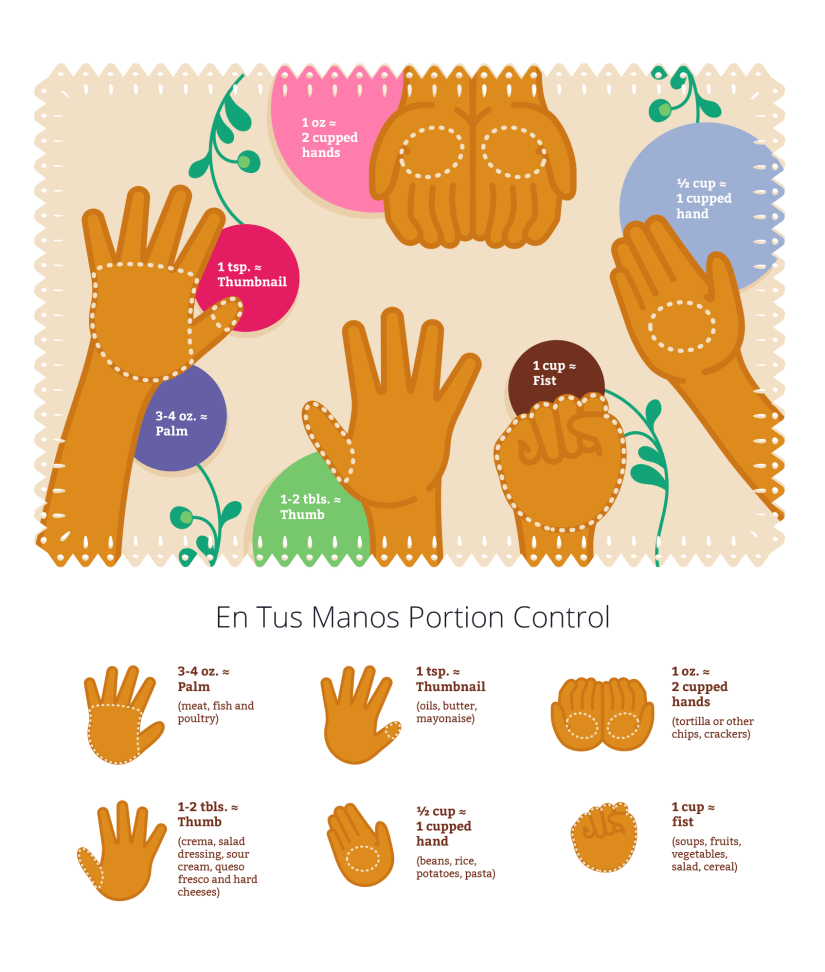
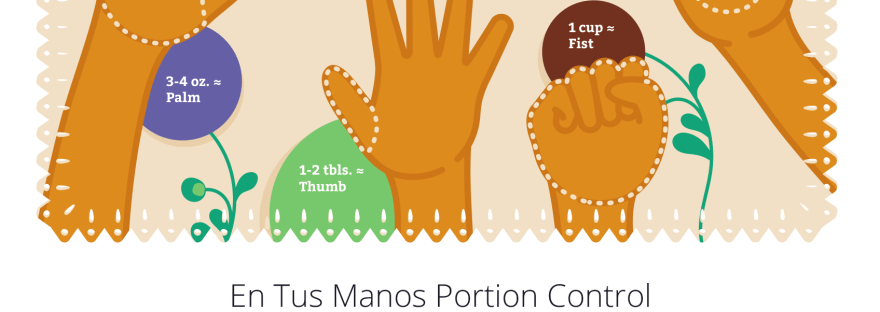
en tus manos Becoming aware of serving sizes and how they impact your healthy eating goals is a key step toward healthy living. We’ve said it before and we’ll say it again, De Las Mías is not about diets or deprivation. We don’t want you to stop eating anything that you love to eat. Even a sweet treat is okay in moderation. The other day I was talking to a doctor, a specialist in diabetes, and we were discussing the traditional New Mexican diet. She said, “Face it—there is no way of making a healthy bizcochito,” and she is right. Traditional bizcochitos are made with flour, sugar and lard. Period. So, what to do? Are you really going to try to give up these tasty little morsels? I don’t think so. The next-best thing is to eat a smaller amount. Enjoy it, savor it and don’t overdo it. So, if you’re used to dunking four bizcochitos into that hot chocolate on a cold winter’s eve, now you cut it by half. Dunk two and enjoy! Giving up your favorite foods is just going to make you feel deprived, and we don’t want you to feel deprived. We want you to feel nourished and happy. Treating yourself once in a while is not going to hurt you; it might even make you happy. That’s why one of our favorite traditional dichos is “Una vez al año, no hace daño”—”Once a year doesn’t hurt.”   We believe that, with small tweaks, a traditional recipe can be turned into a healthier recipe without sacrificing flavor. See what we have done with traditional green chile: we use olive oil instead of lard. Try our low-fat pozole recipe and taste a bit of heaven. And go ahead and make the enchiladas, but instead of frying them before rolling them, make them flat and use a little less cheese. The De Las Mías recipes are chock-full of traditional foods made healthier, but even the best chef can’t get the fat out of the bizcochito. At those special times, just eat “un poquito,” a little less of it, and you’ll be fine. And by the way, don’t begrudge yourself after you eat a special treat like that. Once you decide to indulge in the deliciousness of a homemade bizcochito, don’t ruin it by beating yourself up. Own it and go on to healthier options at your next meal. Remember, you always have a chance to have a healthier meal. Here are five ways to cut down on serving sizes:

  1. Instead of four bizcochitos, have two.
  2. Divide a meal. Instead of having the whole burrito, eat half now and save the rest for later!
  3. Instead of two flour tortillas, have one flour and one corn tortilla.
  4. At a restaurant that serves chips and salsa along with big meal portions, simply skip the chips.
  5. Eat a salad before your main meal. That way you will naturally eat less and get your veggies to boot!

The biggest takeaway is this: By making small changes to your portion sizes, you can still enjoy your traditional foods. Cutting back on the amount of fat you eat is a good way to make healthy changes. You can cut back on fat without cutting back on flavor. If you follow these guidelines, you are well on your way to making healthy changes without compromising your passion for traditional foods.