¡Hola, Sabrosa!, Edición No. 6: Healthy Eating, Edición No. 8: Healthy Habits, English, Healthy Mexican Food

The Taquito Diet™


The Taquito Diet

At De Las Mías we don’t normally use the word – ‘diet.’ Diets have gotten to be trite and boring, and we don’t like them very much. We know that if you go on a diet, the chances of you succeeding are slim. (No pun intended.)  

Therefore, De Las Mías is not a diet club. We are a healthy lifestyle community. And we are here to help you take steps to be your healthiest self! We focus on the pleasure of eating and cooking good food. We don’t believe in deprivation, as evidenced by our “Poquito de Todo” philosophy. But because we are a healthy lifestyle community and we want to meet your needs, we do pay attention and many of you want to lose weight and want to get healthier and stronger.  

We’re with you! We support you on  your healthy lifestyle journey, but we don’t want you to go on a diet.

Proud Latinas

As you get to know De Las Mías better, you also know that we are proud of being Latinas, and we love nuestra comida. You will find De Las Mías recipes that are Mexican, New Mexican, and Southwestern. We are proud Latinas, Mexicanas and Chicanas and we want you to be proud too! We come from a rich Indo-Hispano tradition and we have a passion for our indigenous roots and foods!

As we grow and add more recipes and ideas on how to live healthier and more joyful lives, we want to add more ways that you can connect with your roots through your enjoyment of delicious, healthy food. And since most Latinas are both indigenous and Spanish, we want to fold in our love for the Mediterranean way of eating and enjoying food. So we are providing you with two ‘undiets’: The Mediterranean (Un)Diet and The Taquito (Un)Diet!

The Taquito (Un)Diet!

I am so proud of being Mexican! We are blessed with one of the most diverse, healthy and delicious foods in the world! Our Indigenous mothers and Spanish fathers, through many trials and tribulations combined to make us and our food, Mestizas! And what a beautiful combination that ended up to be. If you feel like geeking out on the origin of the taco, check out the Smithsonian: Where did the Taco Come From?

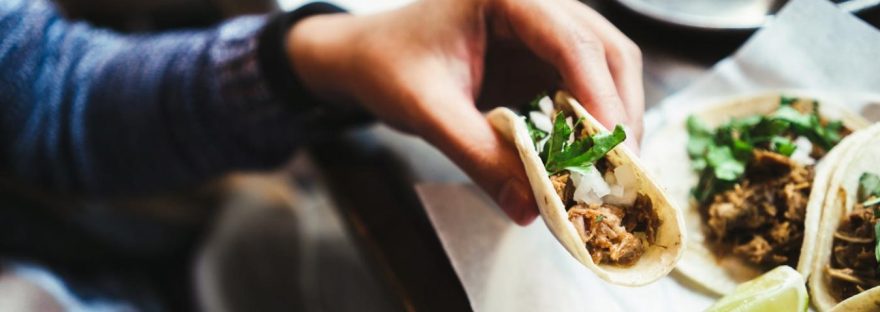
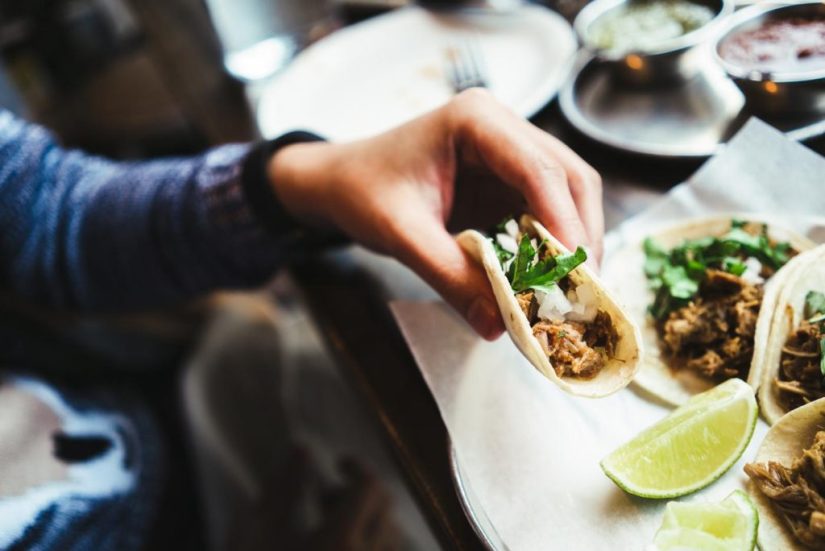
Take the humble taco, a portable bundle of deliciousness and health! It’s the perfect package of whole grains, lean protein, vegetables and even sometimes fruit!

You’ve heard of the grapefruit diet, the celery diet, the paleo diet, the Atkins diet, the blah-blah-blah diet! Now let me tell you about the Taquito Diet™, Baby! It’s a modular, delicious, nutritious and soul feeding pathway to health! You saw it here first!

Here is the skinny on the Taquito Diet:

1. You can make a healthy taco!

2. You can lose weight and enjoy your soul food while eating tacos.

3. You can mix and match, get creative and have fun while achieving a healthy lifestyle for you and your familia!

The taco could change your life! ¡Creélo! Believe, Comdres!
Here’s how it works:

1. Start with 3 corn tortillas.

We’re all about eating more whole grains and these thousand year old tortillas are a great low calorie, whole-grain, flavor-packed vehicle for all things deliciosa!

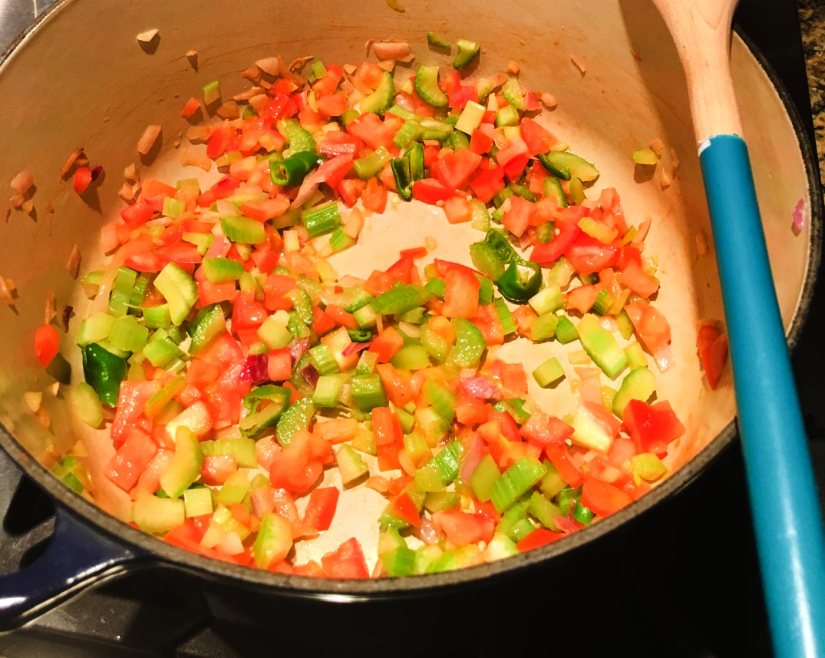
2. Make a sassy sofrito.

One of the very first things that my mother taught me about cooking is to always start with a sofrito. She said that my food would always be delicious if I started whatever I was doing with this magic concoction. It seems like every family has their own version of sofrito. My sister always adds a little fresh garlic, carrots and celery. My Ecuadoran consuegra calls it “Refrito,” and hers includes garlic, onion and achiote.

In our family, it meant simply frying up green chile, onion and tomato in a bit of olive oil before adding your meat, your eggs, or your frijoles de la olla. In Spain, sofrito almost always involves garlic and red pepper. So, the takeaway here is that almost all Spanish, Mexican and Latin American cooks use some kind of sofrito.

Hint: this is one place to add a veggie serving to your day.
3. Add a delicious meat or veggie heart!

A roasted chicken is an easy, simple way to fill your taquitos. Sometimes if we haven’t had a chance to cook dinner, I will stop by the market and get one of those rotisserie chickens that are already roasted. I remove the skin and chop it up for taquitos. I always start with the simple green chile, onion and tomato sofrito my mom taught me to make.

Carne asada is always a class taco choice. Or for the vegetarians in your life a delicious spicy cauliflower.


4. Top it off with soul-affirming salsa. ¡Qué viva el chilito!

Salsa is in our blood. Our indigenous ancestors were making salsas before the Spaniards landed. ¿Sabes qué? Mexican salsas originated with the Aztecs. And apparently, the Incas and Mayans were no slackers when it came up to making these tasty concoctions. (Ají, any one?) The base of a good salsa is, el chilito! You cannot have a good salsa without chiles, but the next most common ingredient is el tomate — the tomato.

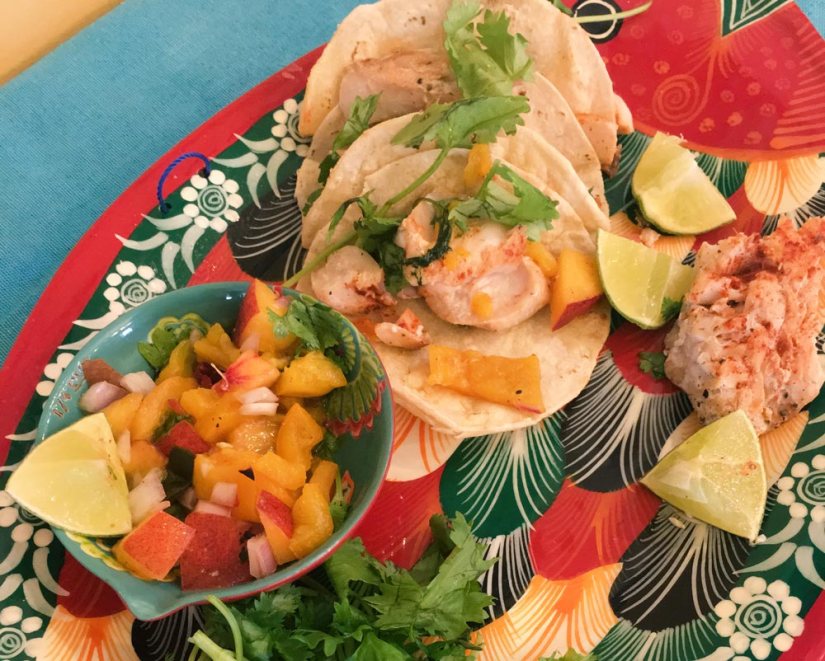
Salsa, of course, has evolved and many other healthy ingredients were added such as cilantro, parsley, epazote and other spices, and lest we forget, the heroic avocado! Today, there are hundreds of different kinds of salsas. We love fruit salsas, like mango, peach and jicama salsa. Salsas can be raw or cooked. My own favorites are raw salsas, like Pico de Gallo with jalapeños or a good Hatch green chile, or even the humble Anaheim! But one thing is for sure, and that is that salsas are healthy foods that you can use in great abundance and feel good about it. Get your veggies here, Comadres!

Here are some of our favorite salsas:

5. Serve with a side of roasted veggies or raja de chile verde.

And just for safe measure another serving a veggies. 😉

Here are 4 Taquito Diet Recipes in our app to start you on your journey to a better taco!

  1.  Tacos de Camaron
  2.  Tacos de Atun
  3.  Pork Taquitos
  4.  Lazy Sari Avocado taquitos

All of that for just about 500 calories! No fooling. ¡Buen provecho, Guapas!

〰️

Check out the De Las Mias app. It’s free and ready for download in the Google Play Store.  Follow us on Facebook and Instagram @delasmiaslife.

¡Hola, Guapa!, ¡Hola, Sabrosa!, Edición No. 6: Healthy Eating, English, Healthy Comadres, Healthy Family

Healthy Eating Wisdom: Eat Like Your Abuelos

  Looking for Healthy Eating Wisdom?  Your Abuelos Might Have the Answer

Have you noticed how many diseases are related to what we eat? High blood pressure, heart disease, diabetes, cancer. And if you’re trying to come up with a healthy eating plan, it is very confusing. Eat this. Dont eat that. Every time you turn around, there is another diet that you have to follow.  It’s enough to make us un poco loca.
 
But lucky for us, there’s some encouraging news. Researchers are finding out some things that many of us already know. Our grandparents and great-grandparents had a healthier lifestyle than we do, and that’s a fact.

Healthy Eating Wisdom from My Grandfather Take my Papa Pepe for instance, my dad’s father, who immigrated from Spain. Wiry little dude walked everywhere! If he weighed 135 pounds, he weighed too much. Swore that the onion he chomped on and the copious amount of garlic that my abuela cooked with kept him young and nimble even when the arthritis caught up with him in his 70s. We have an old cane of his that has a black mark on the inside of the curve of the cane, and that was from jumping on the bus. He used to run up to the bus and hook his cane around the door handle and hoist himself up the bus steps without missing a beat. Three Meals a Day I remember he bragged about his eating habits. “I eat breakfast, I eat lunch, I eat dinner. ¡Y, Ya! The big meal in those days, and still today in Spain and Latin America, was lunch. And that was paired up with a nice nap. La hora de la comida, which is what we called it at home, started with soup, then a second dish mostly consisting of a small portion chicken, fish or meat and veggies. Dessert was usually a cup of flan or fruit, or even 2-3 galletitas, usually Marías. Small portions but with a lot of variety. The soups were basic and traditional like cocido, which is made up of lots of veggies and very little meat. This was my Papa Pepe’s favorite. But there were also the caldillos. Ours were usually made with chopped fresh tomato, garlic, onion and green chile with small bits of lean beef and cubed potatoes. Meat was expensive then, so the meat portions were always small. A chuleta (pork chop) was thin cut and no bigger than the palm of your hand. The side dishes were veggies such as calabacitas, green beans, or a cucumber salad. ¡Un pan! (One piece of bread) Dinner was lighter than lunch. Some leftovers from lunch perhaps, or a lentil stew with carrots and onions, or even a simple bowl of frijoles de la olla. Sometimes we had chorizo con papas, scrambled up with some eggs. This was a bit heavier, but again, the portions were small, so we could enjoy it without excess. ¡Chiquito pero sabroso! (Small but tasty. ) You can eat a great variety of foods when you eat small portions. “¡Es provete, no traguete!” is one of my favorite dichos related to eating. (It translates to: it’s a taste, not a gorge.) So even a traditional chorizo, which has more fat than a regular cut of lean meat, in small amounts, is delicious. Todo en moderación. (Everything in moderation.) Papá Pepe was anti-chuchulucos. Now there’s a word for your dictionary! CHUCHULUCOS. (Mostly refers to the sweet stuff, like candy, churros, pies, pan dulce, cakes, etc.) He never touched the stuff.   So my abuelo ate three meals with no snacks in between; never ate sugar, except maybe in his café con leche, walked everywhere he could, and worked from sun up to sun down. Lived to be 90. But life has changed. Now we supersize our meals. We use food as a stress management tool and snack for entertainment purposes. The crunchier, the fattier, the more addicting, the more we like it. We sit in our cars, sit in front of our desks, plop down in front of some kind of screen for hours every day and weigh much more than our grandparents did. One of the most interesting lectures I ever attended as a health educator was years ago from Dr. David Hayes Bautista, a Professor of Medicine and Director of the Center for the Study of Latino Health and Culture at the School of Medicine at UCLA.  He cautioned that “Assimilation could be hazardous to our health,” and it was all about how Mexican immigrants were healthier when they got here than when they had lived here for a few years. Current research from UCLA also shows that as Mexican immigrants spend more time in this country, their health physical and mental health deteriorates. The basic traditional Mexican diet consists of corn tortillas, beans, fresh vegetables like tomato, avocado, chiles and onions, and some fruit. Traditional Mexican life included walking as a means of transportation and working hard.   Once we gave up walking as a mode of transportation, changed our traditional lifestyles from working on farms and ranches or even subsistent farming like growing our own food and tending to our orchards, gardens and chickens, we also started eating larger portions and more processed foods with lots more fat, sodium and sugar. Modern North American life has not been kind to our health. Along with eating more processed and fast foods, came the convenience and affordability of cars. These changes make our lives easier but also carry unintended consequences. (Para cada solución hay un problema.) We eat more poorly and are less active than our grandparents, and our poor bodies just started slowing down and wearing out. It’s not rocket science, Comadres. But there you have it. There’s an old dicho that you might have heard: “Lo que no mata engorda.” The equivalent of – “If it  doesn’t kill you, it will make you fatter.” Now, a more appropriate dicho for our times  may be, “Lo que te engorda, te puede matar,” – “That which makes you fat may kill you.” Unfortunately, I speak from experience. I just found out that I have prediabetes again. I had been diagnosed with prediabetes many years ago and that is when I started biking every day and cutting back on carbs and fat. I lost the magical 5%-7% of my body weight, and the prediabetes went away. It worked for me for over 10 years. Recently, I gained some weight, and sure enough, I am back in the prediabetes range. Now let me tell you that I haven’t changed my mind about having diabetes. I do not want diabetes, and I am going to do what I can to prevent or delay it.   So, I am going to channel Papá Pepe and start going back to a more traditional way of eating. I’m cutting back on portion sizes and do more walking.   I always thought that I did plenty of exercise. I ride my bike every day, come rain or shine, but I also confess that I’ve been riding to a French Café. So, I’m bailing on the croissant and switching to whole grain toast. When my Viejo takes our giant dog for a walk in the morning, I’m getting up and going with them even if it means going in my PJ’s. (I’m in Portland right now and people shop in their pajamas here, so I’m cool.) I’m using our De Las Mías Healthy Lifestyle Checklist and calling my Comadre, best friend and sister, test kitchen chef, extra-ordinaire, and Silver Sneaker maniac to report in.    No more CHUCHULUCOS for me and that means, not eating those sour ginger candies I get at the corner store! BUMMER! Okay, well maybe just a few on the week end! ¡Poquitos porque son benditos! I’m going to practice what I preach and let you know how it goes. In 6 months, if I lose 5%-7% of my weight, I should be under the Pre-diabetes range again.   For now, I’m going to take it easy, be kind to myself, love my body, treat it well, and make it last. I’m signing off now to take my bici to Petite Provence, to eat my whole grain toast with an egg for protein and to enjoy the fall colors. ¡Hasta la vista!   Sources: Gordon, Dan. Life in America: Hazardous to immigrants’ health? December 01, 2014  Pérez-Escamilla. Acculturation, nutrition, and health disparities in Latinos. American Journal of Clinical Nutrition. 2011;93(suppl):1163S–7S. 2011 American Society for Nutrition  

¡Hola, Sabrosa!, Edición No. 6: Healthy Eating, English, Healthy Mexican Food

Embracing Our Heritage Through the Love of Food

Our Rich Heritage Embraced Through Food!

At De Las Mías, we embrace our indigenous and  our Spanish roots.There is so much history that shaped our Indo-Hispano heritage, and some of it is not so good. Oppression and colonization caused pain and suffering. And because of that, we would sometimes like to abandon our past and reject the oppressor. There is merit in rejecting oppression and in countering the negative effects of colonization. But to deny or reject our past can also cause us to reject ourselves, and we don’t want that.

We want to embrace the whole messy thing that brought us to this place, and move on.

Our Heritage and Cultural Pride

I am equally proud of being Mexicana, Chicana, Latina as I am to be Española. I love that my Papá Pepe, my Spanish grandfather, left Spain by himself when he was 13 years old to come to ‘Hacer la America.’ And I’m proud that my Nana Concha, with her Yaqui roots, lived and struggled in a small village in the State of Sonora. This is my heritage and I am proud of it. 

I embrace the traditional and healthy Mexican way of eating, as well as the Mediterranean way of eating. The Mexican way of eating is rich in corn, native vegetables, chiles, nopalitos, tomatoes, beans, and chocolate (lots of chocolate!), and the Mediterranean way of eating is rich in vegetables, fruits, legumes, nuts, fish, olives and olive oil (lots of olive oil!).

The Mediterranean Diet

There is ample research that the ‘Mediterranean Diet’ provides great health benefits. Adopting it as a way of life is an excellent way to prevent chronic conditions like diabetes, heart disease, cancer and hypertension.

We are working on having a whole array of Mediterranean inspired recipes to send your way, but for now, let’s take a look at what we mean when we say ‘Mediterranean Diet.’

What makes it special?

The Mediterranean Diet is a way of eating that involves traditional foods commonly eaten in the 16 countries that border the Mediterranean Sea. This way of eating involves eating lots of vegetables and fruits, along with a moderate amount of bread, whole grains, potatoes and nuts, and a lesser amount of dairy, eggs, poultry, and fish. There is almost no red meat in the classic ‘Mediterraneans Diet.’ It also involves copious amounts of olive oil, very little butter, and a little red wine.

According to Clark and Farrow, authors of the wonderful and affordable cookbook, Mediterranean, A Taste of the Sun in over 150 Recipes, these are some of the most common foods and spices that are part of a Mediterranean Diet:

  • Vegetables include artichokes, eggplant, fava beans, fennel, mushrooms, okra, onions, peppers, mostly sweet peppers like red and yellow peppers or pimientos, radicchio, radishes, spinach, tomatoes, grape leaves, zucchini, and olives.
  • Fruits characteristic of the ‘Mediterranean Diet’ are dates, figs, melons, peaches and oranges.
  • Dairy includes goat, cow and sheep cheeses, like Manchego! And of course, yogurt.
  • Legumes include garbanzo beans also known as chickpeas, lentils and navy beans.
  • Nuts include almonds, piñon nuts, walnuts and pistachios.
  • Herbs and spices are bountiful in the ‘Mediterranean Diet’ and perhaps that is the reason why it is so tasty and satisfying. Traditional Mediterranean herbs include basil, bay leaves, chives, cilantro dill, mint, parsley, rosemary, sage, tarragon, thyme, cardamom, chiles, cinnamon, coriander, cumin, mace, nutmeg, pepper and saffron!  
  • Fish, poultry and eggs are key proteins in the Mediterranean way of eating, but the small amount of red meat in this way of eating may account for the great benefits to heart health that are attributed to it.
  • The Mediterranean way of eating includes olive oil almost to the exclusion of any other kind of fat. Olive oil is one of the healthiest fats we can consume.

With this great variety of foods and flavors, how can we not enjoy the bounty of the Mediterranean table?

It is not a way of eating it’s a way of living.

A characteristic that many of us in North America forget to mention when we talk about the Mediterranean way of eating is that it is a lifestyle. It is not just about the food but about how you buy it, prepare it and share it with friends and family. The Mediterranean way of eating involves sitting around a table, talking, eating, sharing stories, taking it slowly and not rushing, being more mindful of the experience of good food and good company.  

So, embrace your multicultural heritage and delve into the Mediterranean way of eating, but take your time, cook it with love and attention, set a table, tell some stories and enjoy! ¡Buen Provecho!

〰️

Check out the De Las Mias app It’s free and ready for download in the Google Play Store. Follow us on Facebook and Instagram @delasmiaslife.

————

Source:

Clark, Jacqueline and Farrow, Joanna. Mediterranean, A Taste of the Sun in over 150 Recipes. Hermes House. 2003.


¡Hola, Guapa!, ¡Hola, Sabrosa!, Edición No. 4: Reflection, Spanish

Latinas, el centro de la familia: Autocuidado para la supermujer

Las latinas somos el pilar principal que sostiene a la familia.  Somos la clásica Supermujer que hace todo. Somos supermamás, superabuelas y supercuidadoras de nuestros padres, tías y tíos que están en su tercera edad.

Como madres, siempre se espera que tomemos el buen camino. Nos hacemos cargo de nuestras familias y estamos orgullosas de ello. Nos sacrificamos haciéndolo: compramos, guisamos y servimos los frijoles.  Nos aseguramos de que nuestros hijos, parejas y padres mayores estén sanos y salvos.

A las latinas se les conoce como el centro de la familia. Hay varios estudios científicos que comprueban que las latinas toman la mayoría de las decisiones de atención médica de la familia; tomamos las grandes decisiones económicas, como por ejemplo, cómo se gasta el dinero, dónde se compra la comida y la ropa de la familia. Decidimos cómo educar a nuestros hijos, a qué escuela mandarlos, cómo disciplinarlos y cómo cuidar de nuestros viejitos.

Estamos en el todo de la familia. Ser la mera mera y el Centro de la familia es un paquetón. Pensemos en esto: Si somos el centro de la familia, ¿qué pasa si el centro se descompone? (Pista: Cuando el centro se descompone, nos lleva la tiznada. Y estoy siendo educada, pues hay una palabra que lo describe mejor en mi Chingonario).

Este artículo es el principio de lo que espero sea una conversación sobre cómo cuidarnos a nosotras mismas mientras que cuidamos a los demás: desde la cuna hasta la tumba.


Éstas son algunas cosas que debes considerar al verte como el centro de la familia.

  1. ¿Cómo te cuidas? El autocuidado es fundamental cuando estás cuidando a los demás. A ver, rápidamente, haz una lista de 5 cosas que haces para cuidarte.
  2. Si no llegaste a 5, haz una lista de 5 cosas que deseas  hacer para cuidarte mejor. Escríbelas y pégalas en el refri o en tu espejo, en algún lado donde puedes acordarte que tu propio cuidado es importante. Recuerda: ¡la contemplación es el primer paso hacia la acción!
  3. Aquí les compartimos algunos consejos básicos de autocuidado:
    • ¡Tus mañanitas! Piensa en un día en el que te sentirías feliz y relajada. ¿Cómo sería ese día? ¿Cómo empiezas tu día? Una amiga, Roni, que vive en Tucson, siempre empieza su día con una taza de té en cama, leyendo su lectura inspiradora favorita. Se levanta 30 minutos antes que los demás y se hace su taza de té y regresa a la cama.  Escucha música tranquila, lee un párrafo o dos de su librito y medita 5 minutos. Me cuenta que ese ritual matutino es fundamental para que empiece bien su día. ¿Qué pequeños momentos puedes crear en la mañana para sentir que empiezas tu día bien? ¿Cómo sería tu Ritual Matutino?
    • Tu bienestar físico. ¿Sabías que la mayoría de nosotras las latinas no somos físicamente activas? Podrías decir, “Pues si estuvieras en mis zapatos, ¡tú tampoco serías muy activa!” Y puede que tengas razón, pero piensa cómo le puedes agregar 20-30 minutos de actividad a tu día. ¿Puedes echarte una caminata de 15 minutos durante tu break del trabajo o tu hora de la comida? ¿Puedes empezar a estacionarte un poco más lejos del super para que camines un poquito más? ¿Qué pequeñas medidas puedes tomar para que puedas mover más tu cuerpo?
    • Tus verduras. Come tus verduras, tus granos integrales y frutas. Tenemos una herramienta increíble en la app de De Las Mías: Nuestra Lista de Vida Sana. Si no te estás cuidando, seguramente al principio, no vas a marcar todo lo que está en la lista, pero ¿qué tal si empiezas con tus verduras? ¿Qué tal si te comes una ensalada a la hora de la comida todos los días? ¿Y si te comes una fruta o nueces de snack en vez de algo crujiente con demasiada sal y grasa? ¡Empieza a avanzar con tu lista de vida sana! ¡Vales la pena!
    • Tu ritual a la hora de acostarse. ¿Qué tan bien duermes? ¡El sueño es muy importante para la roca de la familia! ¡Tiene que estar descansada y lista para empezar el nuevo día! Estos son algunos rituales de noche que puedes intentar:
      • Si puedes, acuéstate a la misma hora todos los días.
      • Evita estar frente a una pantalla 30 minutos antes de acostarte.
      • Evita la cafeína en la noche.
      • Un baño calientito antes de acostarte siempre es rico.
      • No te acuestes demasiado llena ni con mucha hambre.
      • Mantén tu recámara fresca y oscura.
      • Si no puedes dormir, no estés dando vueltas. Párate y camina un poco o lee. Cuando te dé sueño de nuevo, regresa a la cama.
      • ¿Estás preocupada por algo? Escríbelo y ponlo en tu cajita de las preocupaciones. Ahí estará en la mañana cuando estés descansada y lo puedas resolver.
  1. Cuida a tus viejitos. Cuidar de los viejitos no es fácil, aunque los ames con todo tu corazón. Para poder cuidarlos, tienes que cuidarte a ti. Haz de cuenta que estás en un vuelo. Ponte el oxígeno tu primero.

Encontramos un artículo en inglés buenísimo del Mayo Clinic que da muy buenas recomendaciones sobre cómo manejar el estrés como cuidador. Prueba algunas de estas sugerencias y cuéntanos cómo te va:

  • Acepta ayuda. Prepara una lista de maneras en que los demás te pueden ayudar a ti, y deja que el ayudante escoja que le gustaría hacer. Por ejemplo, un amigo puede ofrecer llevar a la persona que cuidas a pasear un par de días a la semana. O una amiga o miembro de la familia puede ayudarte con algún encargo: ir al super o preparar la cena.
  • Enfócate en lo que puedes proveer. Es normal sentirse culpable a veces, pero entiende que nadie es un cuidador “perfecto”. Créetela que estás haciendo lo mejor que puedes y tomando las mejores decisiones que puedes en cada momento.
  • Establece objetivos realistas. Divide las tareas grandes en pasos más pequeños para poder hacerlos uno a la vez. Fija prioridades, haz listas y establece una rutina diaria. Empieza a decir que no cuando alguien te pida que hagas algo que te va agotar, como organizar fiestas de fin de año.
  • Busca apoyo social. Haz un esfuerzo y mantente conectada con la familia y amigos que te puedan dar apoyo emocional sin juzgarte. Aparta tiempo cada semana para conectar con tus amistades, aunque sea una caminata con una amiga.
  • *Conéctate. Busca recursos en tu comunidad sobre cuidado a mayores. Muchas comunidades tienen clases específicamente sobre la enfermedad que tiene tu ser querido. Pueden tener servicios de cuidado disponible como transporte, comidas a domicilio y limpieza.
  • *Únete a un grupo de apoyo. Un grupo de apoyo puede darte validación y apoyo, al igual que estrategias de solución de problemas para enfrentar situaciones difíciles. La gente en los grupos de apoyo entiende por lo que estás pasando. Un grupo de apoyo también puede ser un buen lugar para crear buenas amistades.

*Una nota importante sobre las dos últimas recomendaciones: la investigación muestra que en el cuidado de los viejitos, las latinas y latinos usan muy poco los servicios de ayuda que existen. Estos servicios generalmente son gratuitos y bilingües. Te recomendamos que contactes a tu iglesia o asistencia social local, como las Caridades Católicas, tu AAA local, Area Agency on Aging, y/o las clínicas de tu comunidad. ¡Busca lo que está disponible! ¡No lo hagas sola Comadre!

¡No es nada fácil ser Supermujer! ¡Cuídate, Mujer!

Cuéntanos qué haces para cuidarte. Comparte tu conocimiento con las demás para que aprovechen de lo que tú has aprendido.


Fuentes:

https://www.nielsen.com/us/en/insights/reports/2013/latina-power-shift.html

http://www.pewresearch.org/fact-tank/2017/09/18/how-the-u-s-hispanic-population-is-changing/

https://www.mayoclinic.org/healthy-lifestyle/stress-management/in-depth/caregiver-stress/art-20044784

Flores, et al. Beyond Familism: Ethics of Care of Latina Caregivers of Elderly Parents with Dementia. Health Care Women Int. 2009

¡Hola, Sabrosa!, Edición No. 5: Stress, English, Healthy Body, Healthy Comadres, Healthy Family

Stress Management and Traditional Latina Remedios


Stress Management Latina Style 

We come from a rich Indo-Hispano tradition of adversity, cultural clashes, magical spirituality and wisdom. We carry this mixed bag passed down by our grandmothers, madrinas, tías and mothers. It’s in our blood and in our soul. We hand it down to the next generation through our DNA, our traditions, memories, stories and practices.  But did you ever think of these remedios as stress management tools?

As we take a deeper dive into the negative effects of stress in our lives, and we become more immersed in the science of chronic stress and its effects on our health, we can also dig deep into how our abuelas and great-grandmothers endured and thrived in spite of their adversity. They may not have been calling it that, but those tips, tricks and yes, even brujerías, were the original stress management tools!

Two concepts come to mind when thinking of stress management in Latino cultures. One is Aguantar and the other is Remedios. One is better than the other.

 Aguantar is one of those words that has much more meaning in Spanish than in English. In English it means to put up with, to endure. But for generations, we Latinas have been conditioned to not just endure, but to be silent about it. That “Calladita me veo más bonita” type of endurance. Aguantar goes with silence and that goes hand in hand with “sucking it up” for the sake of others. You’ve seen it in your mothers, tías and abuelas, that stoic dignity that comes from suffering – from grinning and bearing it.

I loved attending the #WeAllGrow Latina Summit last year and seeing droves of young Latinas pass by ¡Calladitas No More! banners, some even taking selfies by this 3-word manifesto: Silent No More!

Latinas are learning and growing and taking back our health, our power and our joy. As always, and like good Latinas, we do this not just for ourselves, but also for our familias. And that is a very good Latina tradition that we vow to pass down.

The other concept that comes to mind as we explore this multigenerational link of Aguantar el Estrés, is the concept of Remedios.

All things have a dark and light side and to me, the light side of Aguantar is the magic and power of our Remedios. The Remedy!

Remedios carries with them the magic of healing, of miracles, of hopeful expectancy. I went on a Búsqueda of Remedios that can help with stress management and here are a few that I found in my own Remedios Tool Box: 

1. El Santuario. The Sanctuary.

You may associate the word sanctuary with a church, such as El Sanctuario de Chimayó in beautiful Northern New Mexico, but you can make your own little sanctuario in your home or garden. Claim a little corner somewhere in your home or garden.  When you make this special sacred place, you can use it as an intentional remedio to help you cope with stress. Your bedroom works well for a sanctuario because often, it is the most private place in a home.

  • Start by claiming it as a special place where you can go for a quiet moment.
  • Place a few objects there that have meaning for you. A picture of your dad if that inspires strength, or a picture of your mom, if she inspires faith.
  • Place a picture or statue of your favorite Santito, or Our Lady of Guadalupe, a rosary, or whatever holds sacred value or a positive memory.  
  • Choose a candle that you will light only when you are in the room and place it securely on a flame proof base. (Twice, I almost burned the house down.)
  • Add some flowers. A bowl of holy water, or a bowl of water that you have blessed yourself.
  • Spend a few minutes with your sanctuario every day or acknowledge it when you pass by.

Use this sacred space to let go of your stress, worry and fear. Practice this and little by little you might find some magical refuge.

2. Sanctuary Creative Visualization

Another sanctuary practice that is lovely and has given me comfort in hard times is to do a deep relaxation exercise and add a creative visualization. Imagine a special place in your mind’s eye where you can go to feel comfort and peace. Does a beautiful garden come to mind? Or a special place to go for a sunset? Perhaps you went for a long walk on a beach one day and you felt relaxed and at peace. Take a few minutes and create this special sanctuary in your mind.  Feel peace and refuge there and go back anytime you want.

3. Un Tecito. A little cup of tea.   

Latinas have a long tradition of drinking their tecitos. Té de manzanilla – Chamomile tea is the most common. We even give it to babies to relax! Take a break, brew some tea, sit down and drink it in. As you sip your tea, try to relax and “letigo.”  

Té de tila – Linden tea is popular as a relaxation tea, but you shouldn’t drink it if you are pregnant or have heart disease. If you have any kind of chronic condition, it is always a good idea to ask your doctor if you should drink té de tila.  

Another favorite is té de azar – which is orange blossom tea. Té de azar was the classic tea given to young ladies when they were nervous before the big dance. Life is a big dance, sometimes, Comadres, so fortify yourselves.

Any kind of herbal tea will do. There are some great teas, like Sleepy Time, that will do the trick

3. La Limpia. The Cleanse.

Limpia has different meanings to different folks. Most would agree that a limpia is a cleanse. You might want to ask your abuelas and madrinas what they have used to do a limpia, or if they ever did one at all. Not all Latinas practice this tradition, but the basic limpia that I do is simply get some good sage and burn a little in a metal or ceramic bowl. It’s nice to offer it to the four directions, face each direction and let the smoke go over your head. After you smudge, you could put a few lemon drops in a cup of water in spray bottle and spray the room. This is a simple ritual that could help you feel more relaxed after an argument, after a guest leaves your house if she or he stressed you out, or you feel tension or unpleasantness in the room and you want to “clear the air.”  The important quality to try to achieve is to intentionally let go of tension, stress, and malas vibras.

4. La veladora. The blessed votive.    

We love our candles, but we have to be careful. Did I tell you I have almost burned down the house twice?! So fair warning, comadres! But there are some wonderful veladoras out there. Te prendo una veladora always means I will light a candle to help make your wish come true. So use your veladoras, wisely. I burn mine in the fireplace now, so there is no chance that I will cause a fire except the one that is burning in my passionate heart. We love the classic Virgen de Guadalupe votives.

5. El Bubble Bath.  

I’m a Latina and I am a grandmother now, so you can say this one came from an old abuela. I love a good bubble bath. Just take some “me” time, ¡Comadres! Get some bubbles, put on some relaxing music, a do not disturb sign on the bathroom door and chill out! This remedio works wonders if your back aches or you have tired feet from standing all day at work.


What are some of your tried and tested remedios? What customs from your culture do you bring to your own stress management?

¡Hola, Sabrosa!, English, Healthy Mexican Food

The Mexican Pantry


The Basics of the Mexican Pantry 

When I think about a traditional Mexican pantry, I think of my abuela’s house. At my paternal grandmother’s house, we had a large pantry — a despensa — it was like a walk-in closet only for food. I loved my grandmother’s pantry because it smelled of cinnamon, clove, anise seeds, and Mexican chocolate…of dried red chiles, oregano and bay leaves.

It was cool and dark and where the food kept longer in the hot Sonoran desert. It was there she kept the sacks of flower, dried beans, rice, sugar, and strings of garlic hanging on a hook. And it was there that I hid from my brother and cousins when we played hide and go seek.

The word despensa awakens all those aromatic memories of my grandmother’s kitchen and the life I was a part of then — simple, clean, wholesome and unpretentious. There was an orchard in the backyard, with apples, plums, apricots and figs. We had lazy slow-clucking chickens, and a mean rooster. More than once I saw my grandmother kill a chicken for the eventual arroz con pollo placed steaming hot on her white embroidered tablecloth.  

El amor entra por la cocina – Love enters through the kitchen.

The kitchen is the soul of the house.

Now I too have an unpretentious old kitchen, not half as nice or neat as my Abuela’s but every bit as soulful. Once in a while when I open the cupboard, I get a whiff of cinnamon, chile and chocolate, and I go right back to that rambling old adobe house in Nogales, Sonora, on Calle Morita and it brings me joy.

A well-stocked pantry was a point of pride in those days of frugal and careful living. Fruit was harvested, preserved and stored for winter. Plans were made for the winter holiday celebrations. Life just seemed more gracious, more mindful then, and less hurried and hectic.

Feeling nostalgic for that simple pleasure, I take inventory of my mini pantry and decide to stock it well, like my abuela’s.

Besides satisfying the nostalgia of a well-kept kitchen, stocking a pantry can make it easier to live a healthier life. Keeping basic ingredients handy can keep you from calling in a pizza or driving the kids through for fast food. There are ways you can make fast food at home. It’s cheaper and healthier.

Here’s my list for a well-stocked Mexican pantry:

Dry Goods

  • Vermicelli for a good fideo soup
  • Rice
  • Whole grain pastas
  • Garlic
  • Chocolate, Chocolate, Chocolate
  • Pepitas
  • Slivered almonds
  • Unpopped popcorn kernels
  • Potatoes
  • Oatmeal
  • Brown sugar
  • Masa harina
  • Whole wheat flour

Canned Goods*

  • Pinto beans
  • Black beans
  • White beans
  • Hominy/nixtamal
  • Tomato sauce
  • Stewed tomatoes
  • And everyone’s favorite: Rotel!
  • Enchilada sauces
  • Diced green chiles
  • Salsas
  • Chicken and vegetable broths – in a can or carton
  • Canned chipotles
  • Canned Jalapeños

Packaged foods

  • Taco and tostada shells
  • Blue corn tortilla chips

Spices

  • Mexican oregano
  • Bay leaves
  • Garlic powder
  • Chile powder
  • Paprika
  • Cumin
  • Cinnamon
  • Did I mention chocolate already?
  • Dark chocolate
  • Mexican chocolate
  • Powdered cocoa
  • Dried red chiles of different varieties
  • Anise seed
  • Mexican vanilla

Vinegars and Oils

  • Olive oil
  • Balsamic vinegar
  • Rice vinegar
  • Apple cider vinegar

En el Refri

  • Queso fresco
  • Low fat milk
  • Onions
  • Tomatoes
  • Cabbage
  • Avocados
  • Green Chile
  • Tomatillos
  • Fresh cilantro
  • Limes
  • Onions
  • Mangoes, oranges, and papaya
  • Whole wheat flour tortillas
  • Corn tortillas
  • Eggs
  • Ground Turkey
  • Chicken
  • Mexican squash or zucchini

In the Freezer

  • Corn
  • Green beans
  • Assorted pre-chopped veggies
*Canned food is fine in my Mexican pantry. Just watch the sodium. Practice a tip from our certified nutritionist, Madrina Malena, rinse canned foods before using them! This gets rid of excess sodium.

These are the basics of my despensa. Some of these ingredients you will have in your dry pantry for weeks and even months, in the case of spices, sugar, flour, etc..And some, such as your refri items, you will need to replenish on a weekly basis depending on your weekly menus. I promise you that if you have most of these in your pantry, you will cut down on your trips to fast food restaurants or pizza delivery. You and your familia will be healthier and your wallet will be fatter. If I start the week off with these foods in my pantry, I can make at least 10 meals!

What are the staples in your pantry?  What is the quickest meal you can make with what you have on hand?

!Buen Provecho!

¡Hola, Sabrosa!, English, Healthy Family, Healthy Mexican Food

Healthy Snacks for Your Summer Road Trip


Summer is here and it’s time to hit the road. What’s a road trip without good snacks? You may think that healthy snacks sound boring but here are some tasty ideas that will keep everyone munching happily on the road. 

I have fond memories of traveling by car in Northern Mexico with mom and dad and the sibs. We would stop at roadside stands all the way through the state of Sonora until we got to Guaymas, our beach destination in the Sea of Cortez.

Healthy snacks were easy to come by on the road in Northern Mexico. Aguas frescas and corn on the cob were everywhere. Then, the lady in the red stand in Magdalena made some killer homemade corn tortillas!

There’s a small town by the name of Imuris just south of Nogales where we would always stop. Little boys carrying blue enamel pots sold  soft homemade cooked cheese – queso cocido – out of these little pots. You could roll one up and eat it just like that, or add a tortilla and make a quesadilla! They sold it in small personal serving sizes in sheets of wax paper, and it was fresh and delicious.

The very first food item I think of for a nice little road trip picnic is fresh cheese! Mozzarella cheese sticks are very similar to the queso cocido of my youth, and you can find them in almost all grocery stores now. Taking a handful of these handy snacks is a good way to get some protein. Pack some whole wheat tortillas, or even a moderate amount of tortilla chips and you’ve got a healthy snack.

My favorite chips are blue corn! Whole grain and good looking! There are some great blue corn chips available at your local super market!

¡Esquite! (Now there’s a good Nahuatl word for you!) Make some homemade popcorn and sprinkle it with red chile powder or Tajin! Try it with grated parmesan cheese for extra flavor. Popcorn is a whole grain, just like blue corn. (Just remember to go easy on the salt.)

After we stopped in Imuris for queso cocido, we stopped a few miles down the road at the naranja stand. These were delicious, ugly little oranges that tasted like heaven on a hot summer day. Yes, we let the juice run down our arms, but now you have handi-wipes, so don’t fret about the kids getting sticky. It’s summer! Chill out.

You can make your own version of roadside naranjas by cutting up some oranges into quarters and taking some Tajín with you on your road trip. (Full disclosure: They are not our sponsors but everything tastes good with Tajín!)

After the queso and the naranjas, off we went down the road until we hit Santa Ana, Sonora. There we stopped for figs! Fresh from the tree and so much fun to pick your own! Finding fruit stands along the way is a fun way to break up a trip and get those little ones to stretch their legs. But if you don’t have roadside stands, pack some dried fruit like figs, apricots and almonds and put them in a ziplock bag to share, or split them up into small bags to distribute to hungry kids and grown-ups alike.

No road trip is complete without peanut butter sandwiches. This is America after all! Use whole grain bread to make a more substantial sandwich. Hearty breads made of whole grains are much better for us and they don’t get as soggy as quickly as white bread.

Pack some ready-to-eat baby carrots, celery sticks and cut-up cucumber spears, and pass the Tajín!

Add some whole wheat or rice crackers for extra crunch.

Keeping yourself and your kids well nourished on your road trip is easier than you think.

Avoid sugary drinks and greasy junk food and make it healthy and fun!   

Stick to fruits, veggies and nuts. Sunflower seeds are fun to eat, messy and delicious. So what if the car looks like a bird lives in it–it’s summer! Chill out.

Drink plenty of fluids. Water is best! But for a special treat, invest in one those vintagey water cooler jugs and make some homemade “aguas”, such as Jamaica (aka hibiscus), melon water, or watered down lemonade. If you water it way down, it isn’t so loaded with sugar, and the kids will still love it, especially when they’re thirsty.

If you really want to avoid the sugar, just fill it up with cool water and lemon. I promise it will taste good when it’s hot outside and it comes out of a pretty jug. And remember one rule of summer, everyone loves the refreshing taste of lemon on a hot summer day.

Keep it healthy, Comadres and keep it real. Even a little sugar in your lemonade won’t hurt anyone, because remember –  it’s summer!

And we believe in the ¡Poquito porqué es bendito! philosophy.

And to close this off, how about some plant-based protein for your journey?

Here’s a simple recipe for crunchy garbanzos.  My favorites are sprinkled with chipotle powder, but you can get creative.

  1. One can of garbanzo beans…chick peas.
  2. One teaspoon oil
  3. One teaspoon salt.
  4. One teaspoon powdered chipotle chile, red chile, or curry powder.
  5. Drain the liquid out of the can.  Dry the garbanzos on paper towels until they are pretty dry.  Remove some of the skins if you can. Less skin = more crispy.
  6. Add 1 teaspoon oil and one teaspoon salt.  Toss. Don’t season them with anything else until they are out of the oven.
  7. Bake in a preheated oven at 350 degrees until crispy or about 45 minutes.  (Shake them around a little at the half way point and put them back in.)
  8. Season them after you bake them. Don’t cover them in an air tight container until they dry completely.
  9. Get creative.  Powdered chile is always good but you can use other flavors such as, garlic powder, paprika, pepper, a touch of cumin, and, you guessed it, Tajín.

¡Happy Verano! ¡Y Buen Provecho!


¡Hola, Sabrosa!, Edición No. 6: Healthy Eating, Spanish

Licuados y batidos: el “smoothie” Latinoamericano facil y rapido

A donde quiera que vayas en México y América Latina, vas a encontrarte con licuados de frutas y verduras. Se venden en las calles y se hacen de volada en la mayoría de los hogares. En los Yunaides (EE.UU.), en la cocina popular, los licuados y batidos tienen su dichoso lugar, como muchas otras comidas deliciosas que se han adoptado de nuestras tierras.  

Los licuados, también conocidos como batidos en otras partes de América Latina, se transformaron en “smoothies” cuando emigraron a los E.E.U.U., así como los burritos se convirtieron en ‘wraps’. Pero de todas maneras, los licuados, batidos y smoothies  vienen siendo la misma cosa: un elixir delicioso, nutritivo y ‘on-the-go’ como desayuno o un ‘levanta-muertos’ por las tardes.

En nuestra cocina en casa, siempre contábamos con la licuadora en su lugar principal así como el tostador de pan y el comal. ¿Tenías prisa? En un dos por tres, le echabas un poco de Chocomilk, leche, un plátano y un poco de hielo en la licuadora, le dabas gas al ‘High Button’ y ¡listo! Déjate de decir que no tienes tiempo para el desayuno.

Los batidos en Ecuador y América Latina son fantásticos, preparados con frutas exóticas y deliciosas. Y son súper fáciles. Solamente necesitas una licuadora. Si te gusta usar aparatos ‘hi-tech’, hay todo tipo de licuadoras y Nutrí Bullets. Yo te aconsejo que para empezar, si tienes la humilde licuadora en casa, úsala. Si se te pega la rutina y sigues soñando con el aparato más fufo, pues cómpratelo. Te lo mereces.

Para hacer un buen licuado, típicamente, se usa leche, fruta, hielo y un poco de azúcar. Yo prefiero lo dulce de la fruta y no le pongo azúcar a mi licuado. Pero ponle lo que te guste a ti. ¡Experimenta, comadre! Una cucharadita de vainilla o de chocolate. Una pizca de canela. Un chorrito de jugo de naranja o toronja.

El otro día, pelé una manzana triste, piqué un poco de apio con una puntita de jengibre pelado, un poco de jugo de naranja, una taza de agua y hielo. Lo licué hasta que quedó bien licuado. ¡Y me supo a gloria!

No te imaginas la fruta vieja que he rescatado y echado a la licuadora. Usa cualquier fruta que tengas, menos la que está podrida.

Y no se te olvide de una regla muy importante de nutrición: come proteína con cada comida, especialmente con el desayuno.

¿Quieres agregarle más proteína? Muy sencillo. Usa:

  • Leche de vaca, cabra, arroz, nuez o soya
  • Yogur
  • Un ‘boost’ de proteína en polvo

Las ideas brotan de donde uno menos piensa. El otro día en el Safeway, me encontré un libro,  The blender girl por Tess Masters. ¡Es rete creativa, la muchacha esta! ¿Qué te parece un licuado con jugo de naranja, fresas, pimientos y coliflor? No lo he intentado, pero te prometo un reporte.

Aquí en De Las Mías, el libro de cocina, México, the cookbook por Margarita Carrillo Arronte nos está despertando el hambre. ¡Qué libro tan bonito! Fue padre ver que su licuado de miel y aguacate es parecido a la receta que tenemos en la colección de recetas de De Las Mías: Aguacate Mojito. Y en la página 578 está el Jugo de Vampiro. ¿Dime a que niño o niña no le gustaría probar el jugo de vampiro?

¡Si vieras las mezcolanzas que hago en mi licuadora! La semana pasada compré unas ciruelas que me dejaron con la boca fruncida por tres días de lo amargas que estaban. ¡Fuera de broma!  ¿Crees que , que las tire? No, señorita. Las pelé, les agregué un poco de jugo de durazno que me sobró de una lata de duraznos, unas fresas olvidadas en el refri, una pizca de ‘Stevia’, una taza de agua y un poco de hielo. Esto lo licué hasta que el licuado pidió paz.  Y para cerrar con broche de oro, lo rocíe con un poquitín de Tajín. ¡Ay qué delicia! ¡Agridulce como tamarindo!

Anda, y comienza a agregar el licuado a tu día. Es un buen hábito. Excelente manera de comer más frutas y verduras…¡Y le va a encantar a toda la familia!

¡Anímate a hacer licuados! Experimenta y mándanos tu creación: info@delasmia.com. Malena, nuestra nutricionista analiza el contenido nutricional y lo publicamos en nuestra sección de Cocina con tu nombre, para darte un  ‘pat on the back’.


¡Hola, Sabrosa!, English, Healthy Family, Healthy Mexican Food

Latin American Style Smoothies: Easy and Quick Licuados and Batidos

Latin American Style Smoothies

Licuados and batidos are a daily staple of traditional Mexican and Latin American life. And like many other good things from our motherlands, they have happily found a place in Los Yunaides (Mexican slang for United States). In the U.S., licuados have morphed into smoothies, kind of like burritos became “wraps.” But the essence of smoothies, licuados and batidos, is the same–a delicious, nutritious, refreshing and portable elixir to have as a breakfast, snack or mid-afternoon pick-me-up.


Licuado literally means blended, so anything you blend in a blender is a licuado. No sense in getting uptight about the true definition of a licuado. If you blend it, it’s a licuado.

In Ecuador and other parts of Latin America, these delicious and portable licuados are called batidos, and they are fantastic because of all the amazing and exotic fruits you find in those regions.

Call it what you will. Smoothies are easy and quick to make. At our house, the blender is always on the counter, as is the toaster and the comal. If you are in a hurry, you just throw in some Chocomilk, a banana and some ice into the blender, blast it on high and you are good to go! Get yourself a reusable cup and never say you don’t have time for breakfast.  

Keep it simple. You don’t need a fancy blender. If you are into appliances, there are all kinds of cool blenders you can buy, like the NutriBullet. But my advice is: if you have a blender, use it. If you get into the licuado habit, reward yourself and buy a fancy appliance. But to get started, all you need is the humble run-of-the-mill blender.

Traditional licuados are usually made with milk, fruit, ice and sugar. I don’t use sugar because the fruit is usually pretty ripe and tasty, but you can add a pinch of sweetener if you like. Vanilla is good with banana smoothies and a sprinkle of cinnamon is good with almost anything, but especially con chocolate!

Licuados are a great way to use up those ugly, shriveled strawberries that you didn’t eat but you felt bad throwing out. Almost any ugly fruit will do, as long as it’s not spoiled.  The other day, I peeled an old apple, threw in some chopped celery, a small bit of peeled ginger, a little bit of orange juice, a cup of water and ice. I blended it within an inch of its life and it was refreshing, delicious and it didn’t have milk (and I still called it a licuado!)

To make protein rich licuados, by all means use milk, yogurt, soy milk or any alternate milk you like, add some fruit, and presto! You can add protein powder or even nut butters, like almond butter or peanut butter. For breakfast, especially, we recommend powering it up with protein. Protein at every meal is a good rule, been around for a while and still makes good nutritional sense.

You can enrich and fortify your licuados with all kinds of good stuff – even spinach, if you are feeling like Popeye. I picked up a book in the bargain bin at Safeway the other day, The Blender Girl by Tess Masters. She gets truly creative with what she puts in a blender! She should be called The Licuado Girl! She even has a licuado with orange juice, strawberries, bell peppers and cauliflower! Who knew? (I haven’t tried it yet, but it’s on my list.)

The Mexican cookbook that we are drooling over right now is Mexico, The Cookbook by Margarita Carrillo Arronte.  Her honey avocado licuado is similar to the De Las Mías Avocado Mojito Smoothie. I also found Jugo de Vampiro on page 578. Now you tell me what 12 year old boy or girl wouldn’t like a shot of vampire juice?!  

Smoothies are a low risk way of getting creative in the kitchen. I bought some plums the other day, and I am not kidding you, comadre, when I took a bite, it bit me back! It was so sour that my mouth still feels somewhat puckered, but did I throw it out? ¡No señorita!  I peeled it, I threw in some old peach juice that I had left over from a can, a few shriveled up strawberries, a pinch of stevia, a cup of water and some ice! I showed that plum a thing or two! I blended it until it cried out, ¡mama! and sprinkled some Tajín on it. It was so good, sweet and sour at the same time (it kind of reminded me of Kool Aid).

My point here is that you can make a licuado or smoothie, with whatever fruit or veggie you have at hand that appeals to your palate.

If you are looking for a healthy habit to add to your day, add a licuado a day! Add some veggies, add some fruit. Channel the Licuado Girl. You’ll love it and your kids will love it too!

Get creative and send us your concoctions! Email info@delasmias.com and we’ll have our nutritionist, Malena, analyze the nutritional content and post it in on De Las Mías and give you proper credit.

¡Hola, Guapa!, ¡Hola, Sabrosa!, English, Healthy Body, Healthy Comadres

¿Could You Have Prediabetes?

Latinas are at high risk of having prediabetes.  Find out more!

Today we are asking a hard question, Comadres: ¿Could you have prediabetes?


Answer these questions…

  1. Are you Latina?
  2. Did you have a baby that weighed more than 9 lbs.?
  3. Do you have a brother, sister, mom or dad with diabetes?
  4. Do you get very little or no exercise?
  5. Are you between the ages of 45 and 65?
  6. Are you overweight?

If you answered yes to 3 or more of these questions, it doesn’t necessarily mean you have prediabetes, but you should get make an appointment to get it checked out.

Here is a prediabetes quiz developed by the CDC that can further help you assess your risk.  It’s better to know, Comadre!

When you find out if you have prediabetes, don’t panic. First of all, be grateful that you found out! You have a chance to dodge diabetes.

The research is clear and the take-away is this:

You can prevent or delay diabetes.

Now, ask yourself, ¿Am I ready to make small changes that will pay off big?

If you answered, yes, ¡Bienvenidas a De Las Mías! Follow our De Las Mías Guidelines  and you will be well on your way to preventing diabetes. Talk to your doctor or dietitian and show them the De Las Mías checklist. We are sure they will approve!

My nana had diabetes, my tía Paqui had it. My brother has it and probably half of my mother’s side of the family had it and didn’t know it. That’s a common story among Mexican Americans, Puerto Ricans and Native Americans of North America. That’s the way it is but that is not the way it has to be.

There’s Hope!

The research tells us that you can prevent or delay diabetes. By “prevent,” we mean that you could actually keep from getting it. And by “delay,”  we mean that you might get it anyway, but way later than if you had done nothing. (You could have gotten it by 45 but you didn’t get it until you were 65.) That’s like a discount. Having diabetes is no walk in the park. You want to hold off for as long as you can. But let’s be clear: If you get it, don’t blame yourself, okay? Just try your best and be kind to yourself. We are looking for improvements here and not perfection.

So, here’s my story…

About 15 years ago, I was about 30 pounds overweight and pretty sedentary because my back condition was preventing me from walking for too long. I felt low energy and not very attractive. Truth be told I was probably a little depressed.

Feeling kind of sluggish and down, I went to our family doctor and he was someone we really trusted. He sent me for blood work and when I went back, he looked at my chart and said, “Well, I have some good news and some bad news. What do you want first?”

I said, “The bad news.”

“The bad news is that you have prediabetes.”

I was stunned but not surprised. I knew my family history and my eating habits. Not to mention ‘couch potato.’

“What’s the good news?”  I asked.

“You have prediabetes.”

“Say, what?”

And that is when he told me that I had a golden opportunity.

“I say golden opportunity, because you have a chance to turn this around.  If you hadn’t gotten checked, you wouldn’t know. So here you are at an important crossroad.”

He told me that just by losing 5%-7% of my weight I could possibly reverse prediabetes. He also recommended that I get as physically fit as possible.

I hemmed and hawed and said, “Well, I have a lot of back pain right now and I can’t walk for very long.”

“Do you have a bike?”

Oh yeah, my bike! My old childhood friend! 

He also suggested I take a therapeutic yoga class so I could start getting my back in shape and that I try to walk a little at a time.

“If you can’t go for 30, go for 15. If you can’t go for 15, go for 10. If you can’t walk, bike. And if you can’t bike, swim. If you can’t swim, dance. Whatever works, just move your body, because if you don’t, you are going to be one unhappy old woman.”

“Wow, kind of harsh,” I thought with tears in my eyes.

He looked at me with those sad blue eyes and said, “I’m sorry, Ana, but I know you. I know you can do this.”

The truth stung, but I paid attention.

First of all, I went looking for my bike. It was an old beater and my husband helped me pull it down from the rafters in the garage. We cleaned it up and pumped up the tires. I rode it around the neighborhood for a few days and then I realized that I needed to replace it. So I got myself a nice Raleigh like the one I had in college. It didn’t break the bank, and it was so much lighter than the fat tire clunker I had brought back to life. I got a hybrid bike because in Santa Fe where I live there are a lot of dirt roads. I bought this stuff called ‘green slime’ to protect my tires from goatheads. (Nasty, nasty balls of thorns!) I got an ugly helmet. I got bike shorts. (Yeah, I did.)

Then, I made other changes… I stopped eating refined sugar and carbs. I stopped drinking sugary soft drinks and started eating more fruits and veggies. I didn’t go crazy. I just started making small changes and it worked!

A month or two later, I took a yoga class from a 70-year-old woman who kicked my butt every Friday.


And over a period of about 6 months, I lost 24 pounds.

I went back and checked my blood sugar again in about 9 months, and the prediabetes was gone.

That was 15 years ago, and I still ride every day. I walk 30 minutes a day. And when I can’t walk for 30, because my back hurts, I walk for 15 and when I can’t walk for 15, I walk for 10. And if I can’t walk for 10, well, you get the picture…

Change is possible, Comadres. And if you can change one thing, you can change everything.


I co-founded De Las Mías because I want us to be healthy and strong. I want our children to be healthy, and I want our grandchildren to be healthy, active and strong.

It’s a journey, Comadres, and you don’t have to do it alone. We are here.

Are you ready?

¡Acompáñanos!