¡Hola, Guapa!, Edición No. 2: Support, English, Healthy Comadres

With a Little Help from Our Comadres: Part Two

Last week we learned that researchers have validated that the strong bonds we have as Latinas in our traditional familias and friendships protect us—and can help us make healthy changes.

This week, I want to share a personal story and una práctica (a practice).

A Balanced Life with Help From Our Comadres

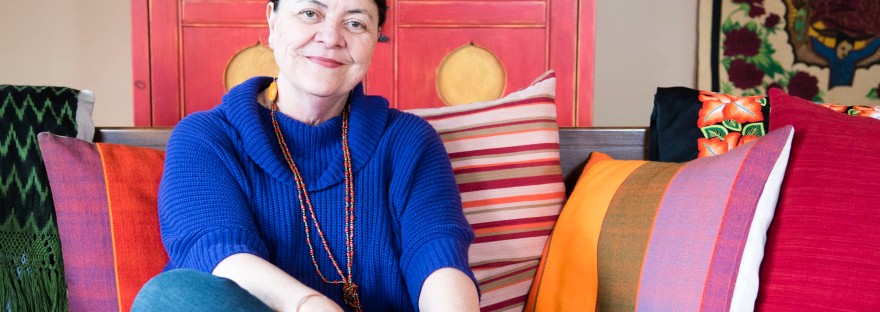
Miriam and I have helped each other through many life changes—including the death of her husband, my divorce, raising our daughters, becoming more prosperous, building our careers, decorating our homes, preventing and managing diabetes and, above all, living a healthy and happy life.


Each year, around the first day of Autumn, we get together and go through a plática process we started over 20 years ago. We make a list of the 7 most important areas of our lives and review our progress and make vows for changes for the following year.

  • Personal Relationships
  • Aspects of Health and Wellness
  • Aspects of Prosperity
  • Living Environment
  • Career and Work
  • Creative Expression
  • Care of the Soul

We go through each of the seven areas of our life and take turns speaking with no interruption or cross talk. We just listen to what each has to say and make no comment until the end.

We answer four basic questions for each of the seven areas:

  1. What went well?
  2. What didn’t go so well?
  3. What would we like to change?
  4. What kind of help do we need from each other?

Using this process has helped the two of us accomplish many things throughout the years. We have improved our careers, become wiser mothers, better partners, more creative writers and artists.

We have made more money and avoided making expensive interior decorating mistakes. We have both become healthier and happier and, oh yeah, we have both lost about 25 pounds each.

Continued Success with a Supportive Friend

Our annual conversation is one of the most valuable and consistent things I have done with my life and my comadre and supportive friend, Miriam, for 20 years. Our friendship has grown and deepened. We are in our 60s now, and it is fair to say that we are more fulfilled and happy as a result of this bond that is based on listening to each other, tracking each other and caring for each other’s happiness.

In the area of health and wellness, Miriam and I have made great progress. We have used this method for achieving a healthier, more balanced life.

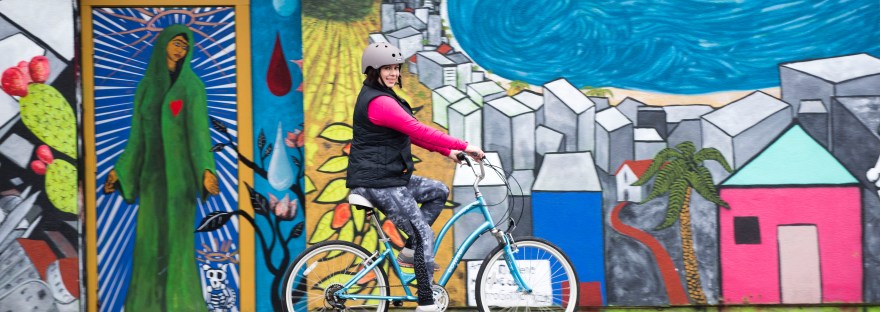
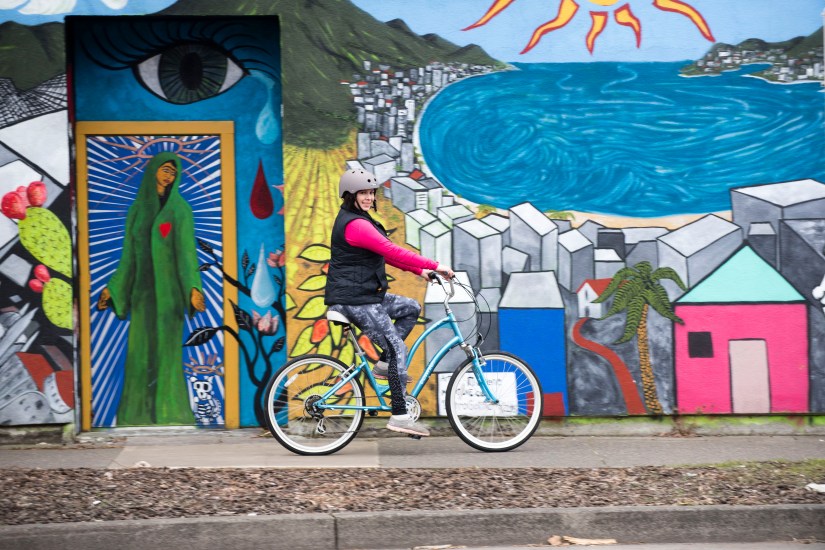
This year, I shared with Miriam that one aspect of health and wellness that went very well for me last year was biking. (I bike six miles a day!) She smiled without comment. Just seeing her face made me proud of myself.

When I shared aspects that didn’t go so well, I shared that my arms felt like mush. Again, no judgment from her. Just a nod that she was hearing me.

When I got to Question Three—what I would like to change—I told her that I needed to keep up my arm strength, that I wanted to be a strong old lady, one who can pick up her own suitcase and put it in the overhead compartment. She still looked at me wisely and smiled.

And when we got to Question Four, Mir asked, “How can I help?”

After thinking a bit, I said, “I guess I need some suggestions, since I really detest going to the gym to lift weights.”

That is when Miriam finally spoke to give me advice. She said, “First of all, you don’t have to go to the gym if you don’t like it.” She then suggested that I get some exercise bands and told me about a YouTube video she used when she started doing arm-strengthening exercises. Knowing me and my love of television, Miriam even suggested I keep some bands by the couch!
I vowed to try it twice this week just to see how it would go.

She gave me a high five and asked, “Do you want to check in with me next week, and let me know?”

I accepted her offer and told her that I could also just shoot her an email or a text.

I then did the same for her. Her goal was to increase her walking by five minutes a day, three times a week. We went through the same process and vowed to check in and help each other out.

Miriam and I trust each other—we have confianza. Sometimes we admit to each other that we don’t want to do what it takes, that we aren’t ready for change.

Just admitting that we are struggling helps break down the barriers. Sometimes we are successful and sometimes we aren’t, but we are always faithful about helping each other without judgment. We know that each of us only wants the best for the other. We both feel supported and cared for.

Having a comadre, a supportive friend, in your life can help you achieve a healthier, happier life. This plática process is a concrete way to get help from our comadres.

Learn more about how to be a supportive friend in part three.

¡Hola, Guapa!, Edición No. 2: Support, English, Healthy Comadres

With a Little Help from Our Comadres: Part One

Health researchers tell us what we already know, that the Latin American family has some built-in protective factors related to the closeness and support we get from our extended families. Although most of us Latinas already know that, it sure is nice to have it affirmed by scholars and health researchers.

We know from experience, the value of our familias, and we know that our fierce love protects us. Now researchers are recognizing these strong bonds as something positive and they call it “protective factors.”

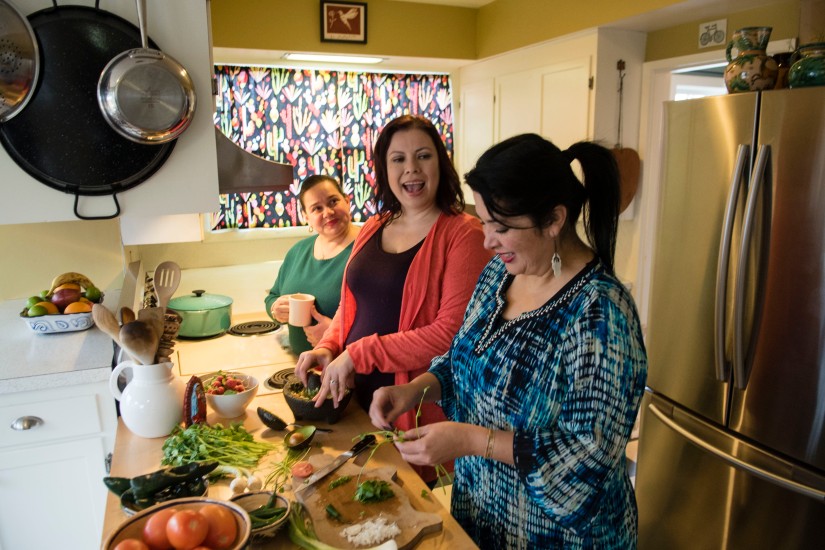
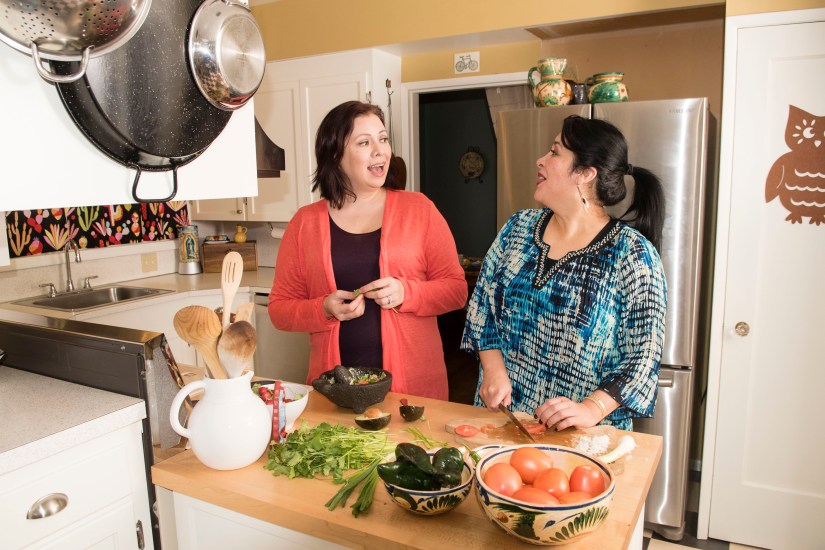
Women in kitchen 2

A Healthier Life with Help From Our Comadres

We don’t need fancy nouvelle cookbooks to tell us how delicious, varied and nutritious our food is. We know our comida rocks, but now there are hundreds of new books on the marvels of the Latin American kitchen.

Just as we already know how important our families and our food are to us, we also know what the research has confirmed about female friendship and support. A recent study conducted by Brown Medical School and University of Minnesota found that women who joined a weight loss program with a supportive friend were much more successful than when they joined alone.

Latinas have always had strong female bonds that uphold and protect us. And now the research affirms that this bond can help us achieve a healthier life.

Next week I’ll share a personal experience about how my comadre, Miriam, and I have been peer-coaching each other for more than 20 years, with stellar results. Check out part two and learn how Miriam and I helped each other through many life changes.

¡Hola, Sabrosa!, Edición No. 1: Getting Started, English, Healthy Mexican Food

Healthy Eating Plan: Poquito de Todo

De Las Mías is not a diet club. It is a community of Latinas who support each other to have a healthier life. ¡Unidas for a Healthy Life! means you are in this community because you want to be healthy and not just thin. A healthy life starts with a healthy eating plan.

Our research has shown that women who strive to make changes because they want to be healthy are more successful than those who strive to make changes because they want to be thin.

We also know that giving up certain foods, like your Grandma’s tortillas, is only going to make you feel deprived and “hangry”. So have a tortilla—just don’t have three!

At De Las Mías we believe that moderation is key to health—that’s why we abide by the “Un poquito de todo” philosophy.

A Healthy Eating Plan Means A Little of Everything

Throughout De Las Mías you will see that we are all about moderation. “Poquito de todo,” means “a little of everything.”

We want you to be healthy, and make healthy changes over time. We don’t want you to feel deprived or have forbidden foods — “comidas prohibidas.” At De Las Mías we’re all about enjoying food, not giving up your beloved foods and customs.

We believe that we can be healthy and strong without being overly focused on being skinny. Getting compulsive around being “good” and being “bad” is just plain silly. Food is good. Life is good. The way to get healthier is to make small changes over time, while enjoying all the foods that bring you pleasure.

It is so much better to have half of a sopapilla, then have no sopapilla. It is so much better to eat half of that giant bowl of green chile stew your grandma just placed in front of you than to deprive yourself of its deliciousness. This is soul food we’re talking about, comadres, and we don’t want you to give it up. We just want you to make “un poquito” de changes, not give up the whole enchilada.

Embrace our “un poquito de todo” way of life and you will be healthier and happier. Let “everything in moderation,” be your way of life.

Ready to put the “Un poquito de todo” philosophy into action? Try our 9-step healthy eating plan, by our resident nutritionist, Madrina Malena.

¡Hola, Sabrosa!, Edición No. 8: Healthy Habits, English, Healthy Mexican Food

Mom, Why Is My Tortilla Brown?

During a recent check-in with a De Las Mías comadre, Laura (not her real name), shared that since getting on the De Las Mías app she has started making healthy changes for her whole family.

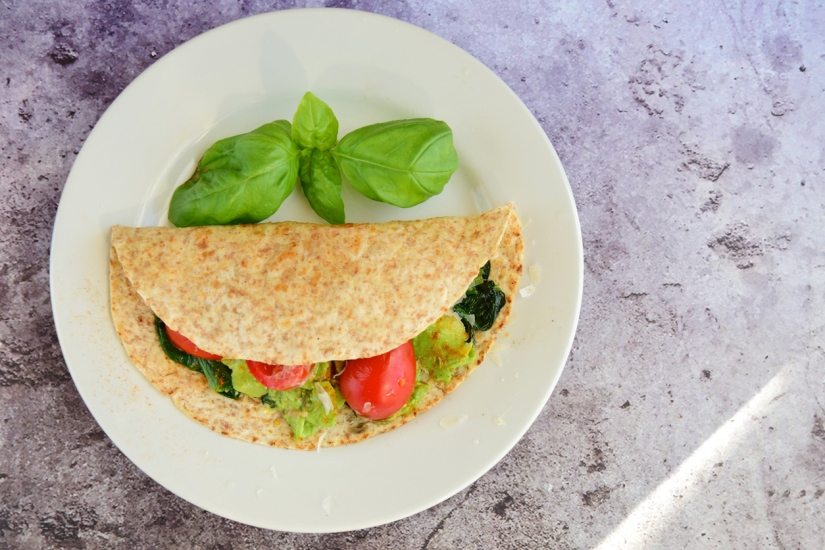
One of the steps she took was to swap white flour tortillas for whole-wheat flour tortillas. She was proud of herself, she said, for making healthy changes. She recognized that this new way of life was affecting her whole family. (¡Eso, Comadre!)

She giggled when she told me that her little boy asked, “Mom, why is my tortilla brown?”  

Her answer to her jito was that brown tortillas are better for you than white ones.

Laura’s little boy is smart because he knows that sometimes when we do things we have to know why. Knowing why is a good motivator.  

Share the benefits of eating healthy foods with your family.  Here are some good reasons to eat whole grains:

  • Whole grains have important nutrients for your body such as protein, fiber, minerals and vitamins
  • Whole-wheat flour is better than white flour because when the grain is refined from brown to white, many nutrients are lost
  • Whole-grain and whole-wheat flour contains all parts of the grain so you get all the nutrients that the bran, germ and endosperm contain
  • Whole grains may help reduce the risk of heart disease, stroke, type 2 diabetes and colorectal cancer, just to name a few
  • Whole grains may help you maintain a healthy weight
  • Whole grains are high in fiber, and give you an easy way to add more fiber to your diet. Fiber helps you digest your food and it’s good for your panza

Here are some whole grains to add to your healthy eating adventures:

  • 100% whole wheat tortillas (¡Qué vivan las brown tortillas!)
  • 100% whole wheat breads (Look for “whole wheat,” “100% whole grain” or “whole (other grain)” as the first ingredient)
  • Whole-grain pasta
  • Whole oats/oatmeal
  • Whole-grain corn (from corn meal, not corn flour)
  • Blue corn tortillas!
  • Popcorn (¡Eso! Kids love popcorn!)
  • Quinoa (food of the Incan gods)
  • Brown rice
  • Wild rice

Look for whole-grain recipes in the De Las Mías app!  

Got whole-grain recipes to share? Send them to us and we will choose some to include in La Cocina!

¡Unidas for a Healthy Life!

¡Hola, Guapa!, Edición No. 1: Getting Started, English, Healthy Comadres

Healthy Changes: Don’t Go It Alone—Tell Your Comadre

Making healthy changes isn’t easy—it takes commitment and hard work.. The good news is: you don’t have to go it alone. Starting a new healthy lifestyle journey is much easier with a comadre by your side. Keep in mind that it is even better if your comadre is also on a healthy lifestyle journey.

You’ve told yourself, “I am ready to make this change.” ¡Estás lista!

Now it’s time to take the extra step and tell your comadre you’re ready. The experts tell us it is important to tell another person we’re ready to make a change. This increases our commitment and the chances of success!

Now’s the time! ¡Ahora es cuando! Turn to your comadre, sister, friend, mom or madrina and tell her, “I’m ready to make a change. This is my plan. Will you help me stay on track?”

Okay, you assessed and declared that you’re ready, you’ve told a comadre and now you make the necessary preparations! Just like you take out the utensils, the bowls and the ingredients to prep for a meal, you have to prep to take action.

Ask yourself, What do I need to make this change?

Try this:

  1. Identify the change you want to make.
  2. Declare yourself ready.
  3. Make a plan. (Write it down.)
  4. Share it with your comadre!
  5. It helps to tell her how you want her to help: Give me an ¡Eso! when I meet my goal. Go with me on my daily walk. Call me in a week if I haven’t called you.

We’ve written plans to commit to healthy changes plenty of times over the years. Here’s an example of one that works well when you’re starting a new healthy lifestyle. Feel free to make it your own!

An Easy Plan for Committing to Healthy Changes

This is the small change I would like to make: I would like to eat fruit instead of cookies when I watch TV.

To get ready I need to:

  1. Buy oranges.
  2. Keep them in a bowl by the TV.
  3. Call my comadre and tell her my plan. (Increase your chance of success by setting a start date!)
  4. Commit to check in with her at the end of the week whether I make it or not.
  5. If I don’t meet my goal, I promise to try again.

¡Adelante! You are on your way to making healthy changes, one small step at a time.

Buena Suerte, Comadre! We wish you luck as you make your commitment to healthy changes. To get into action, follow the De Las Mías ¡Un Poquito de Todo Philosophy!

¡Hola, Guapa!, Edición No. 1: Getting Started, English, Healthy Body

Get Started with Physical Activity

¿Sabes qué? Most Latinas—60% of us—are not physically active. ¡Basta! Let’s change that story!

Mely riding bike 1

Many of us are intimidated by what “physical activity” means. Health education research shows that some people don’t even like the word “exercise.”

We hear the words “physical activity” or “exercise” and we imagine pictures of sweaty, skinny chicas in their tight little outfits at the gym and we say, “¡Ay, no!” “¡Chale!” “Forget it!”

Get started with physical activity and move your body!

Honestly, comadres, it’s not that big of a deal. Here’s our official DLM advice about being fit:

¡Move your body! ¡Enjoy it!

Dance it. Love it. Walk it. Bike it. Run it. Grow a garden with it. Please it. Be proud of it. Stop comparing it.

Move it as much as you can. Engage in a fun physical activity at least five days a week for 30 minutes a day and give yourself a big ¡Eso! (Maybe even a ¡beso!)

Here are some of the top benefits of physical activity:

    • Gives you energy
    • Improves your mood
    • Improves your confidence
    • Improves your sex life (¡Créemelo!—Believe it!)
    • Helps you manage stress
    • Helps you lose weight
    • Helps you control your weight
    • Lowers your risk of heart disease, diabetes, and some cancers

Continue reading “Get Started with Physical Activity”

¡Hola, Guapa!, Edición No. 1: Getting Started, English, Healthy Comadres

Starting a Healthy Lifestyle is Easier Than You Think

We are pleased to welcome you to Edición No. 1 of the De Las Mías online revista! Each edición features articles and recipes to inspire and inform you to start a healthy, balanced lifestyle.

Start a healthy lifestyle. Go from thinking to doing.

Here are articles that will help you move into action:

Moderation is the key to a balanced life. We know from our own experience—and the experiences from our comadres—starting a healthy lifestyle is easier than you think.

Ready for a healthy, balanced lifestyle?

Ready to get started? Click here for the next article.

¡Hola, Guapa!, ¡Hola, Madrina!, Edición No. 8: Healthy Habits, Healthy Comadres, Spanish

Mujeres y altares, nichos y santuarios – ¡Que viva la Morenita!

Cada año durante las fiestas navideñas, siento mucho orgullo por ser mexicana. En esta temporada siento todas las culturas que llevo dentro de mí con más fuerza.  Podría ser porque todos los 5 sentidos se me despiertan con los sabores de nuestra maravillosa comida, los colores brillantes de las luces y decoraciones, la música de las Posadas y toda la diversidad de nuestras celebraciones Indo-hispanas.  Hay tradiciones tan bonitas que celebramos en esta temporada.  Y aunque pienso que nos enfocamos demasiado en “la compradera”, de todos modos, sigue siendo la temporada más mágica del año.

En nuestra familia, la temporada comienza con el día de la fiesta de Nuestra Señora de Guadalupe.   

Uno de mis primeros recuerdos me lleva de regreso a mi niñez en Nogales, Sonora y Arizona.  Era la costumbre que muchas familias en el lado mexicano de la frontera hacían una ofrenda a Nuestra Señora de Guadalupe y la ponían en las ventanas dando a la calle.  

Mi mamá nos llevaba a pasear por los vecindarios para ver a las distintas formas en que la comunidad honraba a Nuestra Señora. Desde la distancia mirando hacia las lomas de Nogales, se podían ver las docenas de ventanas iluminadas con foquitos de muchos colores. ¡Era algo maravilloso!

Como mexicana, soy una clásica Guadalupana, y venero a la Morenita todos los días del año. Creo que es precisamente porque le llamamos la Morenita que tengo tanto amor por ella.  

La leyenda dice que ella vino a las Américas para dar consuelo a los pueblos indígenas para aliviar un poco su sufrimiento.  Me da consuelo ese pensamiento y siempre lo llevo en mi corazón. Hay otras explicaciones más cínicas sobre el milagro de Nuestra Señora de Guadalupe, como ya lo saben.  Como que nuestros antepasados españoles inventaron la historia con el fin de convertir a los pueblos indígenas, pero yo sigo creyendo en ella.

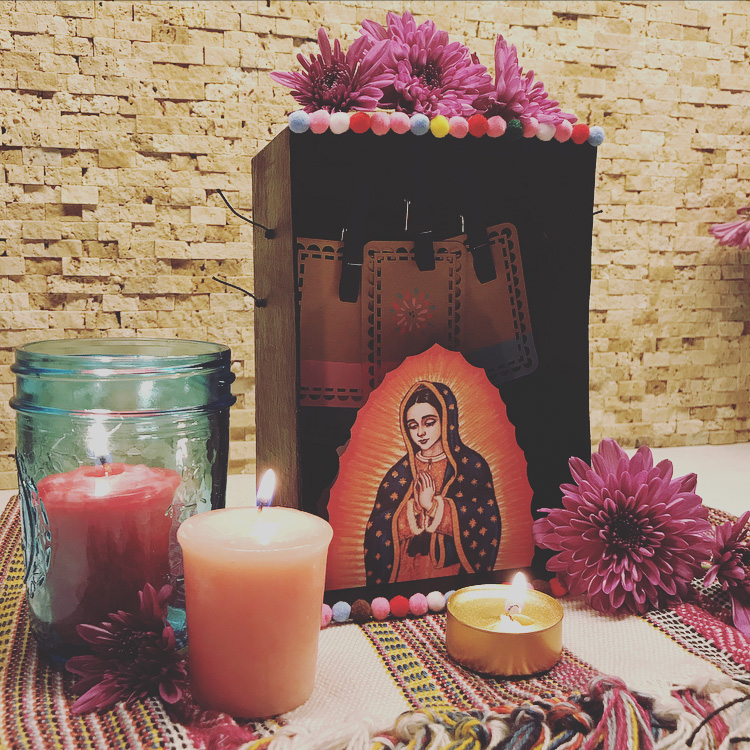
Una costumbre encantadora que muchas latinas practican es en hacer pequeños altares o nichos a Nuestra Señora de Guadalupe. Cuando yo estaba criando a mi hija Sara, teníamos fiestas de Nuestra Señora de Guadalupe e invitábamos a los amiguitos a hacer nichos de cartón.  Recogíamos pequeñas cajas, papel de China y cartulina, restos de otros diferentes papeles o telas, cualquier cosa que se nos antojaba o que podíamos encontrar.  Así nos juntábamos a hacer los nichos y hacíamos fiesta.

Había una señora encantadora en Santa Fe, llamada Connie Hernández. Ella era muy devota y tenía una pequeña tienda religiosa donde se vendían estampitas religiosas de varios santos. Yo hacía mi carrera anual a con Connie para comprar las estampitas de Nuestra Señora de Guadalupe para poner en nuestros nichos. A los niños les encantaba esta actividad, pero siempre fue divertido ver a los adultos que querían participar también.   

Aquí están algunos de los nichos, altares y arreglos que tenemos en nuestras casas y algunos que hemos hecho para esta ocasión especial.

Comadres, si tienen un santuario, nicho o altar para honorar a Nuestra Señora, nos encantaría verlos y publicarlos!

¡Felices Fiestas, Comadres!

¡Y que viva la Morenita!

¡Hola, Guapa!, ¡Hola, Madrina!, Edición No. 4: Reflection, English, Healthy Comadres

Women and Altars, Nichos and Shrines – ¡Qué Viva la Morenita!

Every year around the winter holidays, I am full of pride for my cultura. It is this season when I feel all the cultures that I carry within me more strongly. It could be because all the senses are awakened with the flavors of our wonderful food, the bright colors of the lights and decorations, the music of Las Posadas and all the diversity of our Indo-Hispano celebrations. There are so many rich and delicious traditions that we partake in this time of year, that even with all its consumerism, it is still a magical time of year.

In our family, the season kicks off with Our Lady of Guadalupe’s Feast Day.  


One of my earliest memories takes me back to my childhood in Nogales, Sonora and Arizona. It was the custom that many families on the Mexican side of the border erected shrines to Our Lady on their windows facing out to the street.  My mom would drive us around the neighborhoods, so we could take a closer look at all the different ways the community honored Our Lady. Even from the distance, looking up at the Nogales hills, you could see the scores of windows illuminating Our Lady with multi-colored strings of lights.

As a Mexicana, I am a classic Guadalupana, and I venerate and honor Our Lady every day of the year. Even as I seized to call myself Catholic, I retained my devotion to La Morenita. I think it is precisely because she is called La Morenita that I have so much love for her. The legend says that she came here to give the indigenous people of the Americas comfort for their suffering. And I can so get behind that idea, that I hold it dear to my heart. There are other more cynical explanations, if you care to look, like that our Spanish ancestors made up the whole story in order to convert the indigenous people, but I choose to continue to hold her in very high esteem. Here’s a great summary from the Huffington Post that you might find interesting.

A lovely custom that many Indo-Hispanos like us practice is to build or erect shrines, altars or nichos to Our Lady of Guadalupe. When I was raising Sada, we had annual Our Lady of Guadalupe parties and we would invite the children in our lives to make shrines. We collected small cardboard boxes, construction paper, old remnants of tissue paper and fabric, glitter and whatever else you could find in your craft drawer and have a party. There was a lovely woman in Santa Fe at the time, Connie Hernandez, who had a little religious shop where she sold old-fashioned devotional cards of various saints and milagros, and I would make my yearly run to Connie’s to buy the estampitas to put in our shrines. The kids loved the activity, but it was always fun to see the adults wanting to take part in it too.   

Here are some of Our Lady of Guadalupe shrines that we have in our home and some we made for this special occasion!

Comadres, if you have a shrine, nicho or altar to honor Our Lady, we would love to see it and post it!

¡Felices Fiestas, Comadres!

¡Y que viva la Morenita!

¡Hola, Guapa!, Edición No. 4: Reflection, Spanish

Cómo convertirte en una supermujer con una imagen corporal saludable

¿Sabes Que?

Los estándares de belleza y delgadez extrema que se presentan en los medios de comunicación pueden llegar a afectar negativamente a las mujeres de todas las edades. La mejor forma de prevenir este impacto negativo y tener una imagen corporal positiva es aceptando orgullosamente tu cultura latina y rodeándote de ejemplos positivos a seguir.

Tu cuerpo te mueve y te lleva a lo largo del día. Muchas veces sostiene el peso del mundo: el estrés del trabajo, la escuela y la familia. La manera en la que ves a tu cuerpo es igual de importante que la manera en la que lo tratas. Tener una imagen corporal positiva y alto autoestima es igual de importante para vivir una vida feliz, que incorporar actividad física y alimentarte bien.

¿Qué es la imagen corporal?

La imagen corporal es la manera en la que te percibes a ti misma, cuando te miras al espejo o te imaginas en tu mente. Tu imagen corporal incluye lo que crees y sientes acerca de tu apariencia, tu peso, figura y altura; y cómo te sientes y controlas tu cuerpo mientras se mueve. Una imagen corporal negativa puede afectar tus relaciones y comunicaciones interpersonales, causar un autoestima bajo y desórdenes alimenticios, y en general disminuir tu salud y bienestar. Por eso es tan importante cultivar una imagen corporal positiva.

Señales de que tienes una imagen corporal negativa

  • ¿Tienes una percepción distorsionada de tu figura? ¿Percibes las partes de tu cuerpo como realmente son?
  • ¿Estás convencida de que sólo otras personas son atractivas y que tu tamaño o figura es un signo de fracaso personal?
  • ¿Te sientes avergonzada por tu cuerpo? ¿Te preocupa o te causa ansiedad tu figura?
  • ¿Te sientes incómoda y torpe dentro de tu cuerpo?

Señales de que tienes una imagen corporal positiva

  • ¿Tienes una percepción clara y verdadera de tu figura? ¿Ves las diversas partes de tu cuerpo como realmente son?
  • ¿Celebras y aprecias tu figura natural? ¿Entiendes que la apariencia física de una persona dice muy poco sobre su carácter y su valor?
  • ¿Sientes orgullo y aceptación por tu cuerpo, y te niegas a pasar una cantidad irracional de tiempo preocupándote sobre comida, tu peso y calorías?
  • ¿Te sientes cómoda y confidente en tu cuerpo?

¿En qué afecta la imagen corporal?

La manera en la que percibes tu cuerpo es compleja. Tu imagen corporal se ve afectada por muchas cosas, incluyendo dónde naciste, cómo te educaron, quiénes son tus modelos a seguir y los grupos sociales con los que interactúas y a los que te comparas. Desafortunadamente, la cultura actual de los medios de comunicación masivos tiene el poder de afectar de manera negativa la imagen corporal de las mujeres latinas. Se ha encontrado que las mujeres latinas que ven cuatro o más horas de televisión al día o pasan esa cantidad de tiempo en las redes sociales, tienen una imagen corporal inferior a la de las latinas que no lo hacen.

Los medios masivos de comunicación nos presentan ciertos valores, personas y temas que causan un “espejismo de la realidad” y el deseo de pensar, actuar y vernos de cierta manera que a menudo idolatra la delgadez y los estándares extremos de belleza. Este “espejismo” también logra que como mujeres comparemos nuestras opiniones, habilidades e identidad étnica con los atributos de nuestras comadres o personajes en los medios de comunicación. Estas comparaciones pueden ser poco saludables y causar un impacto negativo en nuestra imagen corporal.

¿Sabes Qué? Las latinas que ven cuatro o más horas de televisión al día o pasan esa cantidad de tiempo en las redes sociales, tienen una imagen corporal inferior a la de las latinas que no lo hacen.

¿Cómo ayuda nuestra identidad latina a mejorar la imagen corporal?

Nosotras las latinas somos fuertes, apasionadas y dignas. Adopta todas estas características para mejorar tu imagen corporal. Las mujeres que se identifican como latinas (las que aceptan orgullosamente su identidad étnica) describen sus cuerpos de manera más positiva y tienen una mejor capacidad de luchar en contra de los efectos negativos de los medios masivos de comunicación. Nuestra cultura latina tiene el poder de promover tipos de cuerpo de todas las edades, figuras y tamaños, lo que ayuda a remover el estigma de imágenes sexualizadas o estereotipos de los cuerpos de las latinas en los medios de comunicación.

Lo más importante es rodearte de positividad en tus entornos familiares y sociales. Tú puedes reducir la imagen negativa de tu cuerpo al rodearte con la positividad de tu familia y de tus comadres. Cuando las latinas tienen un fuerte apoyo cultural, se disminuyen los estándares de belleza y delgadez extrema, resultando en una imagen corporal saludable y positiva.

Así que la próxima vez que te mires al espejo o sientas el peso del mundo sobre tus hombros, toma un momento para recordar quién eres y de dónde vienes. Tu herencia y tu cultura han sido construidas a base de amor, tradición y apoyo; sin importar qué negatividad exista a tu alrededor. Para traer amor y belleza al mundo, debes primero amarte a ti misma y aceptar la belleza de tu cuerpo.