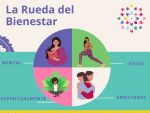

I love the word for wellness in Spanish – It means to be well.
The De Las Mías tool I want to introduce you to is called the Wellness Wheel in English – La rueda del bienestar in Spanish.
What does Wellness/Bienestar mean?
At its center, wellness means living a healthy, balanced life. It includes being physically, mentally, emotionally and spiritually well.
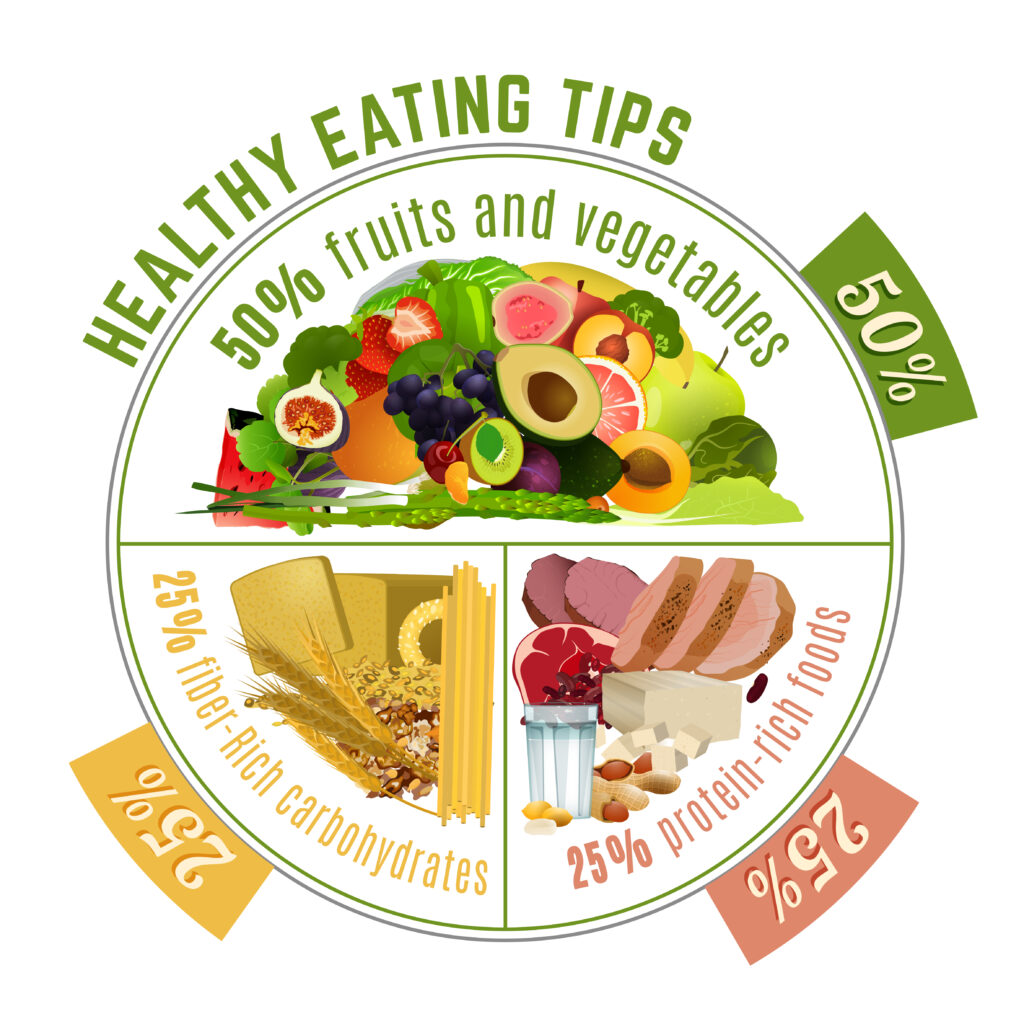
In the physical realm, it means eating healthy foods, drinking plenty of water, getting exercise and treating your body with respect.
In the mental realm, it means keeping your mind engaged, reading, learning new things, and being a good problem solver.
In the emotional realm, it means giving and receiving social support, paying attention to how you feel, sharing your feelings in a healthy way, and having and showing empathy for others.
In the spiritual realm, it means paying attention to your inner self, meditating, praying, relaxing and/or believing in something greater than yourself.
At De Las Mías, when we talk about a healthy lifestyle, we are talking about wellness in the whole sense of the word.
Wellness means you are in active pursuit of a healthier, more balanced life. We believe that you can live a life of wellness even when you have a chronic condition like diabetes, cancer or heart disease. The idea of pursuing wellness also goes along with self-care.
The Rueda del bienestar is one tool to help you check in with yourself and look at your life from this lens. It is another tool to help you on your quest for a healthier life.
Here is how to use La Rueda del Bienestar
Draw the Wellness Wheel on a piece of paper. Label each area of the wheel, like in the illustration. Once you have your Rueda in front of you, place a little dot in the wheel of where you think you are in each aspect. Use a scale from 1-10. One is in the center, which means you have to pay more attention to this aspect, and ten is that you are very satisfied with your lifestyle in this aspect of wellness.
This is your own private wellness wheel, and if you feel ready, share it with your comadre or someone who cares about you. It is just another tool to help you take stock of where you are now and where you want to be.
After you do this part of the exercise, ask yourself:
- Where are my strong points? What aspects of my Wellness Wheel do I feel really good about?
- What aspects of my Wellness Wheel need improvement?
- Choose one small step that you can take to improve one aspect of your Wellness Wheel.
- You can use the SMART tool to help you go into action. bit.ly/DLMsmartGoals
Remember the power of the Comadre, i.e., social support! Share your plan of action with your Comadre, Sister or Friend!


 Move your body in a way that affirms the love you have for yourself and your desire to be healthy and strong. The De Las Mías journey to a healthy life is a fun, and affirming way for Latinas ¡Unidas for a Healthy Life! The
 Estamos bien hechas. Así que a pesar de que tenemos diabetes, todavía vivimos más tiempo que nadie. ¡Ahora vamos a vivir, no sólo más tiempo, sino también más una vida más saludable! ¡Sí se puede! ¡Cuidémonos con Ganas y Salud!






 Cuando Emma se enteró por primera vez de que tenía diabetes, se fue a su cama a llorar. No se escapó de “la maldición”. Así es como ella se refería a la diabetes, después de ver a su mamá quedarse ciega y a su prima perder una de sus piernas. Su hija Josie encontró a Emma hecha bolita como un bebé en el sofá. “No tiene que ser una maldición, mamá“, ella dijo. Josie, con el permiso de su mamá hablo con el médico sobre el nuevo diagnóstico. “Es impactante al principio“, dijo el médico, “pero hay maneras de controlar la diabetes. Su madre es una mujer fuerte y lista, y le ayudaremos a manejarlo“. Luego, el médico compartió buena información sobre la diabetes con Josie. Y ahora, Josie le recordaba a su mamá que podía vivir una vida buena y saludable incluso con diabetes. “Hasta mi nana tuvo diabetes”, dijo Emma, todavía sintiendo el dolor del nuevo diagnóstico. “Pero esta no es la diabetes de tu nana, mamá“. Emma se sentó y miró a su sabia hija. “Esta es tu diabetes, mamá, y vamos a ayudarte a controlarla tan bien como sea posible“. El relato de Emma es solo una de tantas historias que las latinas hemos presenciado y vivido. Declarar que “Esta no es la diabetes de tu nana“, es importante. El cuidado de la diabetes ha progresado mucho desde que nuestros abuelos y tíos sufrieron a través de esta seria condición. Y para quedar claro, la diabetes todavía puede ser trágica para nosotros los latinos. Pero no tiene que ser así. Y de esto se trata este artículo.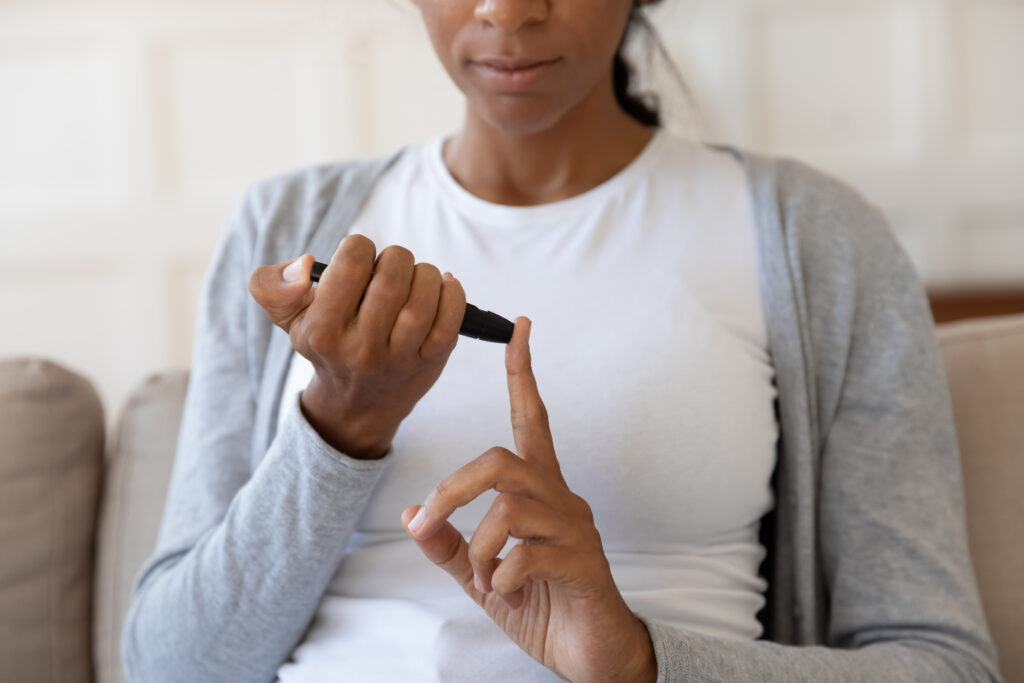




 De Las Mias