¡Hola, Sabrosa!, Edición No. 5: Stress, English, Healthy Body, Healthy Comadres, Healthy Family

Stress Management and Traditional Latina Remedios


Stress Management Latina Style 

We come from a rich Indo-Hispano tradition of adversity, cultural clashes, magical spirituality and wisdom. We carry this mixed bag passed down by our grandmothers, madrinas, tías and mothers. It’s in our blood and in our soul. We hand it down to the next generation through our DNA, our traditions, memories, stories and practices.  But did you ever think of these remedios as stress management tools?

As we take a deeper dive into the negative effects of stress in our lives, and we become more immersed in the science of chronic stress and its effects on our health, we can also dig deep into how our abuelas and great-grandmothers endured and thrived in spite of their adversity. They may not have been calling it that, but those tips, tricks and yes, even brujerías, were the original stress management tools!

Two concepts come to mind when thinking of stress management in Latino cultures. One is Aguantar and the other is Remedios. One is better than the other.

 Aguantar is one of those words that has much more meaning in Spanish than in English. In English it means to put up with, to endure. But for generations, we Latinas have been conditioned to not just endure, but to be silent about it. That “Calladita me veo más bonita” type of endurance. Aguantar goes with silence and that goes hand in hand with “sucking it up” for the sake of others. You’ve seen it in your mothers, tías and abuelas, that stoic dignity that comes from suffering – from grinning and bearing it.

I loved attending the #WeAllGrow Latina Summit last year and seeing droves of young Latinas pass by ¡Calladitas No More! banners, some even taking selfies by this 3-word manifesto: Silent No More!

Latinas are learning and growing and taking back our health, our power and our joy. As always, and like good Latinas, we do this not just for ourselves, but also for our familias. And that is a very good Latina tradition that we vow to pass down.

The other concept that comes to mind as we explore this multigenerational link of Aguantar el Estrés, is the concept of Remedios.

All things have a dark and light side and to me, the light side of Aguantar is the magic and power of our Remedios. The Remedy!

Remedios carries with them the magic of healing, of miracles, of hopeful expectancy. I went on a Búsqueda of Remedios that can help with stress management and here are a few that I found in my own Remedios Tool Box: 

1. El Santuario. The Sanctuary.

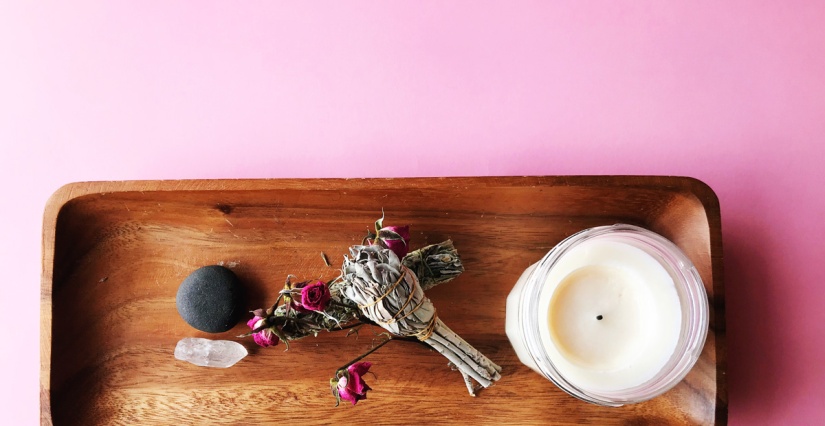
You may associate the word sanctuary with a church, such as El Sanctuario de Chimayó in beautiful Northern New Mexico, but you can make your own little sanctuario in your home or garden. Claim a little corner somewhere in your home or garden.  When you make this special sacred place, you can use it as an intentional remedio to help you cope with stress. Your bedroom works well for a sanctuario because often, it is the most private place in a home.

  • Start by claiming it as a special place where you can go for a quiet moment.
  • Place a few objects there that have meaning for you. A picture of your dad if that inspires strength, or a picture of your mom, if she inspires faith.
  • Place a picture or statue of your favorite Santito, or Our Lady of Guadalupe, a rosary, or whatever holds sacred value or a positive memory.  
  • Choose a candle that you will light only when you are in the room and place it securely on a flame proof base. (Twice, I almost burned the house down.)
  • Add some flowers. A bowl of holy water, or a bowl of water that you have blessed yourself.
  • Spend a few minutes with your sanctuario every day or acknowledge it when you pass by.

Use this sacred space to let go of your stress, worry and fear. Practice this and little by little you might find some magical refuge.

2. Sanctuary Creative Visualization

Another sanctuary practice that is lovely and has given me comfort in hard times is to do a deep relaxation exercise and add a creative visualization. Imagine a special place in your mind’s eye where you can go to feel comfort and peace. Does a beautiful garden come to mind? Or a special place to go for a sunset? Perhaps you went for a long walk on a beach one day and you felt relaxed and at peace. Take a few minutes and create this special sanctuary in your mind.  Feel peace and refuge there and go back anytime you want.

3. Un Tecito. A little cup of tea.   

Latinas have a long tradition of drinking their tecitos. Té de manzanilla – Chamomile tea is the most common. We even give it to babies to relax! Take a break, brew some tea, sit down and drink it in. As you sip your tea, try to relax and “letigo.”  

Té de tila – Linden tea is popular as a relaxation tea, but you shouldn’t drink it if you are pregnant or have heart disease. If you have any kind of chronic condition, it is always a good idea to ask your doctor if you should drink té de tila.  

Another favorite is té de azar – which is orange blossom tea. Té de azar was the classic tea given to young ladies when they were nervous before the big dance. Life is a big dance, sometimes, Comadres, so fortify yourselves.

Any kind of herbal tea will do. There are some great teas, like Sleepy Time, that will do the trick

3. La Limpia. The Cleanse.

Limpia has different meanings to different folks. Most would agree that a limpia is a cleanse. You might want to ask your abuelas and madrinas what they have used to do a limpia, or if they ever did one at all. Not all Latinas practice this tradition, but the basic limpia that I do is simply get some good sage and burn a little in a metal or ceramic bowl. It’s nice to offer it to the four directions, face each direction and let the smoke go over your head. After you smudge, you could put a few lemon drops in a cup of water in spray bottle and spray the room. This is a simple ritual that could help you feel more relaxed after an argument, after a guest leaves your house if she or he stressed you out, or you feel tension or unpleasantness in the room and you want to “clear the air.”  The important quality to try to achieve is to intentionally let go of tension, stress, and malas vibras.

4. La veladora. The blessed votive.    

We love our candles, but we have to be careful. Did I tell you I have almost burned down the house twice?! So fair warning, comadres! But there are some wonderful veladoras out there. Te prendo una veladora always means I will light a candle to help make your wish come true. So use your veladoras, wisely. I burn mine in the fireplace now, so there is no chance that I will cause a fire except the one that is burning in my passionate heart. We love the classic Virgen de Guadalupe votives.

5. El Bubble Bath.  

I’m a Latina and I am a grandmother now, so you can say this one came from an old abuela. I love a good bubble bath. Just take some “me” time, ¡Comadres! Get some bubbles, put on some relaxing music, a do not disturb sign on the bathroom door and chill out! This remedio works wonders if your back aches or you have tired feet from standing all day at work.


What are some of your tried and tested remedios? What customs from your culture do you bring to your own stress management?

¡Hola, Guapa!, Edición No. 5: Stress, English, Healthy Body, Healthy Comadres

Deep Relaxation: How to Be a Healthy y Calmada Super Mujer

The Health Benefits of Deep Relaxation

When we are stressed out, and especially when we have been stressed or worried for a long time, it is important to take care of ourselves and learn ways to cope, such as practicing deep relaxation.  The goal is to keep stress from turning into a health problem. If you read Stress and Cortisol, you now know that there is scientific evidence that the long term effects of cortisol can cause health problems, not to mention las lonjitas (those pesky rolls around the middle). It turns out that getting thick around our middles, developing the lonjita syndrome, is not just a cosmetic problem. There is a link between lonjitas and developing chronic conditions like obesity, prediabetes, diabetes, heart disease and high blood pressure.  

Scientists are starting to refer to chronic stress as toxic stress. There is mounting evidence that deep relaxation can help us counter toxic stress and prevent some diseases.

So as time goes by, we will provide you with updated information, tips and tricks on how to counter the negative effects of chronic stress.  

Traditional Forms of Deep Relaxation

Deep relaxation has been around for centuries. Your abuelita probably practiced deep relaxation without knowing it when she prayed the rosary every night before she fell asleep. Praying the rosary has been a Latina ritual for centuries, and now we are starting to find out, that besides feeling closer to the Blessed Mother, Latinas were finding a way, through repetitive prayer, to “letigo.” Letting go is one of the healthiest things you can do if you are under a lot of stress, and there are many ways to do this. Praying the rosary is just one of them.

As our country becomes more culturally diverse, we see men holding prayer beads, and others wearing mala beads around their wrists. In Greece they have worry beads. My friend Julie has some purple amethyst beads to die for! I have an old strand of mala beads that I wear around my left wrist when I am particularly stressed out. For me, they remind me to take deep breaths throughout the day and stop and smell the roses. I also use them to repeat the serenity prayer or if I’m in really dire straits, a bunch of Hail Marys.

Repetitive prayer, like the Hail Mary, the recitation of a mantra, or the Serenity Prayer, helps place you in a relaxed, meditative state. This meditative state is deep relaxation and it helps counter the negative effects of stress.

Some of  us nerviosas, can’t-sit-still types, do the walking meditation technique that we shared a few weeks ago. I have comadres who get a similar benefit from knitting. There are several studies that link knitting to positive health effects, better memory and deep relaxation.

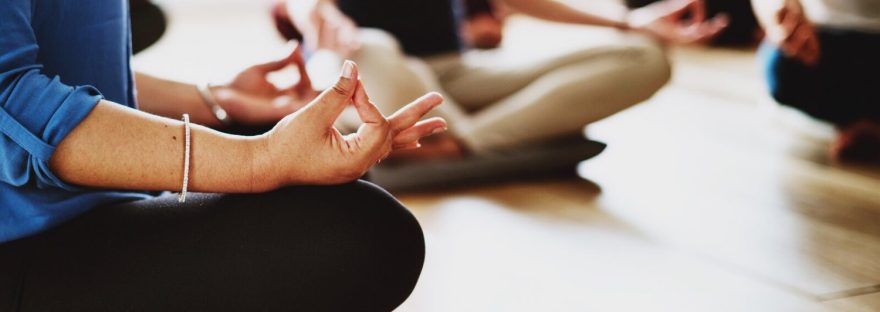
Find your own way of getting into a deep relaxed state at least once a day. There are many good free apps that you can download that will help you meditate, but remember, the goal is the same. Deep relaxation. ¡Namaste, Comadres!

Here is a tried and true technique that I learned many years ago when I worked in a pain management program at the University of Arizona, Southwest Arthritis Center.

  1. Find a quiet place where you will not be disturbed for at least 15 minutes.
  2. Sit in a chair in a comfortable position, or on the floor with your back against the wall.
  3. Take a deep breath. Breathe in through your nose and out through your mouth. Close your eyes and breathe slow deep breaths.
  4. Repeat. Take at least 5 deep breaths and feel your body relax.  
  5. Let go of the tension in your body.
  6. Pay attention to where you feel tense, and go there with your mind and just breathe into it.  
  7. Now start at your feet and pay attention to how they feel. Relax your feet.  Breathe into your feet in your mind’s eye and relax the muscles.
  8. Now go to your calves, breathe, relax, let go of tension in your calves.
  9. Now move up, taking slow deep breaths to your thighs. Relax.
  10. Up to your hips, your waist and chest. Take nice slow breaths and relax.
  11. Keep going up to your neck and move it slightly back and forth in a slow motion until you feel the muscles in your neck relax. Keep up your slow deep breaths.
  12. Now up to your face, your mouth,  your jaw, your nose, eyes and whole head. Tell yourself to let go of all the tension in your body.
  13. Now go back to your back and try to relax your muscles in your back, your buttocks and down the back of your legs, all the way back to your feet.
  14. Take a few more deep breaths.
  15. Stay in this relaxed position for a few more minutes. When you are ready, open your eyes.
  16. Now, slowly get up and go about your day.

There are other ways to go into a deep relaxed state. The Sanctuary Visualization technique is one we shared with you previously in The Vision Map. There are many Creative Visualization techniques that are fun, whimsical and relaxing, but this simple technique is a good place to start.

Do you practice a deep relaxation technique? What works best for you? Share your wisdom with us, Comadres!

I wish you Paz, Comadres. ¡Buena, Suerte!


Sources:

Benson, Herbert. The Relaxation Response. 2000. Harper Collins

Riley, J., et al. The Benefits of Knitting for Personal and Social Wellbeing in Adulthood. Findings from an International Survey. Journal of Occupational Therapy. February 15, 2013. https://doi.org/10.4276/030802213X13603244419077

Gawain, Shakti. Creative Visualization: Use the Power of Your Imagination to Create What You Want in Your Life. 2002. Nataraj Publishing.

¡Hola, Guapa!, Edición No. 5: Stress, English, Healthy Body, Healthy Comadres

Stress, and How It Can Affect Your Health and Weight


Stress and How it Can Affect Your Health and Weight

Stress can affect your health and your weight. To understand more, let’s review a simple definition. Stress is your body’s reaction to change. All change is stressful. Any kind of change that causes your body or mind to react is stress. All of us have stress. We can experience it from any change in our everyday life. You can’t avoid it. Both happy and sad changes can cause us stress. Long-term stress, or chronic stress, however, can be harmful to your health. It can also make it harder for you to get to a healthy weight.

Scientists are beginning to call chronic or long-term stress, Toxic Stress. Dr. Thornburg, Director of The Moore Institute at  Oregon Health Sciences University has this to say: “Toxic stress, also referred to as chronic stress, is frequent or prolonged exposure to adversity. This can take the form of abuse, neglect, exposure to violence, or extreme economic hardship.”

Cortisol, the Stress Hormone

Dr. Thornburg explains that any type of stress causes a number of hormones to be released directly into the bloodstream. In the short-term these hormones help a person cope in response to a perceived threat. One of those hormones that can help a person cope with stress is cortisol. However, he goes on to explain, when a person experiences chronic stress or long term stress, the body produces too much cortisol and for a longer period of time. He compares it to the “body’s alarm button getting stuck in the ‘on’ position.”

Other studies suggest that when levels of cortisol stay high throughout the day, the body has a hard time adjusting. This long-term release of cortisol is linked to gaining weight around your waist. (Las Lonjitas.)  Having this extra weight around our middles puts us at higher risk for chronic conditions, such as diabetes and heart disease. Studies are finding that cortisol may also cause an increase in appetite and cravings. So, it’s not a myth that stress can cause you to want more Cheetos, papitas y chicharrones. 

Okay, that is the bad news, Comadres! But the good news is that the better you are at coping with stress, the better your chances are at protecting yourself from its negative effects.

The first step in solving a problem is to become aware of it. The second step is to make a plan to tackle it!

Take these steps to cope with stress:

  1. Learn to recognize the warning signs of stress. Pay attention to yourself. Ask yourself: “Have there been lots of changes in my life lately?” Are you feeling moody, angry or irritable? Do your muscles feel tight? Clenching your jaw at night when you sleep?  
  2. Have you noticed that you eat for emotional reasons? Ask yourself if you are physically hungry or emotionally hungry?
  3. Eat a healthy diet. Eat more vegetables, lean protein and whole grains.  Check out the De Las Mías 9 Step Eating Plan. And the Daily Checklist on our App! Check those healthy habits ever day! 
  4. Are you craving salty, crunchy, fatty, or sugary foods? Do yourself a favor and take these foods out of your house, desk, car, and/or mattress.  
  5. Keep a food diary or use one of our De Las Mías tools in the app to track your food and moods. Look for patterns. Does your mood affect your food choices?
  6. Get support. Talk to your comadres, friends, sisters or mom about problem solving.
  7. Make a plan. Ask for help. 
  8. Move your body, Muchacha! Go for a walk. Dance up a storm. Have sex.
  9. Get some shut-eye! Sleep is super important. If you aren’t getting good sleep, figure out how you can. Ask for professional help if you need it.  
  10. Keep a journal and write your feelings down. You can get great relief from keeping a diary just like when you were a little girl. Remember? Get yourself a worry box. I have one! If I am worried about something and the worry won’t go away, I write it down and put it into my worry box. It’s easier for me to let it go that way. Try it!  
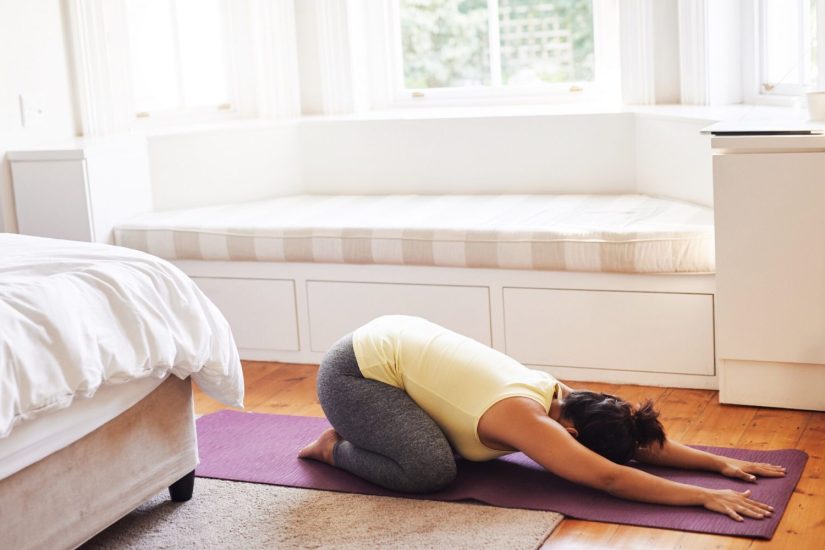
  11. Learn to practice deep relaxation. Take deep breaths. Do Yoga. Stretch. Pray the rosary. Knit. Crochet. Embroider. These are all good ways to manage stress.

And, Comadres, please, if you feel helpless or hopeless and all your ganas are gone, or if you have been crying or thinking sad thoughts for more than two weeks, please ask for professional help. Go to your comadre, a priest, a pastor or a nun. Seek the help of a counselor, social worker, doctor or nurse. Tell someone, but please don’t suffer alone.  If you ever think of harming yourself or others, call: 1-800-273-8255. En español: 1-800-628-9454


Sources:

Thornburg. https://www.ohsu.edu/xd/education/schools/school-of-medicine/departments/the-moore-institute/about/message-from-director.cfm

Torres. Nowson. Relationship between stress, eating behavior, and obesity. Nutrition. 2007 Nov-Dec;23(11-12):887-94. Epub

Harding, et al. Psychosocial stress is positively associated with body mass index gain over 5 years: evidence from the longitudinal AusDiab study.Obesity (Silver Spring). 2014 Jan;22(1):277-86. doi: 10.1002/oby.20423. Epub 2013 Jun 13.

https://www.nimh.nih.gov/health/publications/stress/index.shtml

Epel ES, et al. Stress and body shape: stress-induced cortisol secretion is consistently greater among women with central fat. Psychosom Med 2000 Sep-Oct;62(5):623-32.

¡Hola, Guapa!, English, Healthy Body, Healthy Comadres

The Beauty Myth and Latinas: We’ve Come a Long Way

I have been baffled by the beauty myth all of my life. I’ve thought of it from all sides, from the point of view of a young Mexican American girl growing up in the States under the shadow of a glamorous mother, to the rebellious assimilated Chicana that refused to wear high heels and make-up, to the mother who raised a dancer who had to navigate the minefield of the dancer’s body myth, to the  grandmother I am today. And I am still wondering when women will finally gain the respect we deserve without being judged by what our bodies looks like.

The Beauty Myth has been alive and well in our mainstream media for over a century and although we have come a long way, many of us are still suffering from its negative effects.

I came across a Lucky Strike cigarette advertising from 1930. This one reads,  “To keep a slender figure, no one can deny, reach for a Lucky instead of a sweet.”

The Beauty Myth was used for promoting cigarettes to women almost 100 years ago and continued well into the 1970s. We had this silly Virginia Slims cigarette campaign that “feminized” cigarettes by selling us the drivel that we “had come a long way.” Now we had our own cigarette designed to help us become thin and beautiful, and powerful.  (Now we could get lung cancer like everybody else, all while being feminine and slim. ¡Sobre todo delgada!)

The goal of the Beauty Myth hasn’t changed much. It is still the same as it was when they were selling us cigarettes. The Beauty Myth breaks you down so it can build you back up. First, it identifies the problem: you and your body. It makes you feel fat, inadequate and unattractive and then it provides a solution: the cigarettes, the fad diets, the shampoos, the rubber waistband to melt your belly fat, the magic supplements, or fill-in-the-blank.  

The Beauty Myth puts us at risk of self-loathing, and self-loathing is the gateway – el callejón de los eating disorders.

Some research suggests that Latinas have some protection against the negative effects of the Beauty Myth and its resulting body image distortion and eating disorders. In How to Become a Body Positive Super Mujer, we shared some findings from a study,  Brown Beauty: Body Image, Latinas, and the Media. The  authors of Brown Beauty suggest that being more closely identified with our culture and having the love and support of our friends and familias, may protect us from the negative effects of the Beauty Myth, but other studies suggest that Latinas are becoming more like our Northern European American sisters when it comes to body image and eating disorders.

Although the issue has been raised, and we are aware of the problem, time is overdue for Latinas to counter the effects of the Beauty Myth. And as we look inward, we want to make sure that we aren’t creating the Latina version of the Beauty Myth. Latina Magazine comes to mind. I have enjoyed my subscription to Latina Magazine over the years, and they have great content, but all you have to do is go online and look at a retrospect of their magazine covers and you would be hard-pressed to find Latinas that look like real, everyday Latinas. #realwomenhavecurves

As healthy Latinas, we don’t need to internalize the mainstream definition of beauty. We can come up with our own way of expressing our beauty, our femininity and our inner strength without replicating the Mainstream Beauty Myth.

At De Las Mías we are committed to preventing body loathing and disordered eating. And we are especially interested in creating a supportive and body positive culture for our jovencitas, our young hijas, sobrinas, nietas and ahijadas. We want them to look at us as their role models, mentors and madrinas. Now we can be their protective forces!

There is good work going on in the body positive camp, comadres, and body positivity movement is on the rise. It is an essential part of being our healthiest selves, and we encourage you to take part in it.

If you want to take a deeper dive into the Beauty Myth, read Naomi Wolf’s classic, The Beauty Myth: How Images of Beauty Are Used Against Women. Wolf explores how the Beauty Myth sells us billions of dollars worth of products to reverse the curse of not fitting into the box. It was first published in 1991 and updated in 2002, and it still remains relevant today.

Selena Gomez recently quoted Wolf’s book in response to being the target of body-shaming as told in this Shape article:

The beauty myth — an obsession with physical perfection that traps modern woman in an endless cycle of hopelessness, self-consciousness, and self-hatred as she tries to fulfill society’s impossible definition of flawless beauty.

Gomez stood up for herself by asserting, “I chose to take care of myself because I want to, not to prove anything to anyone.”

¡Eso, Girl!

But my favorite Latina fighting the good fight against the Beauty Myth is Rosie Molinary – author of Hijas Americanas: Beauty. Body Image and Growing Up Latina and Beautiful You: A Daily Guide to Radical Self-Acceptance.

Molinary offers us clear-cut evidence that the Beauty Myth is messing with our Latina sensibilities, and at the same time, she provides us with inspiring content and tools that will help us find our   inner resources and support to stand up against it. Her books and blog are action-oriented and accessible to all, but her work is especially relevant to Latinas, like you, who are embarking on a journey to a healthier life.

Here’s an inspiring passage from Beautiful You. You’ll find it in the last paragraph of Day 6 in her book of 365 daily installments. It’s titled, “Ditch the Fat Chat.”  

Today. When a woman criticizes herself in front of you, don’t join in. Instead, celebrate what you love about her or tell her just how wrong she is. When you are inclined to begin your own body-bashing, stop yourself. We do ourselves and others a disservice when we allow these critiques to carry on.

Beautiful You, in its second edition, offers 365 nuggets of inspiration to help yourself and your comadres, sisters and friends on your journey to a healthier life. You can find out more about Rosie Molinary and her awesome work at http://rosiemolinary.com.

Finally, I follow several body positive super mujeres on Instagram. I love their body positive messages: @Palomija, @rivviera_clothing and @curvecrushin.

Do you want to support yourself and your comadres on this journey to a healthier life? Stop the body bashing — “ditch the fat chat.” Please share your body positive journey. Who inspires you? On social media? In real life? Share the love so we can spread the word.

¡Hola, Guapa!, English, Healthy Comadres

Standing Up and Speaking Out: Calladitas No More

calladitas-no-more

Standing Up and Speaking Out – Calladitas No More

Two years ago, my sister Lori and I attended the #WeAllGrow Summit in Long Beach, California. The first thing we saw when we approached the conference center were banners emblazoned all over the space with – “Calladitas No More.”

That sentiment stands up against the old dicho, “Calladita me veo más bonita.” Now there’s an old salt that needed to be re-written, and it was a powerful experience to have our sisters, comadres and amigas at the #WeAllGrow summit challenge it in such a powerful way – “Calladitas, No More!”

More and more, Latinas are standing up and speaking out,  and we are filled with pride when we witness it.

“Calladita me veo más bonita” is one of those dichos of subtle and not so subtle oppression that has been part of our Latina narrative for centuries. It means, “You look prettier when you’re quiet.” Sit in the corner nodding and smiling while others with more authority, and usually male, have the floor. It goes along with being diplomatic, polite, and lady-like. In days gone by, when someone said something that offended you, you just smiled and tried to look pretty. That’s the nugget of “wisdom” encased in that dicho.  If you grew up in a traditional Latino household you may be familiar with it. 

My sister and I were both familiar with that dicho.  That’s why laughed out loud when we saw “Calladitas No More!” all over the place that week end.

We remembered our Tía Chiqui who says, “Calladita me veo mas bonita,” every time someone asks her a question about politics. Thankfully, times have changed, comadres, and we don’t need to be quiet any more.  

Latinas are standing up and speaking out. 

There are many Latinas out there in our crazy world living the “Calladitas No More” life. Here are some of our favorites:

  1. For our Comadres at Mamás con Poder, Calladitas No More means advocating for the rights of immigrant children. @mamasconpoder
  2. For our Comadres at #WeAllGrow Latina, it means volunteering to be a translator for immigrant parents that are trying to find their children. @weallgrowlatina
  3. For our body positive super mujeres, it means speaking truth to The Beauty Myth power. @rosiemolinary
  4. For every day moms who are tired of the schools feeding your children junk, it means walking into the principal’s office and requesting that they feed your children healthier food which includes, fresh fruits and vegetables.
  5. For those of us who are trying to improve the way we eat, it means telling our families that we are on a journey to a healthy life and that we would appreciate their support. 
  6. For your beloved Tía who insists on you having that third tamal, it means giving yourself permission to say, “No gracias, Tía. I already had two.”
  7. For the guy at work that rubs against you every time he passes by your workstation, it means speaking up to him directly if it’s safe, or asking for help from an ally if it’s not. #metoo – #yabasta

Speak Up. Stand Out.

Calladitas No More is an empowering dicho to keep in mind every time you are afraid to Stand Up for yourself. Speak Out and tell the world what is on your mind. Stand up, amigas, hermanas and comadres. You don’t have to be calladita anymore. Speak out. 

Have you had a Calladita No More moment lately?  Please share it with us!


¡Hola, Guapa!, English, Healthy Comadres

Incubating a baby and business

In the Spring of 2016, I took the plunge, quit my 9-to-5, and started working with my mom, Ana Consuelo Matiella, to found De Las Mías. During this same period, I got engaged and eloped! 2016 was a big year for new beginnings.

Many people comment on how difficult it would be for them to work with their mothers. But I didn’t think twice. De Las Mías presented a once-in-a-lifetime opportunity to learn from and work with one of the wisest women I know. And I knew that with our powers combined my mom and I could accomplish something truly special and create lasting impact for Latinas.

I was also eager to break out on my own and ditch the traditional 9-to-5. After more than a decade in a traditional job, I saw people around me having to sacrifice time with family, ignoring selfcare, being overworked and over busy, and I wanted to do it differently.

Growing up I had a different example of how to be a working parent. For as long as I can remember, my mom had her own business and worked from home. My dad for many years was self-employed. I know this approach to work came with other challenges and sacrifices, but looking back I remember one of my parents always being there.

As I embarked on a new chapter with my husband, and we talked about starting a family, I knew I had to find my own unique way to pursue my ambition to have a family and a career.

A year and a half into starting De Las Mías, I found out I was pregnant with our first child (thus incubating a baby and a business at the same time). We were over the moon excited! And in April of 2018, our Little Coconut entered the world with gusto!


I took two months of maternity leave and stepped away from the day-to-day operations of the business. I got to spend quality time with my little girl and learned a lot about myself along the way.

Now, as a mom, the stakes feel even higher. De Las Mías was always important but now even MORE so. Beyond impacting the greater community, there is now a third generation affected by our endeavor.

My mom and I have built something we’re truly proud of. We conducted a randomized control trial of the De Las Mías app with 200 Latinas in Albuquerque, New Mexico. As a result of the study, we launched an Android app and bilingual website to help Latinas be their healthiest, most fulfilled selves. We have participated in two different incubators: HealthSprint through the Arrowhead Center at New Mexico State University in Las Cruces, and PIE (Portland Incubator Experiment) in Portland, Oregon.

We have now embarked on the harrowing journey to find investors, so that we can continue to grow De Las Mías and achieve lasting impact for Latinas.

We’ve made plenty of mistakes along the way (some more expensive than others) and I’m sure there are more to come, but we have learned so much that we are propelled to keep going. And we have learned a lot about each other. While we are mother and daughter and definitely have our mother-daughter moments (some are better than others) we always return to why we’re doing this…

With my mom’s expert knowledge in bicultural health communications and my business know-how, we are determined to create THE go-to community for Latinas, where they find like-minded women, striving for healthier, more joyful lives for themselves and their families.

I hope someday when my daughter is pursuing and achieving her dreams that she’ll look back and see what I saw: a badass #chingona woman, being her own boss, following her passion and applying her skills to help her community, all while creating a better life for herself, and the next generation.


¡Hola, Guapa!, English, Healthy Comadres

Finding a Positive Path to Wellness with the Right Community

The start of something tasty

When Yesi heard there was a new health and fitness community, she immediately wanted to discover how De Las Mias could help her achieve a more balanced life. She was even more excited to find a wellness community for Latinas, by Latinas.

Yesi began to imagine a support system that would show her how to cook for herself, how to finally enjoy some of the recipes her mom had shared but she never had the time or confidence to make. She felt hopeful that this community could unlock a world of possibilities to the healthy life she had been wanting for years.

The Struggle to Commit Without a Support Team

Before Yesi discovered the De Las Mias community, she found it difficult to stick to a healthy routine. She had every intention to meet fitness and dietary goals, but without a support team to hold her accountable, life got too busy and her goals slipped away.

“Busyness is always my excuse. I’m never in one place for long, and I don’t ever have a consistent schedule. I tell myself I don’t have time to exercise or eat healthy today. But I think we can prioritize and set aside the time to be healthier.”

Determined to make a change, Yesi worked with a fitness coach who showed her workouts and a diet based on her specific needs and goals. However, regularly meeting with a coach was a huge time commitment that proved to be difficult to maintain.

Next Yesi turned to fitness apps to help her track goals and progress. Only not all of Yesi’s friends could afford the apps, so she was missing the support system she needed to stay motivated. De Las Mias was a free community of like-minded women where Yesi, her friends and family — even her Zumba group — could come together to offer and share support for one another.

Developing a Healthy Routine with a Trusted Community

Accountability and support were key components for Yesi’s journey, and the opportunity to discuss health and fitness with a trusted community provided benefits for months to come. Yesi found that support from her comadres and madrinas gave her the consistent reminder she needed to keep going, helping her stick to a healthy routine that flourished within a close-knit community she could depend on.

“As Latina women, we look for support in other women. People are so busy, especially in the United States, and it’s hard to find a community. Where we live in a rural area, you can’t just walk down the street to see one of your amigas. Even though De Las Mias is virtual, you still have that support.”

Being able to share recipes with other Latina women was a refreshing change from the other apps Yesi had used. She was able to plan and prepare healthier versions of meals she loved, like a Tex-Mex salad she could eat on the go.

Inspiration from the community was contagious and Yesi couldn’t keep it to herself. She told her mom about De Las Mias, including the goals she had set, and they made plans to start taking regular walks together. It was a need they both were searching to fulfill — and they had found the answer in each other, along with other Latinas in their newly expanded family.

Prioritizing Well-Being for a Balanced Life

Yesi’s potential was waiting beneath the surface, she just needed the right group of women around to help her see it. De Las Mias showed Yesi that the answer could be found in places and people she already had in her life—and that there were people close to her, like her mom, who needed this new positive path as much as she did.

“I rarely have time to sit down with my mom to learn the recipes that she makes. So, it was really cool to learn about my food and culture from other people—and be healthy about it.”

As Yesi made healthier choices, stress became more manageable. She enjoyed the benefits of more energy and better sleep, along with the strengthening of existing relationships. Making more time to reconnect with her mom on their walks was an unexpected and cherished reward for both women.

Like many of us, Yesi understood busyness was the trap she had to be careful of falling into. By taking the necessary steps to prioritize her well-being, a balanced lifestyle and healthier relationships became a reality that Yesi now experiences every day.

¡Unidas for a Healthy Life!

〰️

The De Las Mias app is free and ready for download in the Google Play Store. Follow us on Facebook and Instagram @delasmiaslife.

¡Hola, Guapa!, Edición No. 4: Reflection, English, Healthy Comadres

The Vision Map – De Las Mías – Bringing Your Dreams to Life

The Power of the Vision Map

I started using the Vision Map when I was a health educator working with people with chronic pain. Our team had all kinds of tools to help people who were suffering, and the vision map was like salve to a wound. Being in chronic pain is one of the most stressful, debilitating and depressing things that can happen to you. That is one of the reasons we are in the middle of an opioid crisis. Because we didn’t want our clients to rely only on medication to manage their pain, we taught a variety of stress and pain management classes. It was a fun and rewarding job and one of my first opportunities to help people make healthy changes.

At the time, our team of fresh-out-of-college and naïve health educators came up with the idea that if we could just get people’s mind off their pain, even for a minute, that we would make a difference in their lives. So we came up with several of what I call “gimmicks.” Now let me tell you that I love that word – gimmick. It’s kind of a no-nonsense way of naming magical thinking. I looked it up and one of the definitions is “a magician’s tool.” 

So allow me to share this magical gimmick with you — The Vision Map!

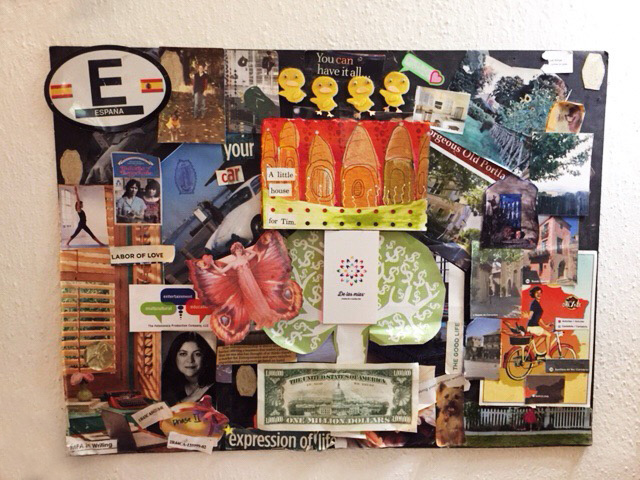
As I said, I have used the Vision Map with people in chronic pain so they could just imagine for even one sacred minute what their lives would be like without pain, but I have also used it with my daughter when her madrina and I joined her in a retreat to help her envision what it would be like to change careers and open a new pathway for her life’s passion and work. Another way I have used the Vision Map is for myself, when I lost track of my dreams and had to gather them all up again. The latest Vision Map I did was with our De Las Mías team, a vision board to visualize what the future might hold for us in this quest to live healthier and more joyful lives.

So here I am suggesting this magical tool to help you visualize your future, your life, your new kitchen, your garden, your nueva vida saludable, your new love, or your next move. A vision map brings your dreams to life and it is a lot of fun.  You can do it alone or with comadres.  It is so much fun to do it in a group, but it is also a magical experience to do it alone.  Try it, you’ll like it!

How to Make A Vision Map

  1. First of all, gather your tools.

Paper, poster board, scissors, glue, lots of old magazines, photos or copies of photos, drawing pens or pencils, ribbons, tissue paper, whatever you have handy that you like the looks of. You can gather or write a favorite quote or affirmation.

2. Next, spend some time in quiet reflection.

What does your heart desire? In this step, start with a few minutes to yourself. Find a comfortable spot where you will not be interrupted and take a few deep breaths and relax. Think about what you want your Vision Map to symbolize.

hero-visionmap-temp

3. Play music, light a candle, or bring a vase full of flowers to your work space to mark it as special.  

It would be good if you didn’t answer the phone and carved out this time just for yourself. You can use the Vision Map as a way to visualize your future career, your deepest desire for adventure, or an overall vision of what you want your life to be. I once did a Vision Map of what I wanted my house to look like. (That was so much fun!)

4. Next, start cutting.

You’ve set your intention of what you want your Vision Map to represent, now start looking for pictures, colors, photos, symbols, that match your intentions. Let yourself go for a few minutes — 15-20 minutes — and cut away. You can also write an affirmation or two to place on your Vision Map. Pick something that inspires you. Use a favorite dicho like “Querer es poder,” or “Real women have curves!” or a famous quote from one of your heroes. I like, “You can have it all!”

5. Arrange and group.

The next step is to arrange the images, colors, symbols, and affirmations on the poster board or whatever backing you are using. See how you like it. You can move the pieces around until it feels right. Once you are happy with the position of your images, start gluing. Stop anytime and take a breather. If there are blank spots on your Vision Map, it’s okay. Leave it and see how it feels to you over the next few days or weeks. Later on, you might find other images or words that you will want to add.

6. Now take a good look at your handiwork.

Put up your Vision Map in a prominent place where you can look at it often. You can add other images, colors, quotes and/or affirmations over time. Or you can create new ones.

Just remember, Vision Maps are there to make you feel hopeful about the future.

7. Some people have asked about sharing your Vision Map and I say this:

If you have a trusted comadre that is on your team and is your tried and true kindred spirit, I say yes. It is so much fun to share Vision Maps with a kindred spirit! But, if you think that it will be met with the slightest bit of skepticism, or criticism, I say no. Protect yourself and your dreams and share only with people who care about you and don’t criticize you. This needs to be totally safe for you. Think of it as your soul shining through, a diary entry, or a prayer.  

I have done Vision Maps with a group of professional women in a seminar where we mapped out our dreams and aspirations for our careers. We took turns sharing it in a group, and it was super fun and affirming. We did it once with our little family just to talk about what was on our minds and what we hoped was in store for us in our future.  That felt sweet and cozy and we even shed a tear or two. (We are lloronas.) My master vision map, the Mother of all Vision Maps, is tacked right in front of my desk where I can see it every day. (De Las Mías is on there!)

visionmap-inline

I hope that using a Vision Map turns out to be a fun and magical tool that you and your comadres, and daughters, sisters and friends will enjoy. I hope that it works for you like it has  worked for me — to see possibilities! May it transport you to that special place of contemplation where you can ponder what could be next and good for your life.

Not to sound too much like our beloved comadre, La Oprah, but one of the things I know for sure is that believing you can do something matters. It prepares you for what comes next. Belief is an essential part of making your dreams come true, and I want your dreams to come true!

Try it and let us know how it goes!

¡Unidas for a Healthy Life!

〰️

The De Las Mias app is free and ready for download in the Google Play Store.  Follow us on Facebook and Instagram @delasmiaslife.

¡Hola, Guapa!, ¡Hola, Sabrosa!, English, Healthy Body, Healthy Comadres

¿Could You Have Prediabetes?

Latinas are at high risk of having prediabetes.  Find out more!

Today we are asking a hard question, Comadres: ¿Could you have prediabetes?


Answer these questions…

  1. Are you Latina?
  2. Did you have a baby that weighed more than 9 lbs.?
  3. Do you have a brother, sister, mom or dad with diabetes?
  4. Do you get very little or no exercise?
  5. Are you between the ages of 45 and 65?
  6. Are you overweight?

If you answered yes to 3 or more of these questions, it doesn’t necessarily mean you have prediabetes, but you should get make an appointment to get it checked out.

Here is a prediabetes quiz developed by the CDC that can further help you assess your risk.  It’s better to know, Comadre!

When you find out if you have prediabetes, don’t panic. First of all, be grateful that you found out! You have a chance to dodge diabetes.

The research is clear and the take-away is this:

You can prevent or delay diabetes.

Now, ask yourself, ¿Am I ready to make small changes that will pay off big?

If you answered, yes, ¡Bienvenidas a De Las Mías! Follow our De Las Mías Guidelines  and you will be well on your way to preventing diabetes. Talk to your doctor or dietitian and show them the De Las Mías checklist. We are sure they will approve!

My nana had diabetes, my tía Paqui had it. My brother has it and probably half of my mother’s side of the family had it and didn’t know it. That’s a common story among Mexican Americans, Puerto Ricans and Native Americans of North America. That’s the way it is but that is not the way it has to be.

There’s Hope!

The research tells us that you can prevent or delay diabetes. By “prevent,” we mean that you could actually keep from getting it. And by “delay,”  we mean that you might get it anyway, but way later than if you had done nothing. (You could have gotten it by 45 but you didn’t get it until you were 65.) That’s like a discount. Having diabetes is no walk in the park. You want to hold off for as long as you can. But let’s be clear: If you get it, don’t blame yourself, okay? Just try your best and be kind to yourself. We are looking for improvements here and not perfection.

So, here’s my story…

About 15 years ago, I was about 30 pounds overweight and pretty sedentary because my back condition was preventing me from walking for too long. I felt low energy and not very attractive. Truth be told I was probably a little depressed.

Feeling kind of sluggish and down, I went to our family doctor and he was someone we really trusted. He sent me for blood work and when I went back, he looked at my chart and said, “Well, I have some good news and some bad news. What do you want first?”

I said, “The bad news.”

“The bad news is that you have prediabetes.”

I was stunned but not surprised. I knew my family history and my eating habits. Not to mention ‘couch potato.’

“What’s the good news?”  I asked.

“You have prediabetes.”

“Say, what?”

And that is when he told me that I had a golden opportunity.

“I say golden opportunity, because you have a chance to turn this around.  If you hadn’t gotten checked, you wouldn’t know. So here you are at an important crossroad.”

He told me that just by losing 5%-7% of my weight I could possibly reverse prediabetes. He also recommended that I get as physically fit as possible.

I hemmed and hawed and said, “Well, I have a lot of back pain right now and I can’t walk for very long.”

“Do you have a bike?”

Oh yeah, my bike! My old childhood friend! 

He also suggested I take a therapeutic yoga class so I could start getting my back in shape and that I try to walk a little at a time.

“If you can’t go for 30, go for 15. If you can’t go for 15, go for 10. If you can’t walk, bike. And if you can’t bike, swim. If you can’t swim, dance. Whatever works, just move your body, because if you don’t, you are going to be one unhappy old woman.”

“Wow, kind of harsh,” I thought with tears in my eyes.

He looked at me with those sad blue eyes and said, “I’m sorry, Ana, but I know you. I know you can do this.”

The truth stung, but I paid attention.

First of all, I went looking for my bike. It was an old beater and my husband helped me pull it down from the rafters in the garage. We cleaned it up and pumped up the tires. I rode it around the neighborhood for a few days and then I realized that I needed to replace it. So I got myself a nice Raleigh like the one I had in college. It didn’t break the bank, and it was so much lighter than the fat tire clunker I had brought back to life. I got a hybrid bike because in Santa Fe where I live there are a lot of dirt roads. I bought this stuff called ‘green slime’ to protect my tires from goatheads. (Nasty, nasty balls of thorns!) I got an ugly helmet. I got bike shorts. (Yeah, I did.)

Then, I made other changes… I stopped eating refined sugar and carbs. I stopped drinking sugary soft drinks and started eating more fruits and veggies. I didn’t go crazy. I just started making small changes and it worked!

A month or two later, I took a yoga class from a 70-year-old woman who kicked my butt every Friday.


And over a period of about 6 months, I lost 24 pounds.

I went back and checked my blood sugar again in about 9 months, and the prediabetes was gone.

That was 15 years ago, and I still ride every day. I walk 30 minutes a day. And when I can’t walk for 30, because my back hurts, I walk for 15 and when I can’t walk for 15, I walk for 10. And if I can’t walk for 10, well, you get the picture…

Change is possible, Comadres. And if you can change one thing, you can change everything.


I co-founded De Las Mías because I want us to be healthy and strong. I want our children to be healthy, and I want our grandchildren to be healthy, active and strong.

It’s a journey, Comadres, and you don’t have to do it alone. We are here.

Are you ready?

¡Acompáñanos!

Healthy Body, Healthy Comadres

Sticking with Your New Routine


Making healthy choices is empowering. Turning those choices into lifestyle changes is even better. But it takes work! Here are some ways to stick with your routine, push through challenges, and turn healthy choices into healthy habits.

Have you started eating healthier, or exercising regularly with your comadres? Great work! Getting started is the hardest part. But sticking with those new choices is just as important as making them in the first place. The best ways to do that? Stay consistent, hold yourself accountable, and give yourself new challenges.


Consistency is Key

Our strongest habits are the ones we do every day — or at least on a consistent schedule. Whether you’re exercising with your comadres 3 times a week or putting some healthy veggies on the table every night, be consistent. It takes time and commitment to change a habit, so the more you stick to it the quicker it will be second nature.

Prepare for setbacks. Having plans in case of setbacks puts you in the driver’s seat. For example, if the weather is bad, find ways to be active indoors such as an exercise video. If you’re dining out with a friend, make up your mind ahead of time that you will look for healthy menu options. It’s important to make the effort, even if you’re not meeting all of your goals. Make a goal to do something good for yourself every day!


Keeping Yourself Accountable

Speaking of goals, are yours written down? Having something to work toward is essential to your success. Writing down your goals and revisiting them helps keep your eye on the prize. Whether they are on your bathroom mirror or a post it on the fridge, put your goals some place you’ll see and read them often.

As Latinas we also know the strength and support of our community is vital. Tell your comadres and friends about your new healthy habits. This can give you the extra ganas you need to stick to your plan.


Find Challenge in Change

Routines can get boring. We know. But you don’t have to give up your healthy habits just because you’re getting used to them. Give yourself some credit! And then mix it up.  Change your walking routine into a jog. Find a new De Las Mías recipe or two and try them out! And if you find you’ve met your goals, give yourself an ¡Eso! Share your new triumphs with your comadres. Add some new ones! Our philosophy of “poquito de todo” applies as much to activities as food choices: a little bit of everything helps achieve balance, puts variety into the mix and makes your body feel good.